Surf Maneuvers Explained: The Path from Survival to Self-Expression
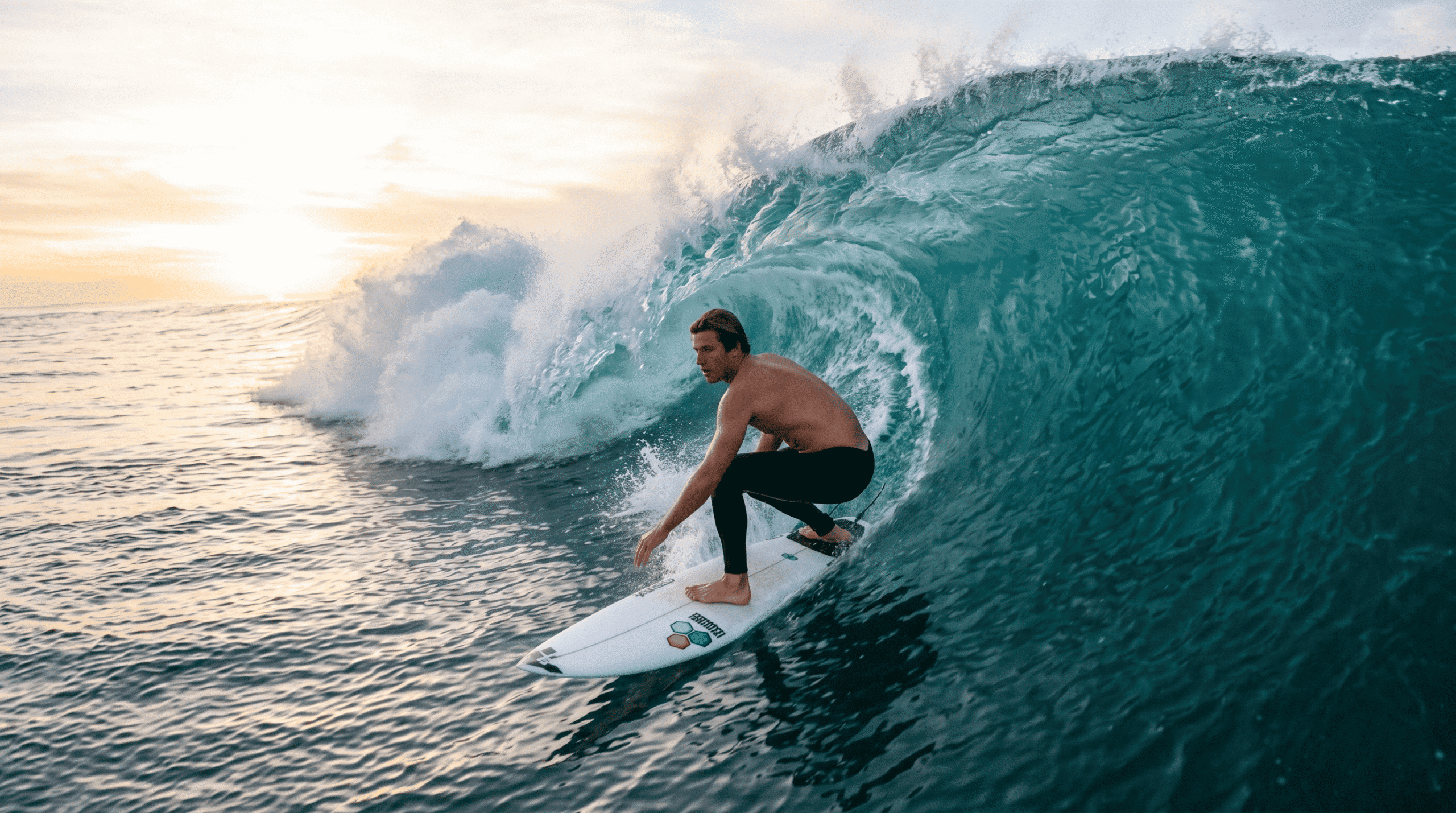
There is a distinct moment in every surfer’s life when the ocean changes from a playground of survival into a canvas of pure self-expression. You remember it clearly: the heavy scent of sweet coconut wax under your nose, your skin chilled by the first dawn flush of water down your wetsuit, and that sudden, breathtaking transition when your board stops wobbling and begins to fly. You are no longer just sliding down a watery wall; you are directing the energy of the ocean itself.
To move beyond the basic straight line, you must understand how to manipulate your board’s rails, tail, and nose. This guide breaks down essential surf maneuvers, stripping away the abstract jargon and replacing it with the raw, mechanical truths of how your body and board interact with the wave’s power. Whether you are learning to redirect your momentum or aiming to throw massive buckets of spray, mastering these dynamics is how you find your flow.
Before you can throw buckets of spray, mastering the basics of positioning is key, which is why studying Surf Techniques for Intermediate Surfers is the crucial stepping stone before attempting highly technical turns.
The Mechanics of Speed and Projection
Every maneuver you execute on a wave is a direct translation of kinetic energy. Surfing is a dance of gravity, friction, and buoyancy. To understand surf maneuvers, you must first understand the concept of projection—using the wave’s vertical drop to generate horizontal velocity. If you turn too early, you sink into the flats; if you turn too late, you get clipped by the breaking lip.
In my twenty years of chasing swells, I have found that most intermediate surfers suffer from “stiff-knee syndrome.” They try to execute turns using only their ankles and back foot. True power comes from your hips and your gaze. Your surfboard will always follow your eyes and the tilt of your shoulders. If you stare down at your feet, you will pearl (nose-dive). If you look back at the pocket of the wave, your board will carve beautifully back to the power source.
When you compress your knees, you load energy into your board’s core like a spring. As you extend your legs during a turn, you release that energy, pushing the water away and accelerating out of the maneuver. This compression-extension cycle is the heartbeat of all advanced surfing.
Fundamental Surf Maneuvers Broken Down
1. The Bottom Turn: The Foundation of Every Ride
The bottom turn is the most important maneuver in surfing. It is the engine that drives everything else. Done correctly, it converts the vertical speed of your drop into horizontal projection along the face. In my early days, I used to drop down a wave and immediately try to turn from the middle of the board, which caused my rails to bog and lose all speed. It took a session at a heavy point break to realize that you must wait until you reach the trough of the wave before leaning into your turn.
- The Setup: Compress your knees deep as you reach the bottom of the drop. Keep your center of gravity low over the stringer.
- The Execution: Shift your weight onto your inside rail (forehand) or outside rail (backhand). Rotate your chest toward the shoulder of the wave.
- The Release: Extend your legs as you climb back up the face, releasing the stored energy to drive yourself into your next maneuver.
2. The Cutback: Returning to the Power Source
When you surf too far ahead of the breaking part of the wave (the pocket), you enter the shoulder—a flat, gutless section where you lose speed. The cutback is designed to reverse your direction, carving a smooth “S” shape back to the breaking white water to harness its energy once more. It is a masterpiece of rail-to-rail transition.
- The Setup: Identify the flattening shoulder. Flatten your board momentarily to transition from your inside rail to your outside rail.
- The Execution: Look back toward the breaking white water. Swing your leading arm across your body, forcing your shoulders to rotate and leading your board through a broad arc.
- The Recovery: As you approach the foam bounce, compress your body to absorb the turbulence, transfer your weight back to your inside rail, and exit back down the line.
3. The Re-Entry (Off-the-Lip)
The re-entry is an assertive, vertical strike against the steep, breaking lip of the wave. It is the ultimate display of timing. You drive vertically up the wave face, slice through the falling lip, and pivot hard to drop back down with the whitewash. When I first tested my high-performance thruster setup utilizing stiff, heavy-drive fiberglass fin templates from industry benchmarks like Futures Fins, I used to panic at the peak of this turn. The secret is trust: you must let the falling wave lip push your board back down into the transition while your fin boxes retain absolute structural integrity under load
- The Setup: Initiate a deep, driving bottom turn to point your board’s nose almost vertically (roughly 70 to 90 degrees) up the wave face.
- The Execution: As your nose pierces the feathering lip, shift your weight onto your back foot, rotate your head and shoulders back down toward the flats, and push through your tail.
- The Landing: Keep your knees bent to absorb the impact as you drop back down into the flats, letting your fins catch the clean water.
4. The Snap / Layback
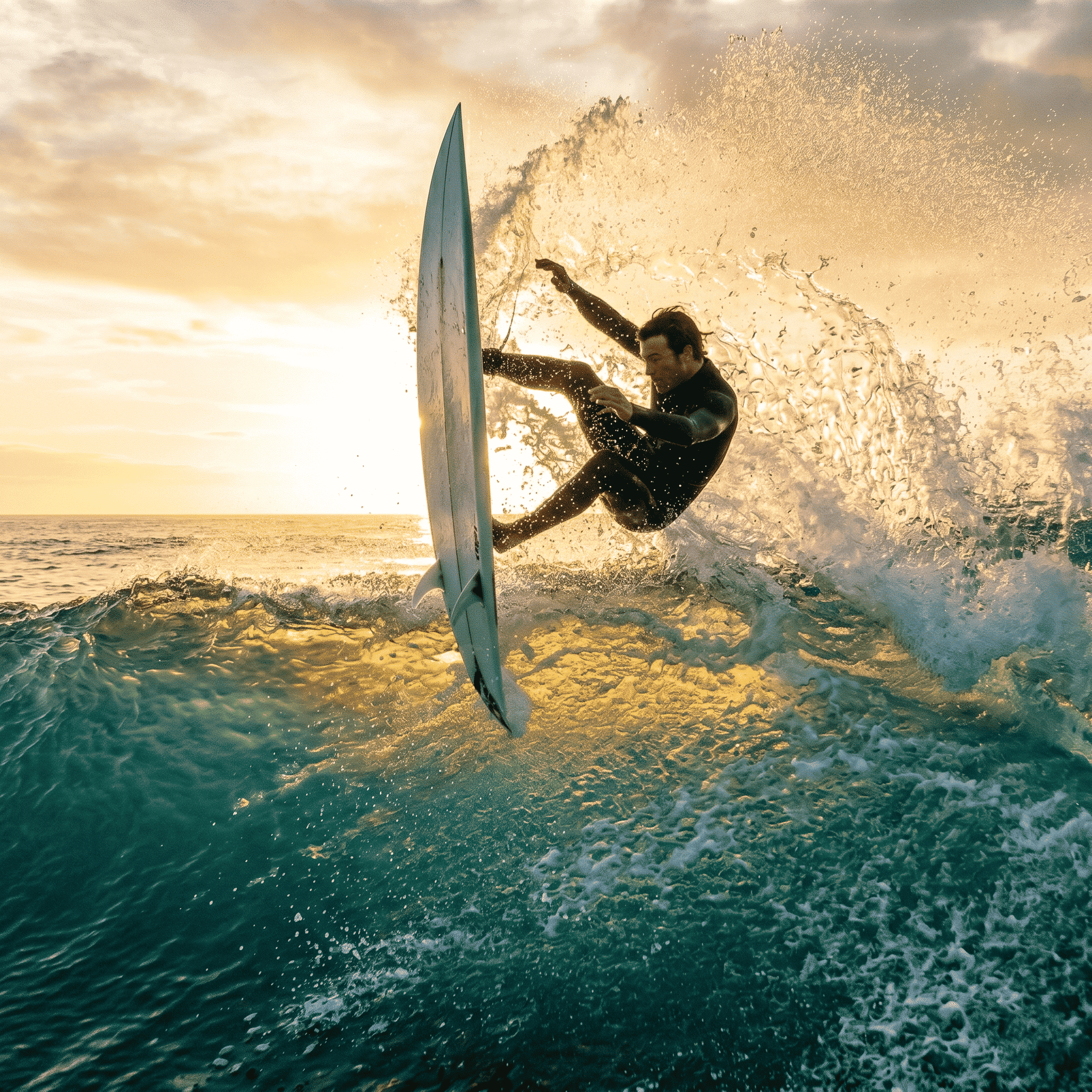
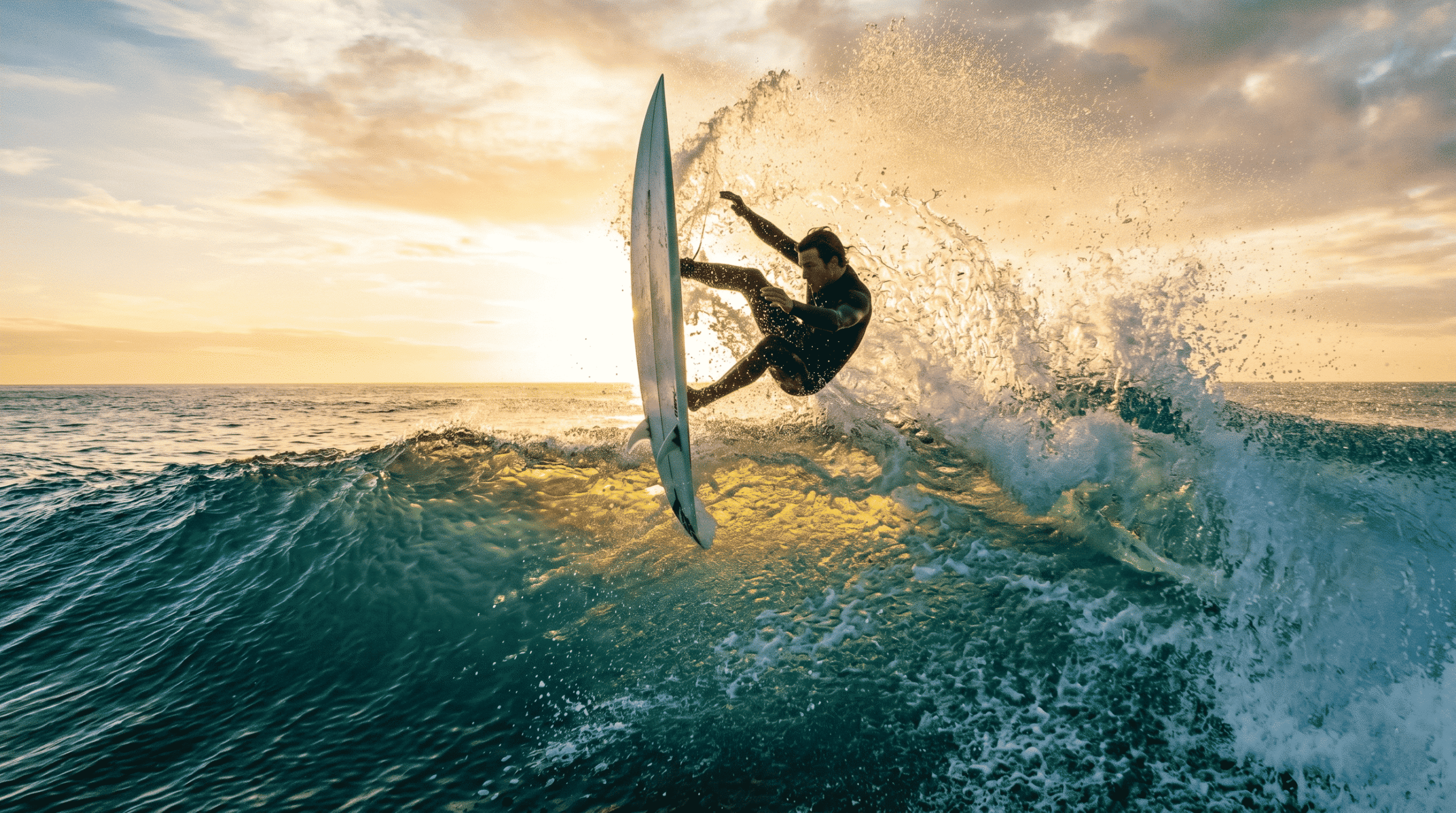
The snap is a rapid, aggressive redirection of the board, often performed at the steepest part of the wave. While a cutback is a long, sweeping turn, a snap is an instantaneous pivot. The layback snap is a dramatic variation where the surfer leans their upper body back into the wave face, using the water as a support system while pushing the tail of the board free.
- The Setup: Approach a steep section with moderate speed. Keep your hips highly flexible.
- The Execution: Kick your back leg out while twisting your torso in the opposite direction. This releases the fins from the water, causing a dramatic spray.
- The Correction: Pull your front foot back toward your body to regain control of the board and slide back into the wave’s glide path.
Comparing Essential Surf Maneuvers
To help organize your progression, the table below compares the foundational surf maneuvers by their difficulty, the optimal wave section required, and the biomechanical focus needed to complete them successfully.
| Maneuver | Ideal Wave Section | Difficulty (1-10) | Primary Biomechanical Focus | Common Mistake to Avoid |
|---|---|---|---|---|
| Bottom Turn | The trough / wave base | 3 / 10 | Low compression & rail pressure | Stiff legs and turning too early. |
| Cutback | The flat shoulder | 5 / 10 | Torso rotation & rail-to-rail transition | Failing to look back at the pocket. |
| Re-Entry | The vertical lip / coping | 7 / 10 | Vertical projection & decompression | Leaning too far back during the drop. |
| Snap | The pocket / steep section | 8 / 10 | Fin release & sharp hip pivot | Over-rotating and losing the board. |
Advanced surf Maneuvers: Floaters and Airs
Once you have conquered the classic transitions of the bottom turn and cutback, your playground expands vertically. The floater is a highly functional maneuver designed to carry you over a closing-out or breaking section of the wave. Instead of dodging the white water, you glide directly on top of the breaking lip, using the foam as a highway before dropping back down into the clean face.
At the pinnacle of modern surfing are aerial surf maneuvers. These require extreme speed, precise ramp selection, and highly developed spatial awareness. To launch an air, you must drive up a vertical section that is actively throwing out, using it as a launchpad. In the air, you use the wind to keep the board stuck to your feet, compressing your body to land flat and cushion the joint-jarring impact on your knees.
Frequently Asked Questions about Surf Maneuvers
Why does my surfboard bog down and lose speed during a turn?
Speed loss is usually caused by incorrect weight distribution or improper rail engagement. If you try to turn using only your back foot while your upper body is leaning backward, you plow water instead of slicing through it. Focus on compressing your knees, leaning your entire body into the turn, and ensuring your shoulders are leading the direction of your board.
How do I generate more speed to perform high-performance surf maneuvers?
Speed is generated by staying in the upper third of the wave face (where gravity is strongest) and pumping your board. Pumping involves a rapid cycle of compressing your knees to unweight the board, and then pushing down to compress the board’s rocker into the wave. This rhythmic movement creates forward drive.
What is the difference between a carve and a snap?
A carve is a continuous, flowing turn executed over a wider radius where your rails remain buried in the water. A snap is an abrupt, high-impact pivot where you quickly release the tail of your board, often throwing a large spray of water and briefly releasing your fins from the surface.