
Big Wave Surfing Explained: Facing the Ocean’s Giants
There’s a profound difference between riding a fun, chest-high wave and standing atop a moving mountain of water that could swallow a small building. Big wave surfing isn’t just a sport; it’s an extreme discipline, a relentless pursuit, and a deep reverence for the ocean’s most formidable power. For those of us who’ve spent a lifetime in the brine, it’s the ultimate conversation with Mother Nature, a dance where the stakes are as high as the waves themselves.
In my two decades on the water, what truly defines a big wave isn’t just a number on a swell chart; it’s the sheer, undeniable presence it casts. It’s the moment the horizon darkens, and a deep rumble vibrates through your chest before you even see the peak.
It’s the raw energy, the intimidating scale, and the immense consequences of every decision. While the commonly accepted threshold is a wave with a face height of 20 feet (roughly 6 meters) or more, seasoned chargers will tell you it’s less about the measurement and more about the feeling – the palpable shift in the ocean’s demeanor, the way the air gets sucked up the face, leaving a momentarily hollow space before the thunderous crash.
This isn’t your average beach break. These waves break in deep water, often miles offshore, over treacherous reefs or canyons that act as natural magnifiers for ocean swells. The deeper the water, the more energy the wave can maintain as it approaches the break, transforming into these colossal, awe-inspiring liquid walls. Learning to read these conditions, to anticipate the rhythm of the sets, and to respect the ocean’s incredible power is the first lesson any aspiring big wave surfer must internalize. It’s a humbling education, one wave at a time.
The Two Paths: Paddle vs. Tow-In
To conquer these liquid giants, surfers have developed two distinct, equally demanding approaches, each with its own philosophy, equipment, and level of commitment. Both require incredible physical prowess, mental fortitude, and an unwavering respect for the inherent dangers.
The Art of Paddle-In Surfing
There’s a raw, primal satisfaction in paddle-in surfing. It’s the purest form of the sport, where it’s just you, your board, and the mountain of water. This method demands an extraordinary level of physical conditioning – immense upper body strength, cardiovascular endurance, and an almost superhuman ability to hold your breath and remain calm during extended hold-downs. The boards used for paddle-in big wave surfing are significantly longer (often 9 to 11+ feet) and thicker than regular boards. This added volume and length are crucial for paddling into these fast-moving behemoths, allowing the surfer to generate enough speed to match the wave’s velocity and drop in.
The true art here lies in the timing. You’re trying to catch a wave moving at incredible speeds, often against strong currents and chaotic whitewater. The secret isn’t just muscle; it’s a deep understanding of the wave’s rhythm – knowing exactly when to commit, and when to pull back and let a wave pass. It’s about finding that sweet spot, that brief moment of acceleration, where you can dig in with everything you’ve got and propel yourself down the face. I remember one session at Waimea Bay, arms burning, lungs screaming, just trying to get over the ledge of a monstrous set. The payoff, when you finally lock into that line, is an unparalleled feeling of connection and accomplishment.
The Power of Tow-In Surfing
When I first saw tow-in surfing up close, I admit, part of me felt like it was “cheating.” But then you witness the scale of waves it unlocks – waves so fast, so large, they are simply un-paddleable. Tow-in surfing utilizes a jet ski to tow the surfer into position, allowing them to reach speeds necessary to catch waves that would otherwise be impossible. This method opened up new frontiers in big wave riding, enabling access to monstrous peaks at spots like Nazaré and Jaws that break too fast or too far out to be paddled into traditionally.
The boards used for tow-in are much shorter (5 to 7 feet), resembling wakeboards, and often feature foot straps. This allows the surfer to maintain control at extreme speeds and through violent chop. Tow-in surfing is a highly collaborative effort, involving a team of jet ski drivers and spotters, constantly communicating about sets, currents, and safety. The jet ski isn’t just a tow-in vehicle; it’s a crucial rescue craft, ready to pluck a surfer from the impact zone within seconds. While it lacks the raw, self-propelled nature of paddle-in, tow-in surfing pushes the boundaries of what’s possible, allowing surfers to experience a different kind of speed and a new level of vertical drop.
| Feature | Paddle-In Surfing | Tow-In Surfing |
|---|---|---|
| Method | Manual paddling, human power | Jet ski assistance for speed |
| Board Length | Longer (9-11+ feet) for volume & speed | Shorter (5-7 feet) for maneuverability & control |
| Wave Size Access | Large, but limited by human paddling speed | Colossal, often un-paddleable waves |
| Physical Demands | Extreme paddling strength, endurance, breath-holding | High tolerance for G-forces, balance, impact |
| Team Aspect | Often solo, but safety spotters are crucial | Mandatory team (jet ski driver, spotters, rescue) |
| Risk Factor | High, extended hold-downs, exhaustion | High, extreme speeds, powerful wipeouts, jet ski hazards |
The Arenas of Giants: Legendary Big Wave Spots
Each big wave spot has its own personality, its own temper, shaped by the unique ocean floor topography and prevailing swell directions. These are not just locations; they are legendary stages where surfers test their limits against nature’s most spectacular displays of power.
- Nazaré, Portugal: Home to potentially the largest waves ever surfed, thanks to the deep Nazaré Canyon. These waves are less about steepness and more about sheer, towering mass. The currents here are notoriously treacherous, demanding impeccable teamwork and tow-in expertise.
- Jaws (Pe’ahi), Maui, Hawaii: A monster wave breaking over a volcanic reef, known for its incredible speed, thick lips, and cavernous barrels. Jaws demands total commitment, whether you’re paddling into its massive face or being towed into its incredible speed lines.
- Mavericks, California, USA: A cold-water, reef break known for its intimidatingly dark, jade-green waves. Mavericks is a true test of nerve, with powerful currents, rogue sets, and a chillingly powerful impact zone that can hold you down for what feels like an eternity.
- Waimea Bay, Hawaii, USA: A historic and revered paddle-in spot on the North Shore of Oahu. While not always the biggest, Waimea holds cultural significance and requires precise timing and deep respect for the lineup.
These spots are sacred grounds, demanding not just skill, but an inherent understanding of local conditions and a deep respect for the community that calls them home. The ocean here dictates the terms, and only those truly attuned to its rhythms can hope to dance with these giants.
Gear & Grit: Essential Equipment for Big Wave Chargers
When you’re facing a wave the size of a multi-story building, your equipment isn’t just gear; it’s your lifeline. Every piece is meticulously chosen and maintained, designed to give the surfer every possible edge in an inherently dangerous environment. I remember one session at Mavericks where a faulty leash nearly cost me everything – it taught me that vigilance with gear is non-negotiable.
- Big Wave Boards: As discussed, longer and heavier for paddle-in, shorter and strapped for tow-in. They are custom-shaped for stability, speed, and durability, often with multiple fin setups to maximize drive and hold.
- Wetsuits & Flotation: In colder climates, thick wetsuits (5/4mm or 6/5mm) are essential for warmth and internal temperature regulation. More critically, big wave surfers almost universally wear inflatable flotation vests. Seamlessly integrated into premium cold-water armor from environmental and safety benchmarks like Patagonia, these specialized vests are equipped with CO2 cartridges that can be manually deployed via a pull-cord. This mechanism rockets a surfer to the surface after a violent wipeout, giving them precious seconds to regain composure and take a breath before the next mountain of water clips them.
- Leashes: Always heavy-duty, often doubled or even tripled, and attached to the ankle or knee. A snapped leash out there isn’t just inconvenient; it’s a life-or-death scenario, leaving you separated from your only floatation in a terrifying impact zone. Always double-check your leash connection. Always.
- Helmets: Increasingly common, especially in tow-in surfing or at reef breaks, helmets protect against impact with the board, the reef, or other objects in the water during a wipeout.
- Jet Skis & Rescue Sleds: For tow-in, these are indispensable. Beyond towing, they are the primary rescue tool, equipped with rescue sleds on the back to quickly retrieve surfers from the whitewater.
Every piece of equipment is a testament to the dangers involved and the incredible lengths surfers go to mitigate risk, however minimally. It’s a constant evolution, driven by the desire to ride bigger waves more safely.
The Unseen Battle: Mental Fortitude & Safety
The biggest wave you’ll ever face isn’t made of water; it’s the one in your mind. Big wave surfing is as much a mental game as it is a physical one. The sheer scale of these waves can induce paralyzing fear, and managing that fear, transforming it into focused energy, is paramount. Breath-holding training, meditation, and visualization are as crucial as any physical workout. When you’re held down for 30 seconds, disoriented and tumbling, your ability to remain calm and conserve oxygen is what brings you back to the surface. It’s a terrifying experience, and one that every big wave surfer has intimately known.
Safety is not an afterthought; it is woven into the very fabric of big wave surfing. No one tackles these waves alone. Teams are essential, with spotters on shore or on jet skis constantly monitoring conditions, tracking sets, and being ready for immediate rescue. Rigorous safety protocols, including emergency plans and communication systems, are always in place. The community aspect is strong; fellow surfers are your first line of defense, and trust in your team is absolute.
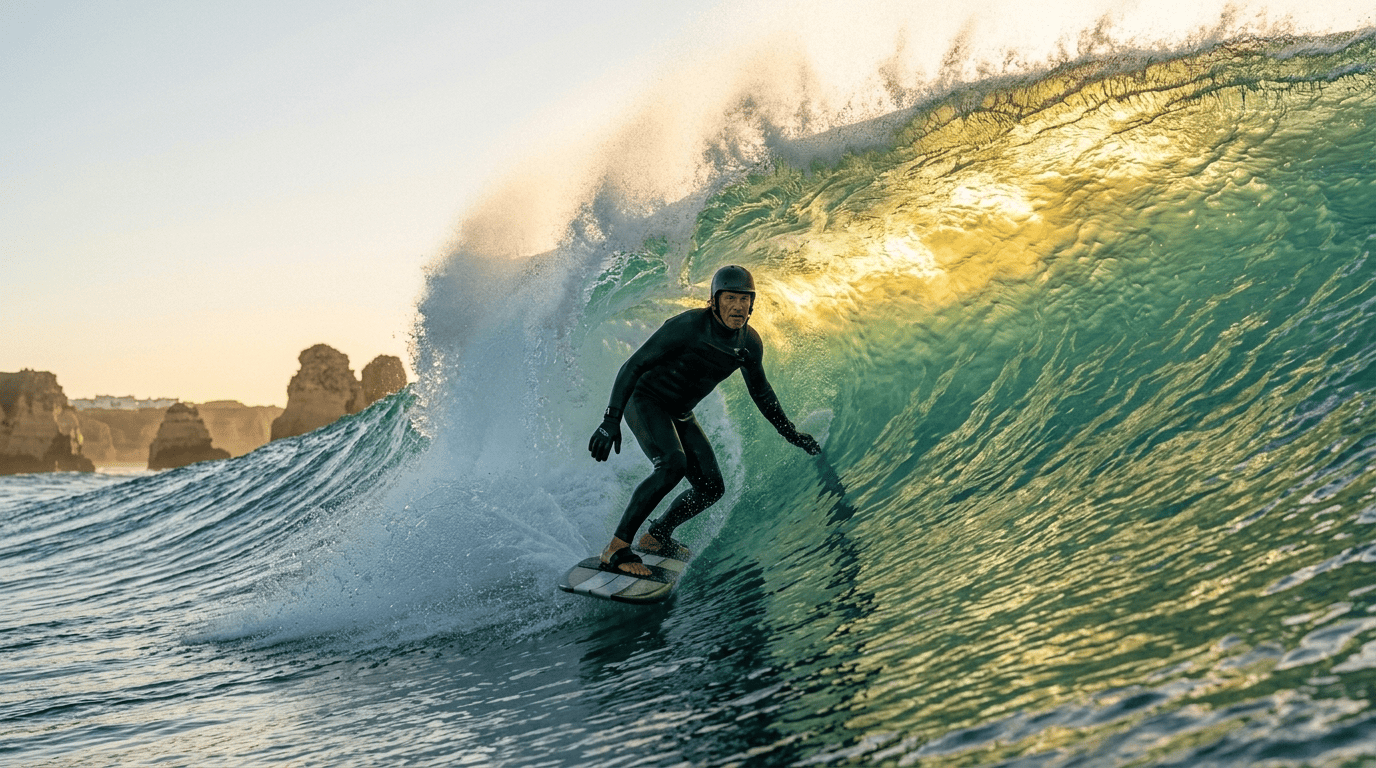
While big wave surfing stands as the pinnacle of the sport, the foundational skills are honed much earlier. Understanding Surf Techniques for Intermediate Surfers is crucial for anyone dreaming of these colossal challenges, building the confidence and board control necessary to even approach such power. It’s a progressive journey, one that demands patience, humility, and an insatiable desire to learn.
Mastering the Monster: A Journey of Respect and Skill
Big wave surfing explained isn’t just about defining the waves or detailing the gear; it’s about understanding a mindset, a lifestyle, and an unwavering commitment to the ocean. It’s a lifelong conversation with the ocean, a dance between fear and exhilaration that only a select few are willing to undertake. Every ride is a lesson, every wipeout a humbling reminder of nature’s supremacy. It’s about respecting the ocean enough to know your limits, but pushing those limits with calculated courage.
The cold rush of salt water, the roar of a breaking giant, the trembling anticipation in the lineup – these are the sensations that define this incredible pursuit. It’s a journey of continuous learning, physical and mental conditioning, and an ever-deepening reverence for the natural world. For those drawn to the horizon where the biggest waves loom, it’s not just about surfing; it’s about truly living.
FAQs About Big Wave Surfing
What is the minimum wave height considered “big” in big wave surfing?
While definitions can vary, a wave is generally considered “big” when its face height measures 20 feet (approximately 6 meters) or more. However, many seasoned surfers emphasize that the energy, power, and consequence of a wave often matter more than its exact height measurement.
How do big wave surfers train for these enormous waves?
Big wave surfers undergo intense physical and mental training. This includes extensive cardiovascular workouts, strength training (especially for the upper body and core), and specialized breath-holding exercises to increase lung capacity and manage panic during prolonged hold-downs underwater. Mental visualization and meditation are also crucial for managing fear and maintaining composure.
Is big wave surfing truly dangerous?
Yes, big wave surfing is inherently very dangerous. The risks include prolonged hold-downs that can lead to drowning, impacts with the board or reef, broken bones, concussions, and severe lacerations. Despite advanced safety equipment and rescue teams, fatalities and serious injuries do occur, making it one of the most extreme sports in the world.
Can a beginner surfer aspire to become a big wave surfer?
While the dream is admirable, big wave surfing requires many years of dedicated experience and advanced skills. Beginners must first master fundamental surfing techniques, gain extensive ocean knowledge, and gradually work their way up to larger, more powerful waves before even considering the colossal challenges of big wave spots. It’s a long, progressive journey, not a quick leap.

