
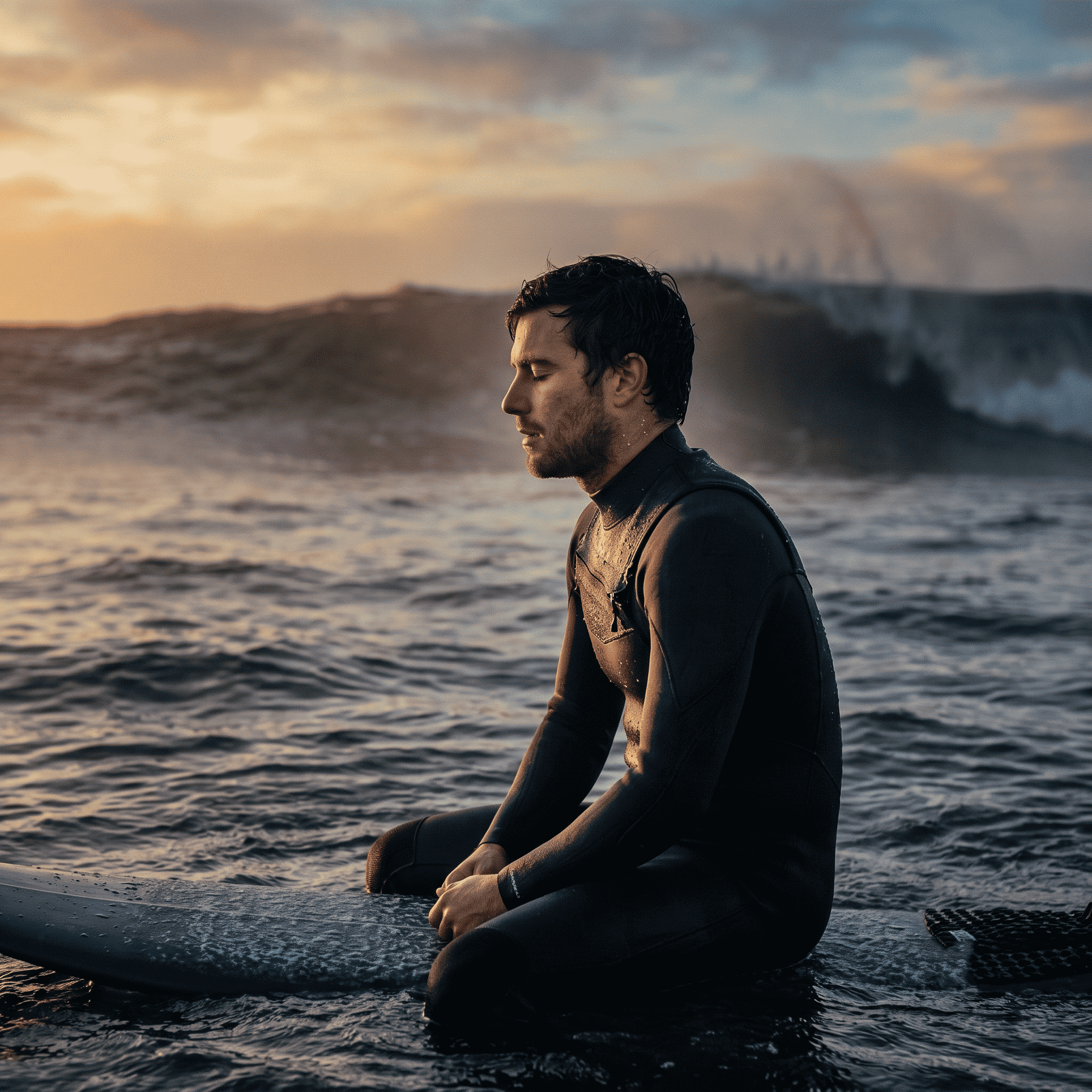
Conquering the Giants: How to Master Your Fear in Bigger Waves
There’s a moment every surfer faces, staring at the horizon, watching a set roll in, and feeling that knot tighten in the gut. That visceral, primal fear of bigger waves. I’ve felt it a thousand times, from the first overhead day on a local reef break to staring down absolute mountains at Mavericks.
The ocean is a powerful, humbling force, and acknowledging that fear isn’t weakness; it’s the first step toward respect and mastery. You’re not alone in feeling it. Every single one of us who’s chased the swell has stared into the void of a huge wall of water, wondering if we belong out there. The trick isn’t to eliminate fear entirely – that’s a fool’s errand – but to learn to dance with it, to channel that adrenaline into focus and commitment. This isn’t about bravado; it’s about preparation, presence, and a deep understanding of yourself and the ocean.
Understanding the Beast: What Makes Bigger Waves Scary?
Let’s be honest, bigger waves aren’t just physically intimidating; they mess with your head. It’s not just the sheer volume of water, the height, or the thunderous impact. It’s the whole package. The sensory overload—the roar, the churning foam, the feeling of being tiny in a vast, unpredictable arena. Psychologically, our brains are wired to perceive danger, and a monstrous wave triggers every alarm bell.
There’s the fear of the unknown: what’s underneath that lip? The fear of getting trapped, held down, or pushed deep under the surface. I remember one session at Sunset Beach where a rogue set caught me inside, and the sound of the bigger waves breaking right above me was like a freight train. It wasn’t just the physical battering; it was the momentary loss of control, the disorientation of not knowing up from down, that really stuck with me.
This is the “impact zone purgatory” that many experienced surfers talk about. You feel the current pulling you, the board getting tossed, and your lungs burning. Your depth perception gets skewed, and the wave looks twice as big from the trough as it does from the shoulder. Understanding these components—the physical threat, the sensory overload, and the psychological response—is crucial. When you can identify what specifically triggers your anxiety, you start to demystify the fear, making it a problem you can tackle, rather than an insurmountable wall. It’s about breaking down that overwhelming feeling into manageable parts. Once you name your fears, they lose some of their power over you.
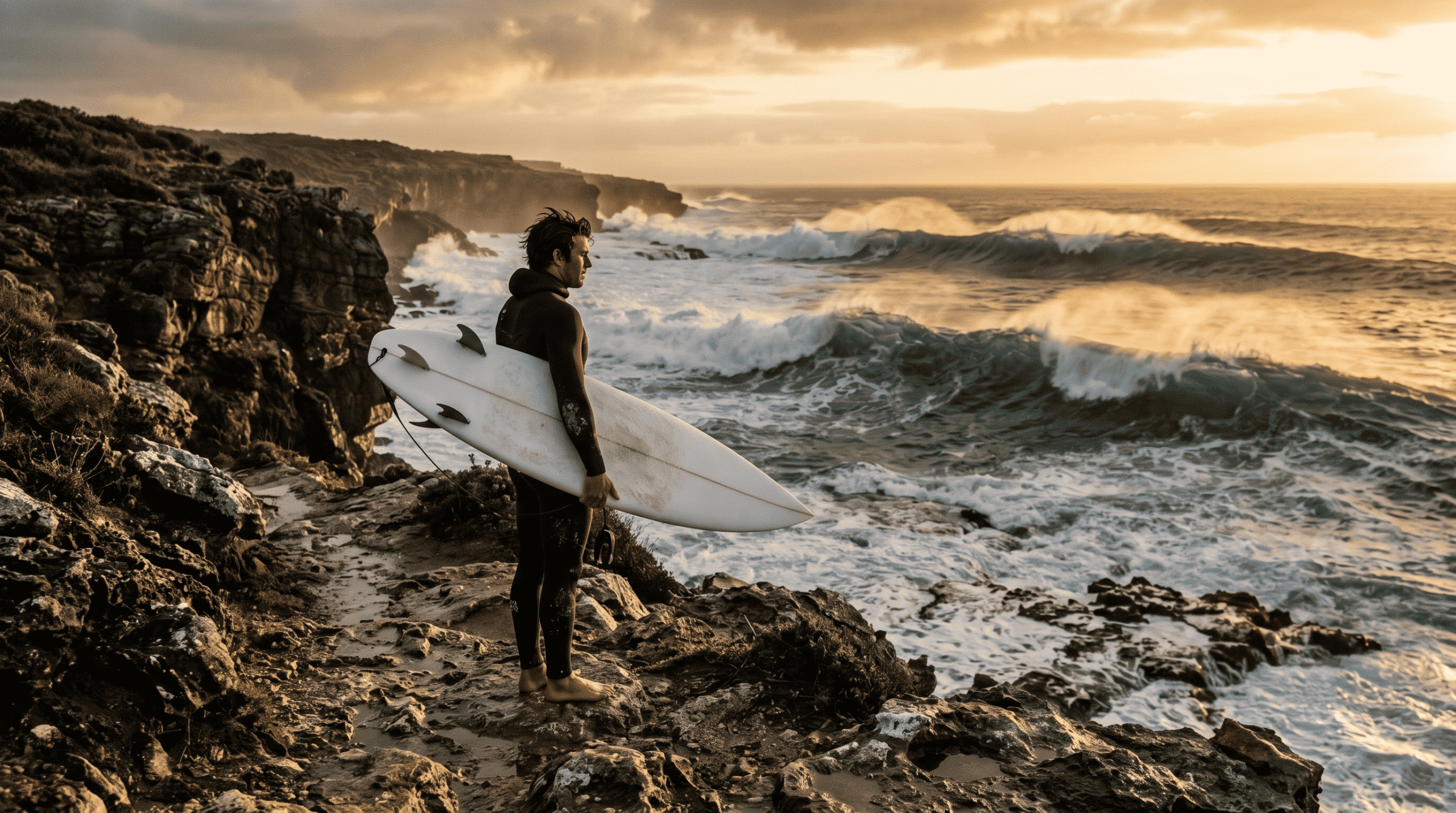
The Mental Game: Rewiring Your Brain for the Swell
The battle against bigger waves fear is won or lost long before you paddle out. It’s all in your head. The mental preparation for tackling larger surf is arguably more critical than the physical. One of the most effective techniques I’ve learned over the years is visualization. Before a big swell, I’ll close my eyes and mentally paddle out. I’ll feel the cold water, hear the bigger waves, and see myself confidently stroking into a big set wave. I visualize the duck-dive, the drop, the ride, and even a safe wipeout and recovery.
This rehearsal primes your brain for success and reduces the element of surprise. Mindfulness is another game-changer. Instead of letting your mind race with “what ifs,” focus on the present moment. Feel the sun on your skin, the rhythm of your breathing, the texture of your board wax. This anchors you and prevents anxiety from spiraling. When that huge set looms, tell yourself, “I am prepared. I am calm. I am capable.” Change the narrative from fear to focus. For me, that shift from “Oh crap, here it comes!” to “Alright, this is it, let’s go!” was monumental. It took practice, but by consistently replacing negative self-talk with empowering affirmations, you literally rewire your neural pathways.
This mental resilience, combined with solid foundational knowledge, will serve you well. As you progress in your surfing journey, mastering advanced Surf Techniques for Intermediate Surfers naturally builds the confidence needed to tackle larger swells. These techniques aren’t just about board skills; they’re about developing a deep intuitive understanding of the ocean and your place within it. Without a strong mental game, even the most physically gifted surfer will hesitate when it matters most.
| Fear Trigger (What you feel) | Mentor’s Mindset Shift (What to do) | Practical Application (How to apply) |
|---|---|---|
| Overwhelm from wave size | Focus on the current moment, not the entire set. | Break down the paddle out into small goals. Focus on each duck-dive, each stroke. |
| Panic during a hold-down | Trust your breath-hold training. Calibrate, don’t react. | Practice static apnea regularly. Inside, during a hold-down, count slowly to maintain calm. |
| Anxiety about wipeouts | Accept the inevitable; wipeouts are learning opportunities. | Visualize safe wipeouts and recoveries. Review what went wrong afterwards, without self-judgment. |
| Hesitation on the drop | Commit fully. Half-measures lead to worse outcomes. | Use positive self-talk before a wave. “Go!” “Commit!” Once you’re in, you’re in. |
| Fear of impact zone chaos | Understand ocean patterns. Find channels and safe spots. | Spend time observing before paddling out. Identify lulls and deeper channels. |
Physical Fortitude: Building Your Bigger Waves Body
You can visualize all you want, but without the physical capacity to back it up, fear will dominate. The ocean demands respect, and that means showing up prepared. Firstly, paddle strength and endurance are non-negotiable. It’s not just about getting out; it’s about getting out when you’re tired, getting out through a heavy impact zone, and having enough left in the tank to catch a wave when it comes. When preparing your gear for heavy water, using reinforced cold-water rubber from safety benchmarks like Patagonia ensures your core stays warm and flexible during long, cold hold-downs.
Focus on long-distance paddles, interval training, and consistent upper body and core work. I’ve spent countless hours swimming laps, adding fins, and even paddling prone on a foam board in a pool to build that specific muscle memory. When I neglected my paddle fitness, I felt it most acutely in bigger surf; exhaustion amplified my fear tenfold, making me prone to poor decision-making. Secondly, breath-holding is your lifeline.
This isn’t just about how long you can hold your breath, but how calmly you can do it under duress. Practice static apnea (holding your breath while still) and dynamic apnea (holding your breath while swimming) in a safe, supervised environment. Learn to relax your body and mind during a hold-down. The key is to exhale slowly before a big set and take a deep, controlled breath before going under. The calmer you are, the less oxygen your body consumes, giving you more time.
Beyond these, a strong cardiovascular system and overall flexibility are vital. Surfing bigger waves is an athletic endeavor, demanding peak physical condition. Don’t just rely on your time in the water; actively train out of it. It’s not just about survival; it’s about having the energy and focus to perform when the moment arrives.
In the Lineup: Practical Tactics for Taming the Ocean
Once you’re out there, surrounded by the moving mountains, practical tactics become your best friend. This isn’t about blind courage; it’s about intelligent wave management. First, learn to read the ocean like an open book. Identify the lulls between sets, the rip currents that can help you paddle out, and the channels where you can rest.
Sit wide if you’re not confident, observing the sets and patterns before committing to the peak. Pay attention to how the more experienced surfers are positioning themselves.
When a big set approaches, don’t just stare; take action. If you’re inside, commit to your duck-dive or turtle roll with authority. A weak duck-dive will only get you thrown around. Practice plunging deep, holding your board firm, and driving through the back of the wave. There’s a rhythm to the ocean, and learning to dance with it means understanding when to paddle hard, when to hold, and when to get out of the way. Insider tip: Watch for the “tells” of a big set—the sudden calm, the horizon darkening, or the way the current suddenly draws water off the reef. These are your early warnings.
Your leash is your lifeline; always double-check it. And never paddle out in conditions beyond your comfort zone, especially alone. There’s no shame in calling it a day if the ocean feels too heavy. I’ve turned around countless times, realizing the risk wasn’t worth it. Knowing your limits is a sign of experience, not weakness. Respect the ocean, and it will often respect you back. When you’re focused on these practical elements, the fear often recedes, replaced by concentration and the exhilaration of the challenge.
Learning from the Wipeout: Turning Fear into Feedback
Here’s the cold, hard truth: if you’re chasing bigger waves, you’re going to wipe out. It’s not a matter of if, but when. And how you respond to a wipeout profoundly impacts your fear. Instead of dreading them, learn to view wipeouts as an inevitable, essential part of the learning process. Each one is a data point, offering valuable feedback. What went wrong? Was it my positioning? My paddle? Did I hesitate on the drop? When you wipe out, the immediate goal is to stay calm. Curl into a ball to protect your head, keep your arms loose, and let the wave tumble you.
Don’t fight it. After a hold-down, focus on resurfacing quickly and taking controlled, recovery breaths. Don’t gasp; breathe deeply and deliberately to regain your composure.
For me, the scariest wipeouts were the ones where I panicked, not necessarily the longest hold-downs. It’s the loss of control compounded by fear that’s truly terrifying. After a particularly brutal wipeout, paddle back to the lineup (or in, if needed) and analyze what happened. Was the wave bigger than you thought? Did you get caught too deep? This analysis turns a scary experience into a teaching moment. Resilience isn’t about avoiding wipeouts; it’s about learning to bounce back, paddle back out, and try again, armed with new knowledge. The most profound growth in surfing often comes from overcoming these moments of intense fear and emerging stronger, more capable, and ultimately, more connected to the ocean.
FAQ: Overcoming Fear in Bigger Waves
What is the biggest mistake surfers make when facing bigger waves fear?
The biggest mistake is often paralysis by analysis or hesitation. When a big set comes, some surfers freeze or pull back at the last second, which can put them in an even more dangerous position. Commitment, even to a calculated risk, is usually safer than indecision. Another common error is neglecting physical and mental preparation, hoping courage alone will suffice.
How can I improve my breath-holding for bigger waves?
Start with static apnea drills in a pool, focusing on relaxation and slow exhalations before a big inhale. Gradually increase your time. Then progress to dynamic apnea (swimming underwater). Always practice with a buddy and never push to unconsciousness. Consistent practice builds both physical capacity and mental calm under pressure.
Is it normal to be scared of bigger waves even after years of surfing?
Absolutely. Fear is a natural, healthy response to a powerful, potentially dangerous environment. Even professional bigger waves surfers experience fear; they’ve just learned to manage it, channel it, and use it as a tool for focus and respect. The goal isn’t to eliminate fear but to develop the mental and physical tools to navigate it effectively.
When should I know it’s too big for me?
Listen to your gut. If your anxiety is overwhelming, if you’re constantly second-guessing yourself, or if you feel out of control even before paddling out, it’s probably too big. There’s no shame in watching from the beach. Knowing your limits, respecting the ocean’s power, and prioritizing safety are hallmarks of an experienced, intelligent surfer. Conditions can change rapidly, so reassess throughout your session.
What’s one “insider tip” for staying calm during a hold-down?
Focus on your exhale. Before the wave impacts, take a controlled, deep breath, then, as you’re getting tumbled, consciously try to let out a small, controlled trickle of air. This helps to release internal pressure and prevent panic. Mentally visualize the surface and tell yourself “I am safe, I will float up.” This small action can dramatically extend your comfortable breath-hold time.

