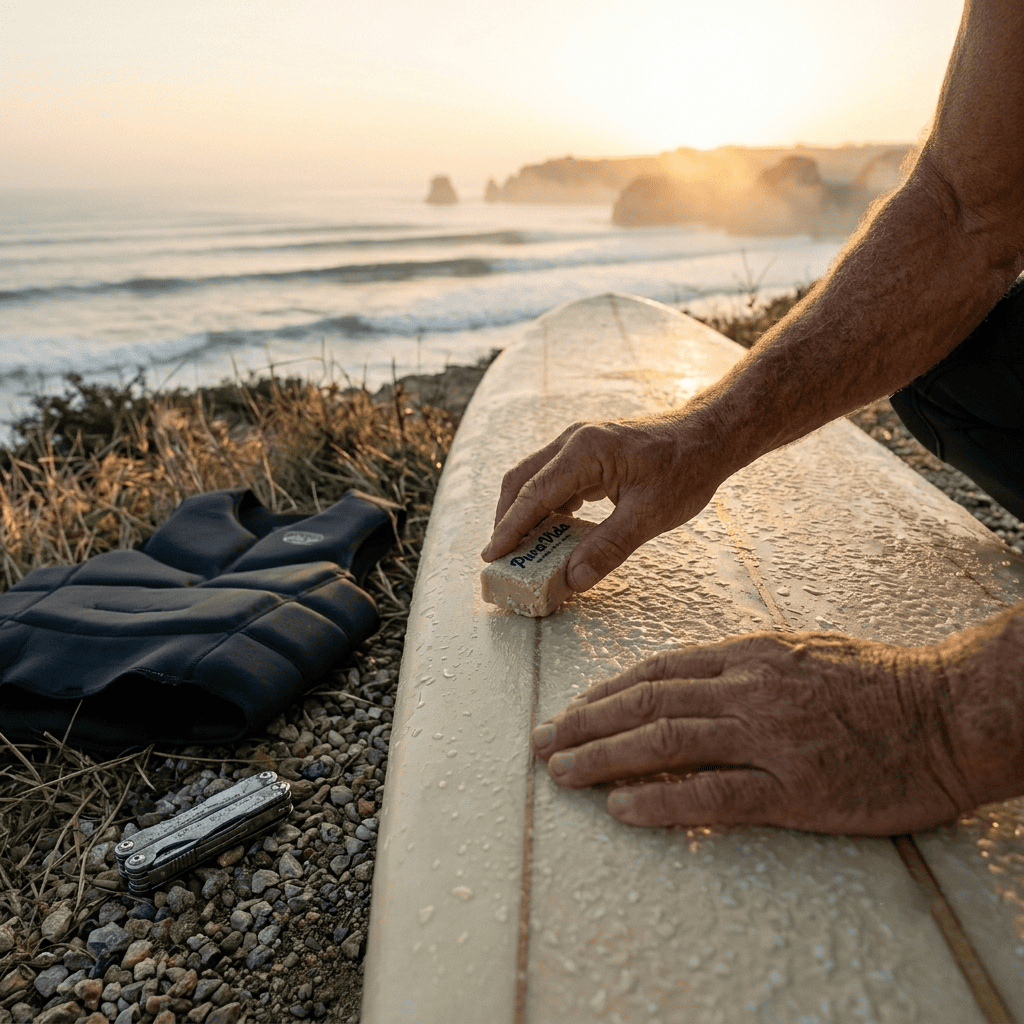

The Physics and Soul of Speed on a Wave
There is a defining moment on a wave when the frantic chaos of paddling suddenly dissolves. Your board catches the swell, the tail lifts, and for a split second, everything goes quiet before the hiss of water against fiberglass begins. In my twenty years of chasing swells from the freezing reefs of the Pacific Northwest to the boiling-hot points of Central America, I have learned one absolute truth: speed on a wave is the currency of the ocean. Without it, you are a passenger, at the mercy of the white water. With it, you become the pilot.
Generating speed on a wave is not about wild, frantic muscle movements. When I was a teenager trying to emulate the pros, I used to wiggle my board furiously, thinking that kinetic energy translated to momentum. Instead, I just bogged my rails, lost my flow, and sank into the flats. True speed on a wave generation is an elegant dialogue between gravitational potential energy and hydrodynamic lift. You are taking the energy of a moving wall of water and converting it into forward thrust by utilizing the curves of both the wave face and your surfboard.
Once you move past the survival phase of simply standing up, mastering the art of down-the-line projection becomes the foundation for more complex Surf Techniques for Intermediate Surfers. To truly command a wave, you must understand where its power lives. The top third of the wave face is a high-pressure zone where water is actively being pulled upward and forward. By positioning your board in this sweet spot—commonly known as the “pocket” or the “tight lock”—you harness gravity as you slide down, and centripetal force as you project back up. It is a continuous cycle of rising, falling, compressing, and expanding.
The Core Mechanics: How to Generate Speed on a Wave
To consistently generate speed on a wave, you need to master three fundamental physical actions: finding the high line, executing the compression-decompression cycle, and managing your rail-to-rail transitions. These are not separate steps; they are a fluid, continuous loop that should feel as natural as breathing.
1. The High Line (The Power Source)
In my early days of surfing heavier point breaks, I used to make the classic mistake of riding straight down to the bottom of the wave immediately after the pop-up. By the time I turned around to find the open face, the wave had already passed me by. To avoid this, you must set a high line early. As you take off, look down the line—never down at your feet or the nose of your board. Angle your board slightly during your entry, so your inside rail engages immediately with the top third of the wave. This preserves your initial entry speed on a wave and positions you directly in the acceleration zone.
2. The Compression and Decompression Cycle (Pumping)
Pumping is essentially weight-shifting. Think of it like riding a halfpipe on a skateboard or pushing a swing. When you reach the top of the wave, you are at your peak potential energy. As you turn down into the trough, you want to compress your body. Bend your knees, drop your center of gravity, and load your weight over your front foot. This is the “compression” phase, where you push your board down the face, cutting through the water. As you reach the bottom and prepare to climb back up, you decompress.
Extend your body, lighten your weight on the board, and let the buoyant force of your surfboard push you back up the wave face. This constant loading and unloading of your weight is what creates drive.
3. Rail-to-Rail Transitions (Weaving, Not Wiggling)
Your surfboard has two rails, and they act like the edges of snow skis. If you ride flat on the bottom of your board, you create massive surface friction, which slows you down. To generate speed on a wave, you must constantly transition from your inside (inside-rail) edge to your outside (outside-rail) edge. This is a subtle rolling motion of your ankles and hips. By keeping your board on a slight edge, you slice through the water rather than pushing against it. When you feel the hum of your board vibrating beneath your feet, that is the sound of clean water flow along your engaged rail.
Compression vs. Wiggling: The Common Pitfalls
The biggest barrier to generating real speed on a wave is the “wiggling” trap. When surfers feel themselves slowing down, their instinct is to shake their upper body and swing the nose of the board back and forth. This actually acts as a brake, forcing the flat bottom of the board to push water. True speed comes from vertical compression using your lower body as a shock absorber and spring.
| Action Metric | Frantic “Wiggling” (Ineffective) | Functional Compression (Effective) |
|---|---|---|
| Primary Power Source | Upper body flailing and hip shaking. | Lower body flexion, extension, and gravity. |
| Board Position | Flat in the flats (trough of the wave). | Engaged on the rail, high in the pocket. |
| Weight Distribution | Back-foot heavy, pushing tail down. | Front-foot heavy on drop, light on rise. |
| Water Displaced | Spilling water off the nose (plowing). | Clean spray exiting behind the fins. |
| Result | Loss of momentum, bogged rails, sinking. | Explosive down-the-line projection. |
Advanced Speed Generation Secrets
When you have spent enough time in the lineup, you start to perceive the subtle nuances that manuals skip over. Speed on a wave is not just about what your feet are doing; it is about how your equipment interacts with the shifting texture of the water. Over the years, I have gathered a few unconventional, highly effective secrets that will change how you approach speed.
First, let’s talk about your feet. Most intermediate surfers glue their feet to one spot on the traction pad. But a surfboard is a dynamic planing surface. If you are trying to outrun a fast-closing section, you need to step forward. Even a micro-adjustment—shifting your back foot just three inches forward of the fin cluster—flattens the rocker of your board, reducing drag instantly. Conversely, when you need to pivot off the bottom to climb back up, slide that back foot right over the kick-tail of your pad to release the nose. Your board should feel alive under your feet, not like a static platform.
Second, pay attention to your fin setups. I remember testing a classic thruster (three-fin) setup back-to-back with a quad (four-fin) setup on a fast, point-break day in Southern California. The thruster felt solid but had a drag point in the center of the tail. When I switched to the quad, it was like someone turned on an outboard motor. Because quads lack a center fin, water channels cleanly through the middle of your board’s tail-exit, drastically reducing drag and offering unmatched lateral drive on high-line trims. Swapping out standard templates for high-performance fin configurations from industry benchmarks like FCS can make an incredible difference if you struggle to generate speed on a wave on soft or fast-running waves
Step-by-Step Training Protocol on the Wave Face
The next time you paddle out and smell the fresh wax on your deck, do not just try to ride the wave. Go out with a dedicated plan of action. Here is a three-step protocol that I teach to surfers looking to build intuitive speed on a wave mechanics.
Phase 1: The High-Line Entry
As you paddle into the swell, do not aim straight for the beach. Angle your board toward the shoulder of the wave at roughly a 30-degree angle. As your tail lifts, pop up with your chest facing down the line. Immediately lock your eyes on the high-line section of the wave—about ten feet ahead of you. Lean your chest slightly forward to engage your inside rail into the upper third of the face. You should feel an immediate surge of gravity-fed acceleration.
Phase 2: The Deep Compress and Release
Once you have established your high line and felt that initial burst of speed on a wave, let gravity draw you down toward the middle of the wave. As you descend, sink your hips, bend your knees deeply, and keep your hands low and wide for stability. Your front foot should bear about 60% of your weight. Just before you hit the very bottom of the wave, look back up toward the crest. Decompress your body, extending your legs like a spring releasing. This removes pressure from your board, allowing the natural buoyancy of the foam to shoot you back up the face.
Phase 3: The Projection Phase
As your board climbs back to the top of the wave, do not let your momentum stall. Just as the nose of your board reaches the high-pressure zone near the lip, shift your weight back onto your front foot and compress your body once again. Push your board down and across the wave face. This “unloading” at the peak projects you forward like a stone skipping across a pond. Repeat this cycle of compression and decompression twice on every wave, and you will quickly realize how much faster you can travel.
Frequently Asked Questions
Why am I losing speed on a wave when I try to pump my board?
In my experience, this is almost always caused by over-steering or pushing too hard on your back foot. When you press heavily on your back foot, the tail of your board digs deep into the water, creating massive drag. Focus on shifting your weight forward (onto your front leg) when you want to accelerate down the wave, and only use your back foot as a pivot point when you are changing direction.
Does board design affect how easy it is to generate speed on a wave?
Absolutely. Surfboards with flatter rockers (the curve from nose to tail), wider outlines, and concaves on the bottom naturally generate speed on a wave much easier because they plane on top of the water. If you ride a highly rockered, narrow shortboard designed for hollow waves, you have to work much harder to generate speed on weak or slow-moving wave faces.
How do I generate speed on a wave on mushy, weak waves?
On soft, mushy waves, the pocket has very little power. To keep moving, you must rely on lateral rail transitions and keep your board flat on its planing surface as much as possible. Avoid deep bottom turns. Instead, keep your board high on the wave face and use gentle, rhythmic, rail-to-rail weaving to skate over the fat sections of the wave.