Crossing the Great Divide: From Passenger to Pilot
There is a specific, humbling moment in every surfer’s journey when the initial thrill of simply standing up begins to fade, replaced by a deep, almost painful craving for real control. You know the feeling. You are sitting on the tailgate of your truck, the smell of melted paraffin wax and salty neoprene hanging heavy in the air, watching the sunset lines roll in. You can catch waves, and you can ride them straight, but you still feel like a passenger on your own board.
When I was stuck in this exact purgatory years ago at a sweeping right-hand point break in Mexico, I realized I was fighting the ocean instead of dancing with it. Moving from an intermediate level to an advanced one isn’t about strength; it is about shifting your relationship with the energy beneath your feet.
The transition requires a conscious evolution of your surf technique, turning raw survival instincts into refined, deliberate movements. As a beginner, your goal was simply to stay dry. As an intermediate surfer, your goal is to command the wave’s face. To do this, you must learn to read the canvas of the wave in real-time, anticipate its changes, and utilize your board’s rails to generate speed rather than relying on the wave to push you. Let’s break down the technical transformations that will unlock the entire wave face for you, turning frantic wiggles into flowing, powerful lines.
Mastering the Intermediate Surf Techniques Toolkit
Dynamic Speed Generation: The Art of the Pump
The most common mistake I see intermediate surfers make in the lineup is what I call “the wiggle.” They stand stiffly on the middle of their board, frantically shaking their hips side-to-side, hoping to generate speed. In reality, this wiggling actually creates drag and slows you down. Real speed generation—pumping—is a beautiful, rhythmic process of compression and decompression. It is identical to the feeling of pumping your legs on a playground swing to go higher.
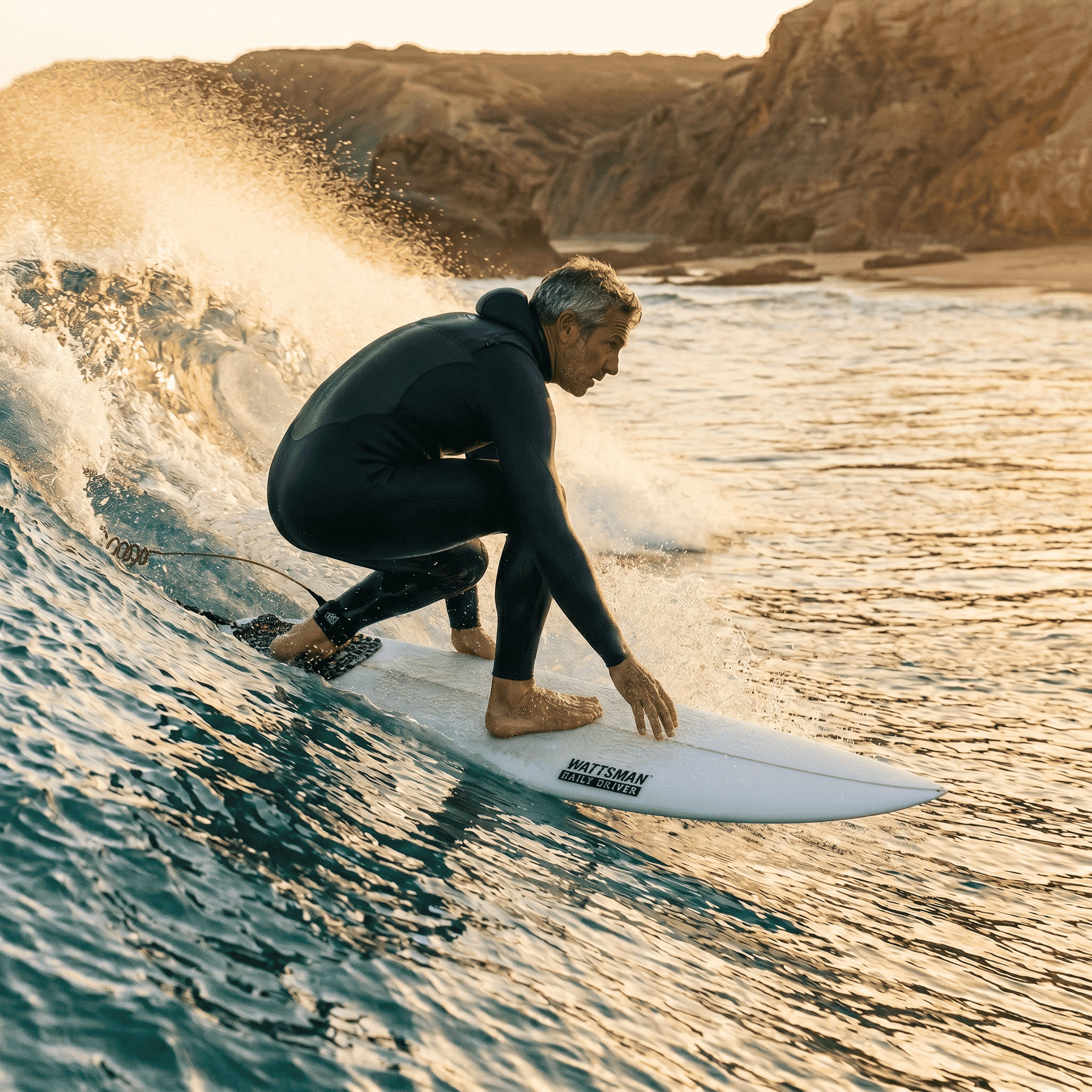
When I tested different surfboard volumes to find the sweet spot for speed generation, I realized that true projection comes from the upper half of the wave. To pump effectively, you must target the “high line” (the top third of the wave face). When you take off, immediately look up towards the crest. Drive your knees up toward your chest (compression) to unweight your board as you climb the wave face.
Once you reach the high line, extend your legs (decompression) to push your weight back down into the board, driving down the slope of the wave. This rail-to-rail transition utilizes gravity and centrifugal force to create blinding speed. Keep your arms quiet; your shoulders should guide your hips, and your hips should drive the energy down through your feet into your fins.
The Bottom Turn: The Foundation of Every Major Maneuver
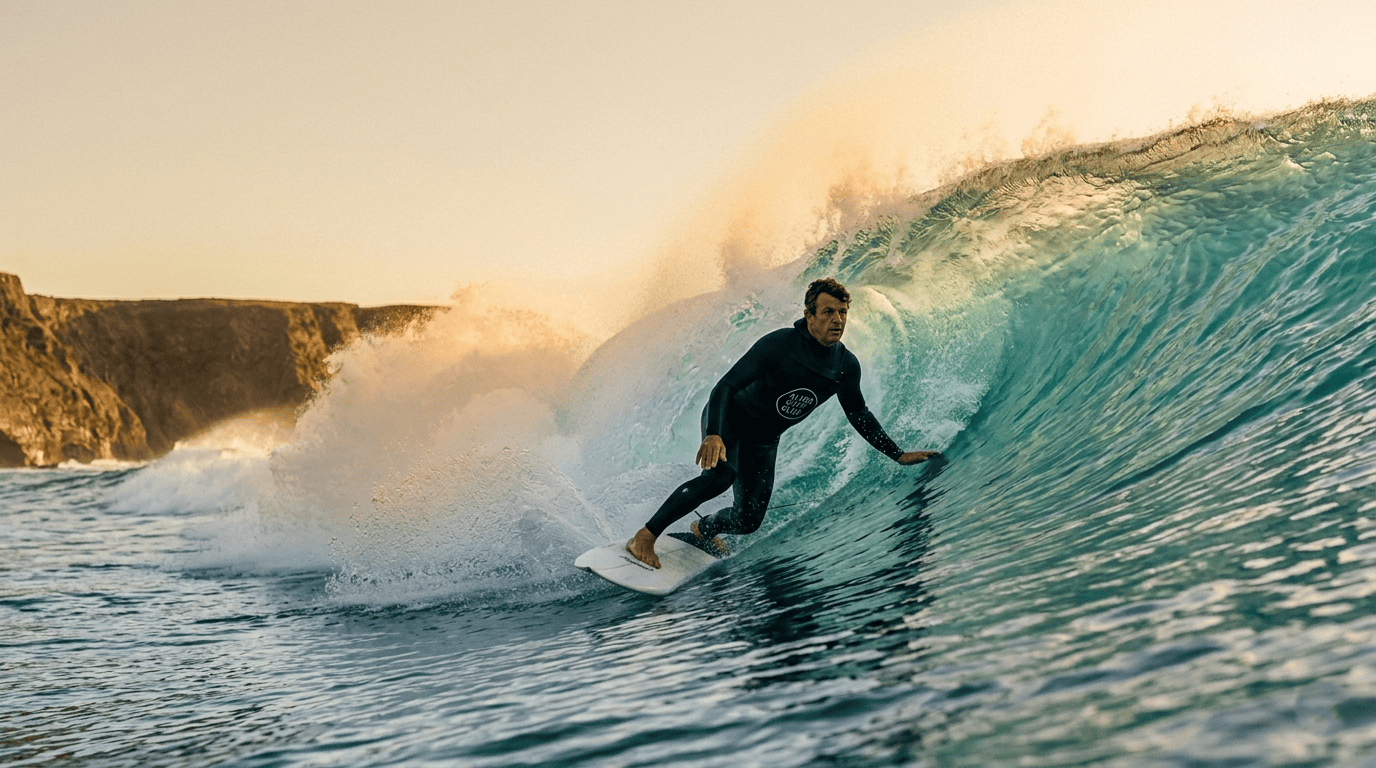
If speed is your fuel, the bottom turn is your steering wheel. Without a clean, functional bottom turn, advanced maneuvers like cutbacks, snaps, and re-entries are physically impossible. When I was fine-tuning my bottom turns on heavy, fat-faced waves in Hawaii, I learned that a common error is initiating the turn too early or too flat. If you turn on the flat bottom of the wave, you lose all your speed and “bog” your rails.
To execute a proper bottom turn, you must compress your body low over your board as you descend to the bottom of the wave. Wait until you reach the transition zone—where the flat water meets the sloping face. Initiate the turn by dropping your inside shoulder and leaning your body into the wave, transferring your weight onto your inside rail. For a forehand bottom turn, push through your toes; for a backhand turn, sit back into your heels.
Crucially, your eyes must look up at the lip where you want to go. Your board will naturally follow your line of sight. Maintain this deep lean until your board is pointing back up the wave face, then gradually decompress your body to release that stored kinetic energy into your next turn.
The Cutback: Returning to the Source
It is incredibly tempting to ride a wave as far down the line as possible, but as the wave shoulder flattens out, you find yourself bogging down in dead water. This is where the cutback comes in. The cutback is a functional maneuver designed to bring you back to the power source of the wave—the pocket or the “curl.” It is the ultimate test of an intermediate surfer’s flow and rail control.
The secret to a smooth cutback lies in the transition of your weight and your visual target. When you feel the wave shoulder losing steepness, look back toward the breaking white water. This head movement is the trigger. Start by shifting your weight from your inside rail to your outside rail. Open up your chest and shoulders toward the pocket. As your board begins to sweep back around in a wide arc, keep your knees bent and your center of gravity low.
The turn should be a continuous, flowing sweep, not a sharp, jerky pivot. As you approach the oncoming white water, prepare to compress your body to absorb the impact, then use the energy of the foam to redirect your board back down the line.
Advanced Wave Reading and Oceanography for the Advancing Surfer
Positioning and the “Lineup Chess Game”
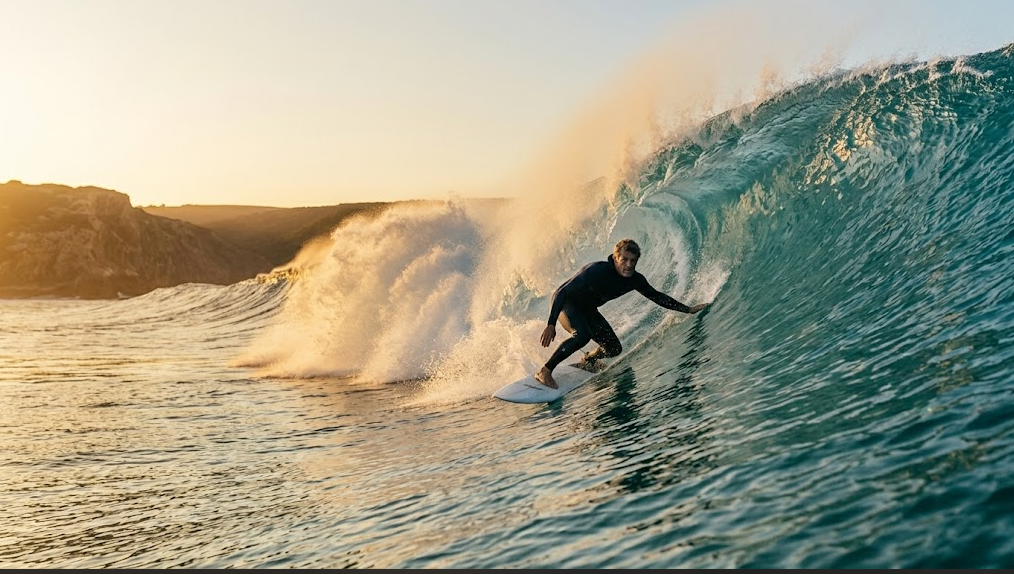
To catch the best waves of your life, you have to stop chasing every lump of water that rises on the horizon. Intermediate surfers often spend far too much energy paddling in circles. You must learn to read the ocean like a map. When sitting in the lineup, do not just stare out at the sea; look at the coast, the reef, or the sandbanks beneath you to find your reference points. Watch where the waves are consistently peaking and breaking. This is the “takeoff zone.”
In my case, I always look for the “crotch” of the wave—the exact spot where the horizontal line of the swell begins to bend and form an angle. This is where the wave will peak first. Position yourself just inside of this peak. If you are too far outside, you will glide over the back of the wave; if you are too far inside, you will get caught inside and “creamed” by the set. When a set approaches, do not panic-paddle. Take three deep breaths, align your board with the angle of the swell, and match your paddling speed to the speed of the wave before you even think about standing up.
Duck Diving with Authority
Nothing saps your energy faster than getting hammered by a wall of white water because you cannot get under it. The duck dive is the gatekeeper skill that separates intermediate surfers from advanced watermen. If you are still doing the “push-up” method on a shortboard, you are wasting precious energy.
To duck dive with authority, you need momentum. Paddle hard toward the oncoming wave; speed is your friend here. When the wave is about six feet away, grab your rails near your chest and push your board down into the water, using your body weight to submerge the nose. As the nose goes under, use your foot or knee (I highly recommend using your foot for maximum leverage) to push the tail of the board down.
The goal is to get your entire body and board parallel to the seafloor, beneath the turbulent energy of the wave. Once the wave passes over your back, look up and pull the nose of your board upward, letting your natural buoyancy pop you out behind the wave like a cork.
Comparative Surf Techniques Analysis: Beginner vs. Intermediate Execution
To help visualize these technical shifts, let’s compare how a beginner approaches these situations versus how an intermediate surfer executes them with control.
| Scenario / Skill | Beginner Approach (The Passive Rider) | Intermediate Approach (The Active Pilot) |
|---|---|---|
| Stance & Posture | Stiff, upright, “poo-stance” with feet too close together; looking down at the nose of the board. | Low, compressed athletic stance; hips aligned with rails; head up, scanning the wave ahead. |
| Speed Generation | Wiggling hips or waiting passively for the wave’s white water to push them forward. | Active compression and decompression, utilizing high-line to low-line gravity projection. |
| Turning Style | Pivoting from the tail by throwing weight onto the back foot, causing the board to stall. | Engaging the full rail of the board, leaning into turns, and using the upper body to lead. |
| Lineup Etiquette & Awareness | Paddling for every wave regardless of positioning; unaware of priority or drop-ins. | Calculating peak positioning, tracking sets, and respecting the lineup rotation and priority. |
Frequently Asked Questions
How do I know if I am ready to drop down to a smaller surfboard?
Do not rush this transition. You are ready to ride a smaller board only when you can consistently catch waves of all sizes, trim down the line in both directions (left and right), generate your own speed, and complete clean bottom turns and cutbacks on your current board. If you transition too early, your wave count will plummet, and your progression will stall.
Why do I keep pearling (nose-diving) when taking off on steeper waves?
Pearling is rarely a result of the board being too small; it is usually a result of poor positioning and paddling. You are likely paddling too late, causing the wave to pick up the tail of your board before you have enough forward momentum. Ensure you are paddling with your chest high to keep the weight off the nose, and make sure your board is angled slightly down the line rather than straight toward the beach on steep takeoffs.
How can I improve my rail-to-rail transitions on flatter waves?
To keep your speed on fat or mushy sections, you need to compress your body and keep your center of gravity low. Focus on shifting your heel-and-toe pressure while keeping your upper body relatively quiet. Think of it like carving on a skateboard; use your ankles and knees to gently rock the board from rail to rail, keeping the board moving and preventing the flat bottom from dragging on the water.
What is the best land-based training for intermediate surfing?
What is the best land-based training for intermediate surfing? Surfskating is by far the most effective land-based tool for intermediate surfers. Training on dedicated, highly responsive trainers from industry leaders like YOW Surf allows you to practice the exact muscle memory required for compression, decompression, and shoulder rotation during bottom turns and cutbacks without waiting for the next swell. Additionally, yoga and functional core training will significantly improve your balance, hip flexibility, and rotational power in the water.