When you first start surfing, it is easy to look at wetsuits as just a style choice or a minor detail. I used to think that if I could just tolerate the cold for a few minutes, my body would adjust and that would be enough.
The ocean corrected that thinking pretty quickly. What you wear surfing isn’t about style—it is about survival, energy preservation, and performance.
If you wear the wrong gear, every paddle becomes a miserable struggle. After years of trial and error, freezing feet, and brutal rashes, here is the absolute truth about what to wear surfing in different water temperatures.
The Golden Rule: Air Temperature Means Absolutely Nothing
I made this classic rookie mistake early on. It was a beautiful, sunny, windless day, so I convinced myself it wouldn’t be “that bad” and paddled out in just boardshorts.
Ten minutes in, my legs were entirely numb. Twenty minutes in, I could barely feel my feet pressing against the deck of my board. My paddling felt weak, slow, and totally disconnected. I had to get out of the water early, shivering uncontrollably and incredibly frustrated.
That day taught me the most important rule of surf gear: Air temperature means nothing. Water temperature is everything. Cold water drains your energy incredibly fast, and once your core temperature drops, your session is basically over. You dress for the water, not the weather.
The Surfer’s Temperature Guide (Thickness Explained)
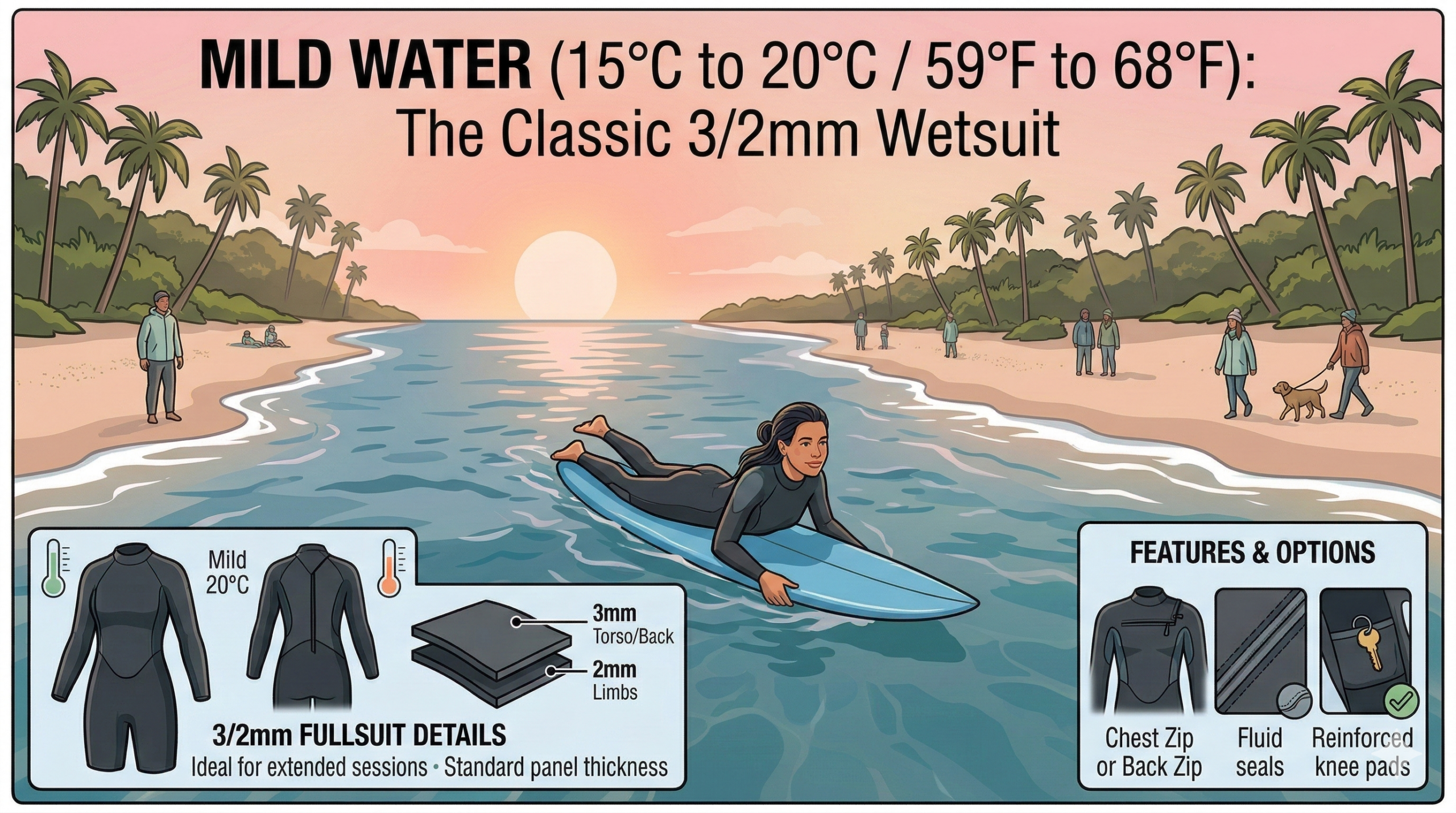
Neoprene thickness isn’t random; it is highly strategic. Wetsuits are measured in millimeters (e.g., 3/2mm means 3mm of neoprene on the chest/back for core warmth, and 2mm on the arms/legs for flexibility)
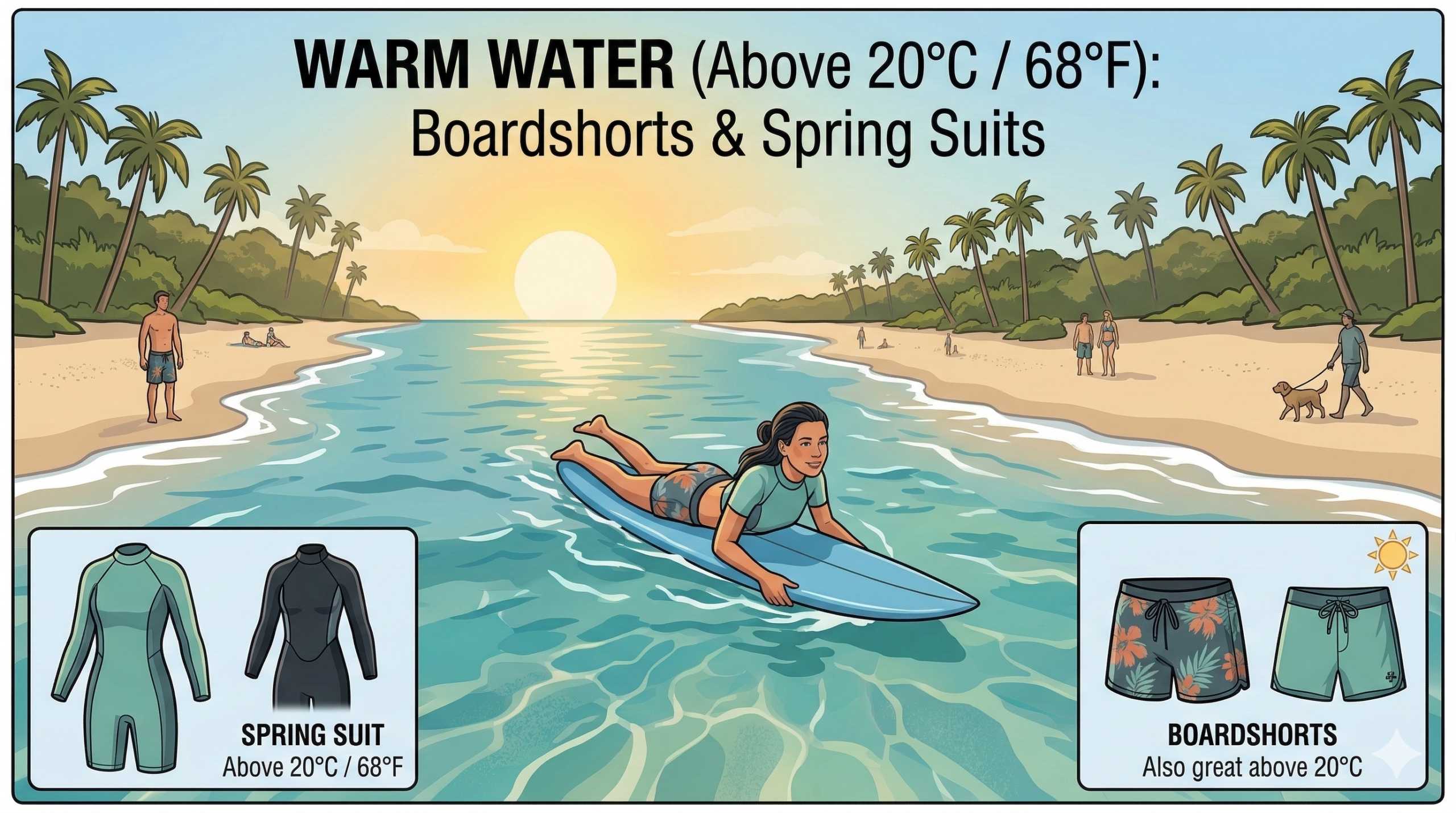
Warm Water (Above 20°C / 68°F): Boardshorts & Spring Suits
If you are surfing in tropical water, you don’t need thick neoprene. Boardshorts (or a bikini/swimsuit) paired with a UPF rash guard to protect your skin from the sun and the wax on your board is perfect. If the water has a slight chill or the wind is blowing, a 2mm “spring suit” (short arms and short legs) will keep your core warm without restricting your movement.
Mild Water (15°C to 20°C / 59°F to 68°F): The Classic 3/2mm Wetsuit
This is the most versatile wetsuit in the world. A full-length 3/2mm suit provides the perfect balance. It gives you enough core warmth to stay in the water for hours, but the 2mm arms still allow you to paddle freely without exhausting your shoulders.
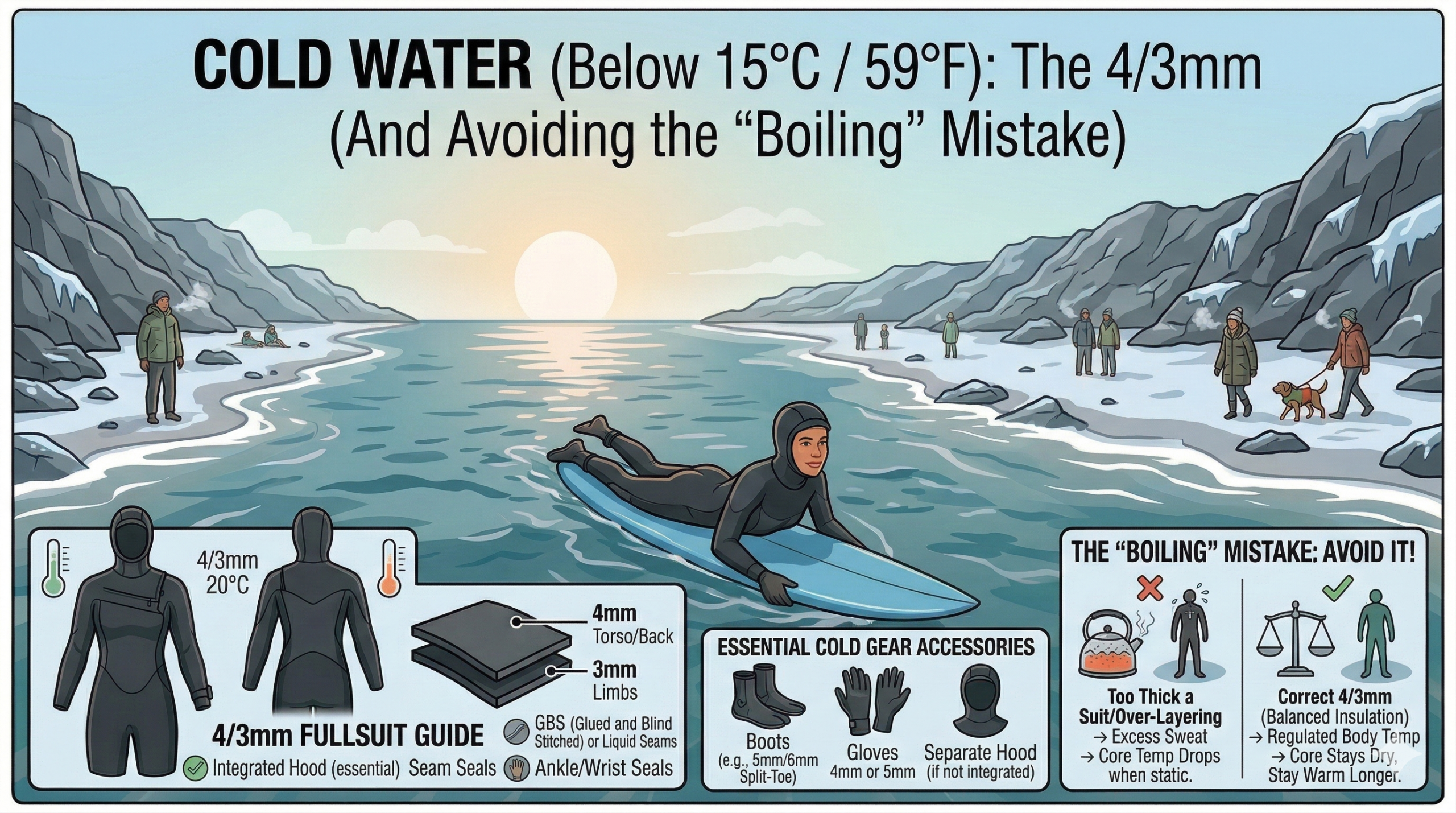
Cold Water (Below 15°C / 59°F): The 4/3mm (And Avoiding the “Boiling” Mistake)
When the water gets cold, you need a 4/3mm suit, and occasionally neoprene booties and a hood. However, you must be careful not to overdo it.
I once wore a thick winter suit on a warm spring day because I wrongly assumed the water was still freezing. Within fifteen minutes, I felt like I was cooking inside a rubber prison. I was overheating, sweating profusely, and I became exhausted way too quickly. Thick neoprene is a lifesaver when you need it, but when you don’t, it becomes a massive liability. Surfing demands a lot of energy; if your body is overheating, your performance drops to zero.
The Cheap Wetsuit Trap: Why Fit is Everything
At one point, I decided to buy a cheap wetsuit simply because it was on sale and I didn’t want to spend the money on a premium one. It was a terrible decision.
Because it didn’t fit properly, it flushed with freezing cold water every time I duck dived under a wave. The cheap neoprene was stiff in the shoulders, making it incredibly hard to paddle, and worst of all, it gave me a brutal, stinging rash around my neck and under my arms. I spent the whole session focused on my discomfort instead of the waves.
That taught me that fit matters way more than the brand. A good wetsuit should feel like a second skin—snug, but not restrictive, with no big air gaps and no excess folds. Quality neoprene is not something you cut corners on.
You Have the Gear, Now Get the Skills
The right gear doesn’t just keep you comfortable. It extends your session, protects your skin, preserves your energy, and lets you actually focus on reading waves and improving your technique.
Once you have the right suit and you are ready to stay in the water for hours, you need to make sure your fundamental skills are sharp enough to make use of that time.
Before you paddle out, head over to our Ultimate Guide to Surfing for Beginners: How to Start and Not Give Up. It covers all the essential techniques—from the perfect pop-up to reading the lineup—so that once you are warm and comfortable, you can actually start catching waves.
Frequently Asked Questions About Surf Gear
What does 3/2mm or 4/3mm mean on a wetsuit?
These numbers refer to the thickness of the neoprene in millimeters. The first number (e.g., the “3” in 3/2) is the thickness around your chest and back to keep your vital organs warm. The second number (the “2”) is the thickness on your arms and legs, which is slightly thinner to allow for flexibility while paddling.
Should my wetsuit feel tight when I try it on dry?
Yes. A wetsuit should feel very snug—almost uncomfortably tight—when you try it on in a store. Neoprene loosens up and expands slightly once it gets wet. If a wetsuit feels loose or has folds of extra material when it is dry, it will fill with cold water in the ocean and drag you down.
How do I stop my wetsuit from giving me a neck rash?
Neck rashes usually happen when a wetsuit doesn’t fit correctly or when salt crystals get trapped between the rubber and your skin. To prevent it, ensure your suit is a snug fit, and apply a specialized anti-chafe balm (or even plain petroleum jelly) around your neck before you paddle out.