Understanding different surfboard types is something that only really clicks once you’ve spent actual time riding them. When you first start, a board is just a board. You just want something that floats. But after a few years in the water, you realize that each shape completely changes how you move on a wave.
Before we dive into the specific shapes, if you haven’t yet figured out your baseline volume or you are still riding your very first foamie, make sure you read our foundational guide on How to Choose the Right Surfboard (And Avoid Wasting Your Money)
If you are ready to start building your quiver, you need to know that there is no “best” surfboard. Every board has its own personality, and the secret to progressing is matching that personality to the ocean’s conditions. Here is what transitioning between these boards actually feels like.
Longboards: The Art of the Glide (Steering the School Bus)
I remember the first time I jumped on a classic longboard (typically 9 feet or longer) after spending time on smaller boards. It honestly felt like I was trying to steer a school bus. The thing was absolutely huge compared to what I was used to.
My first instinct was to force a turn the way I would on a smaller board, leaning hard on my toes. That didn’t work at all; the board just kept going straight. Turning a longboard requires way more patience and specific footwork. You have to physically step back toward the tail to pivot, and then trim forward to generate speed.
Once I relaxed and stopped fighting it, it suddenly made sense. Longboards aren’t about quick, sharp, aggressive moves. They are about flow, glide, and drawing smooth, drawn-out lines across the wave. When you understand that rhythm, riding a longboard feels almost effortless.
Fish Surfboards: Speed Hacks for Mushy Waves
There will be days when the ocean is weak, mushy, and kind of boring. That is exactly when you need a Fish.
The first time I tried a Fish board was on one of those slow days. Someone handed it to me, I paddled into a wave, and I instantly felt this incredible burst of speed I wasn’t used to. Because Fish boards are wider, thicker, and have a unique swallowtail design, they carry momentum incredibly well in softer waves. Suddenly, I was flying across sections that would normally leave me bogged down.
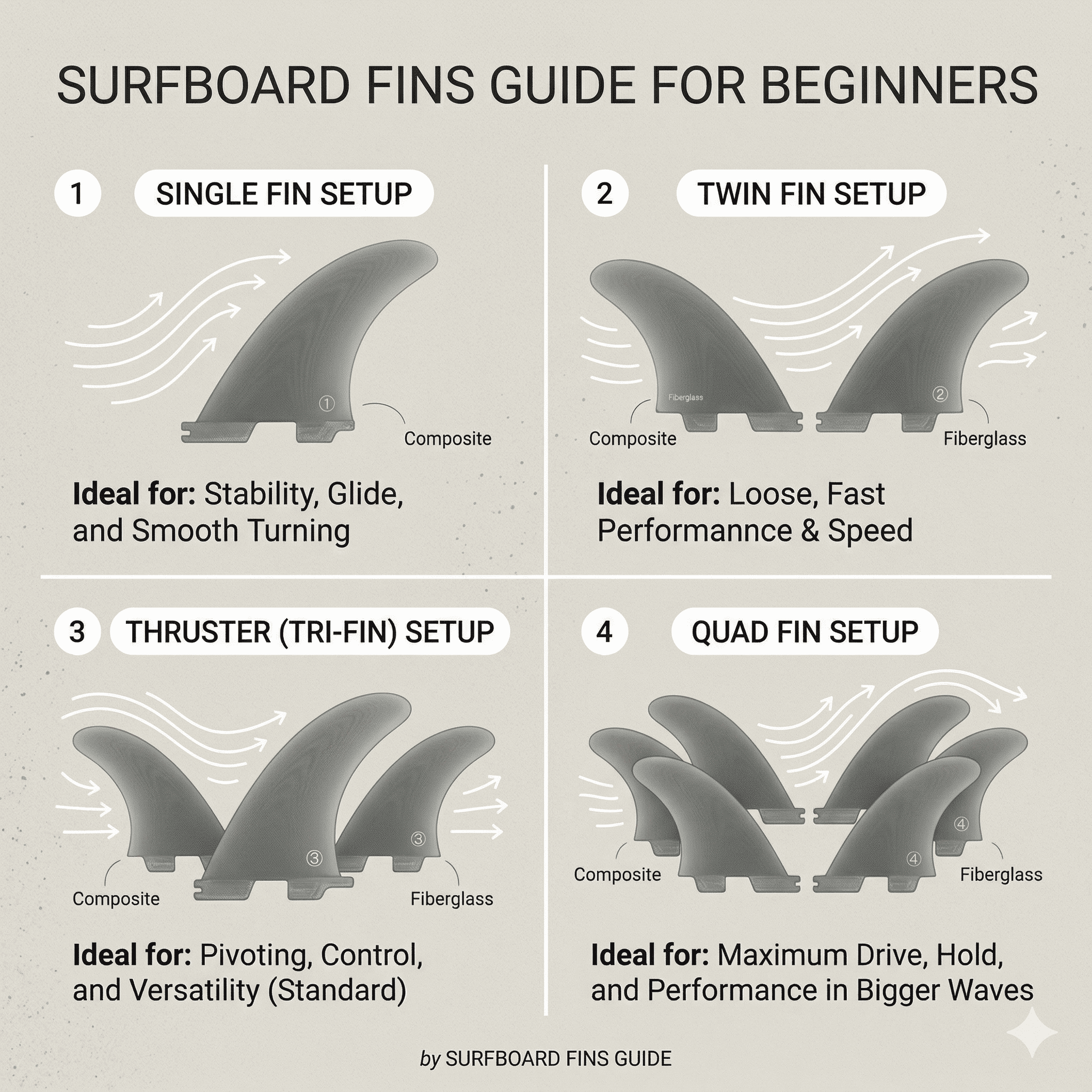
But that speed came with a harsh lesson. I pushed a turn too hard without really knowing how to control the board, and the twin fins just released. The board spun out from under me, and I wiped out instantly. Fish boards are fast, loose, and incredibly fun, but because they often lack a center fin, they require excellent rail control and precise weight distribution to keep from sliding out.
Shortboards: The High-Performance Sports Car
The transition from a big board to a shortboard is the most brutal, challenging shift a surfer will go through. On a bigger board, everything feels forgiving. You catch waves early, you have stability, and you can make small mistakes without immediately falling.
The first time I seriously rode a shortboard, it felt like my safety net was gone. Paddling was exhausting, my positioning had to be flawless, and if my timing was even slightly off, the wave passed right under me. At first, it was incredibly frustrating because it felt like I had suddenly become a worse surfer.
But over time, once I started catching waves consistently, the responsiveness was mind-blowing. The board reacted instantly to the smallest shifts in my weight. Turns became quicker, vertical, and dynamic. It felt like the difference between driving a big, comfortable van and suddenly jumping into a highly tuned sports car. It is completely unforgiving, but far more reactive and rewarding when you get it right.
Quick Comparison: Shortboard vs Longboard vs Fish
| Feature | Longboard (9’+) | Fish (5’2″ – 6’0″) | Shortboard (5’4″ – 6’6″) |
| Best Wave Type | Small, rolling, gentle waves (1-3 ft) | Mushy, weak, or average waves (2-4 ft) | Steep, powerful, fast waves (3-6 ft+) |
| The Feel | Gliding, smooth, driving a school bus | Fast, loose, skatelike speed | Highly reactive, sharp sports car |
| Paddling Effort | Effortless (catches anything) | Easy (lots of volume under the chest) | Hard (requires precise positioning) |
| The Drawback | Heavy to carry; very difficult to duck dive | Can spin out easily if pushed too hard | Zero margin for error; sinks easily |
The Perfect Quiver Takes Time
None of these boards are inherently better or worse than the others—they just unlock different ways of interacting with the wave.
As a beginner, you want the glide of a bigger board. As you progress, you might want the speed of a Fish for average days, and a Shortboard for when the waves are pumping. The more boards you ride over time, the more you will understand how each shape changes the way you surf. Don’t rush the process, and never buy a board for the conditions you wish you had—buy it for the conditions you actually surf in every day.
Frequently Asked Questions
Can a beginner start on a Fish surfboard?
It is not recommended. While Fish boards have more volume than a standard shortboard, they are still very short and lack the stability a beginner needs to master their pop-up. Beginners should start on an 8-foot or 9-foot foam longboard and transition to a Fish only after they can consistently catch unbroken waves and turn both left and right.
Why do Fish surfboards have a split tail (swallowtail)?
The swallowtail design gives the board two distinct “pins” at the back. When you lean into a turn, one pin digs deep into the water, giving you bite and control, while the wide gap in the middle allows water to flow through freely, creating massive amounts of speed in weak waves.
Do I really need to learn how to ride a longboard?
You don’t *have* to, but learning to ride a longboard makes you a substantially better all-around surfer. It teaches you about wave positioning, smooth rail-to-rail transitions, and flow. Many surfers who only ride shortboards struggle on small days, whereas surfers who can ride both simply switch boards and have fun no matter the conditions.