I don’t care where you surf, who you are, or how fit you are, when you start surfing, you are going to make the exact same mistakes everyone else does.
Looking back now, it’s almost funny, but at the time, it was frustrating as hell. You see other people gliding effortlessly across the water, while you feel like you are fighting a losing battle against the ocean.
If you are currently struggling, feeling exhausted, or catching zero waves, you are probably making one of these three classic errors. Here are the biggest surfing mistakes beginners make, the painful lessons they taught me, and exactly how to fix them.
Mistake N°1: The “Cool Board” Ego Trap
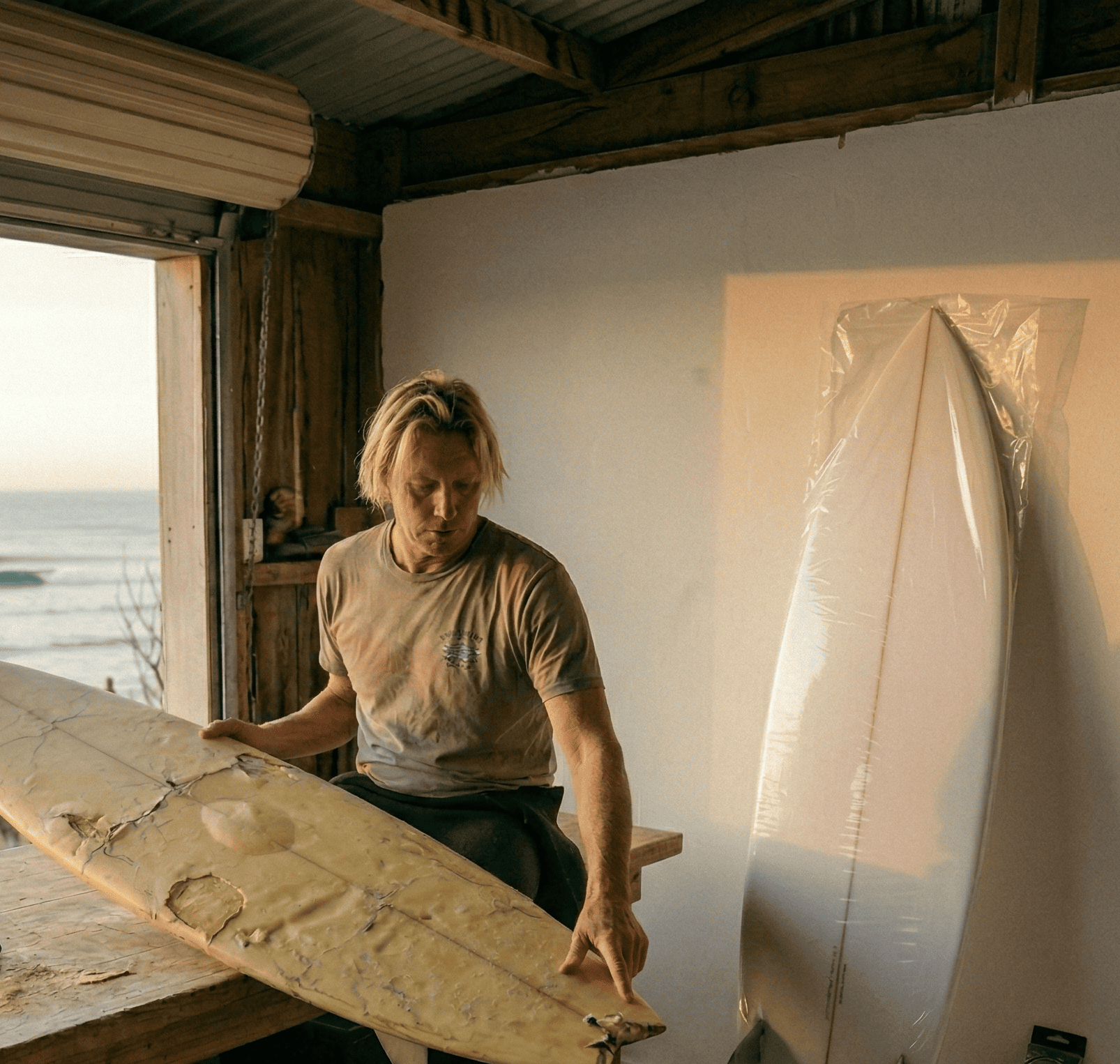
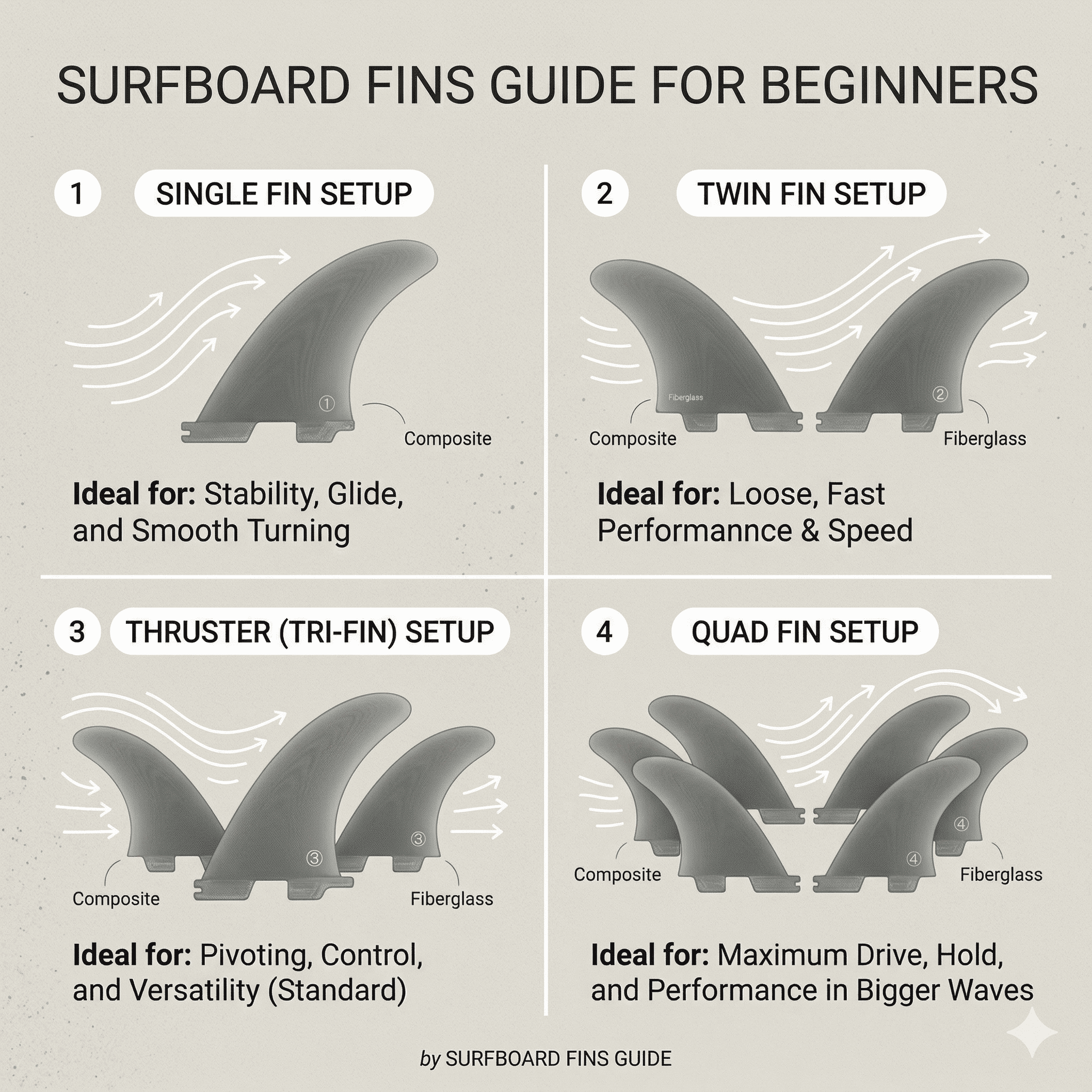
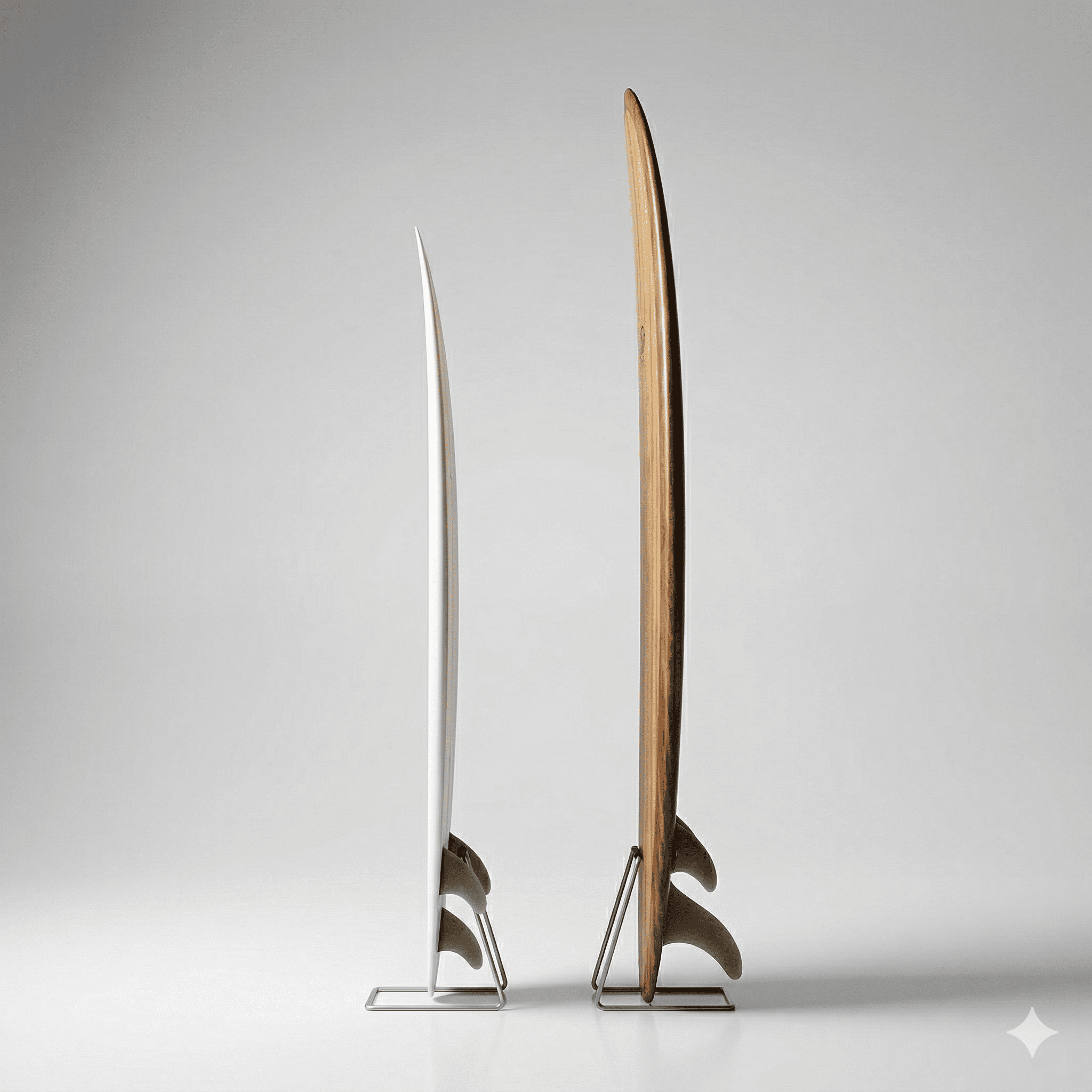
I made this mistake right out of the gate. I bought a small, sleek fiberglass board way too early because, honestly, it looked cool. I didn’t want to be “that beginner” lugging a massive foam board down the beach.
That ego trip cost me months of progression. That tiny board was unstable, unforgiving, and required way more skill than I actually had. I spent session after session struggling to balance, falling off, missing waves, and getting incredibly frustrated.
How To Fix?
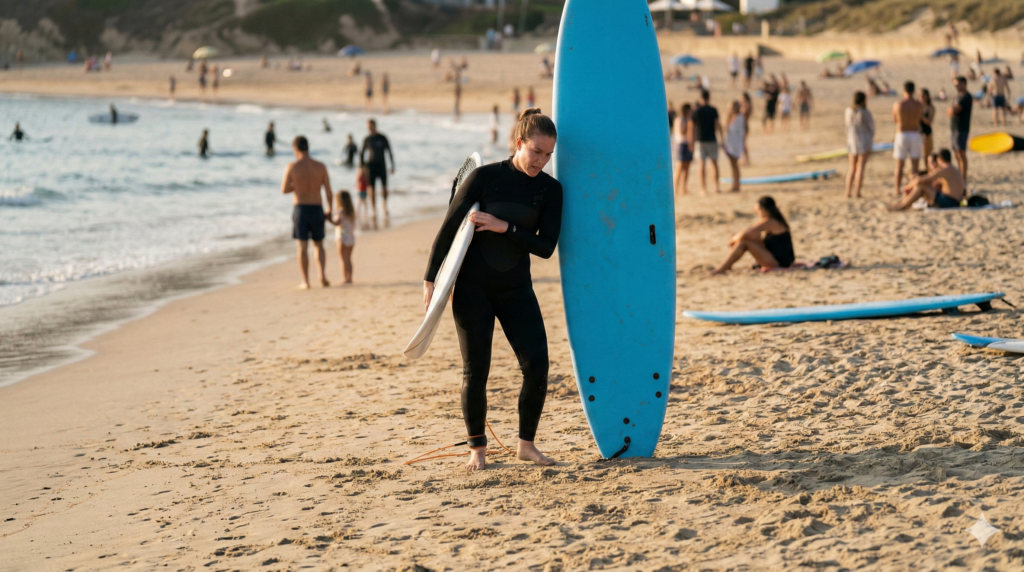
Progression in surfing isn’t about ego; it’s about choosing the right tool for your current level. When I finally swallowed my pride and switched back to a bigger, thicker, more stable board, it honestly felt like cheating. I started catching waves immediately. If you are a beginner, get a big foam board (8 to 9 feet long). It will give you the paddle power and stability you need to actually learn the mechanics of surfing.
Mistake N°2: The “Anchor” Paddle (Weight Too Far Back)
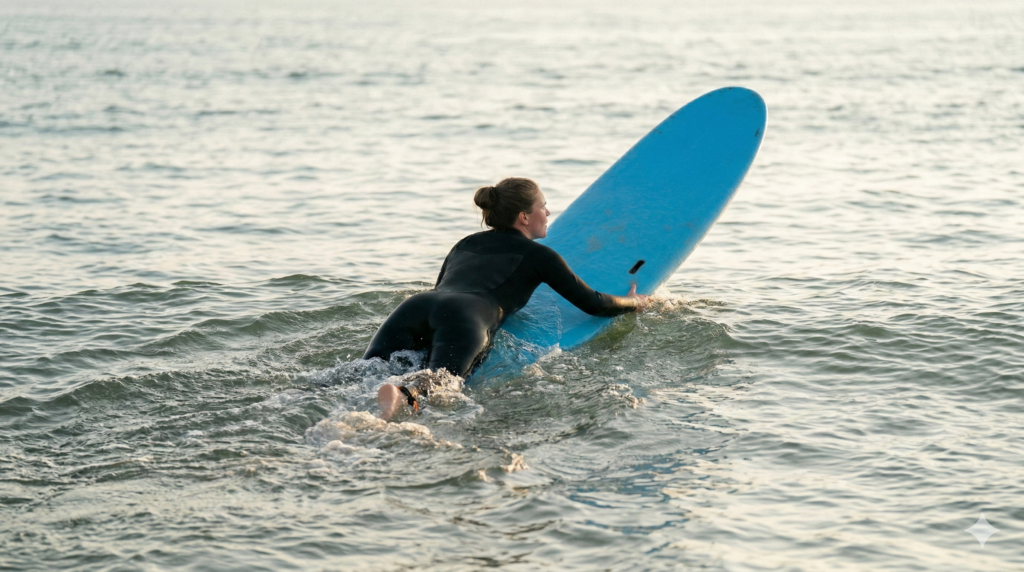
One of the most exhausting mistakes I made at the beginning was paddling with my weight too far back on the board. I didn’t even realize I was doing it. I would lie toward the tail because it felt more stable and kept the nose from diving underwater.
The result? The nose of the board would stick up in the air, the tail would drag deep in the water like an anchor, and I felt like I was paddling forever without actually moving forward. Meanwhile, other surfers would glide past me with half the effort.
How To Fix?
Your position on the board is everything. You need to shift your weight slightly forward until the nose of the board is just an inch or two above the water. The board should sit completely flat on the surface. When I finally made this adjustment, everything changed. Suddenly I had speed, I could catch waves earlier, and paddling stopped feeling like a treadmill.
Mistake N°3: Paddling Straight Into the Impact Zone
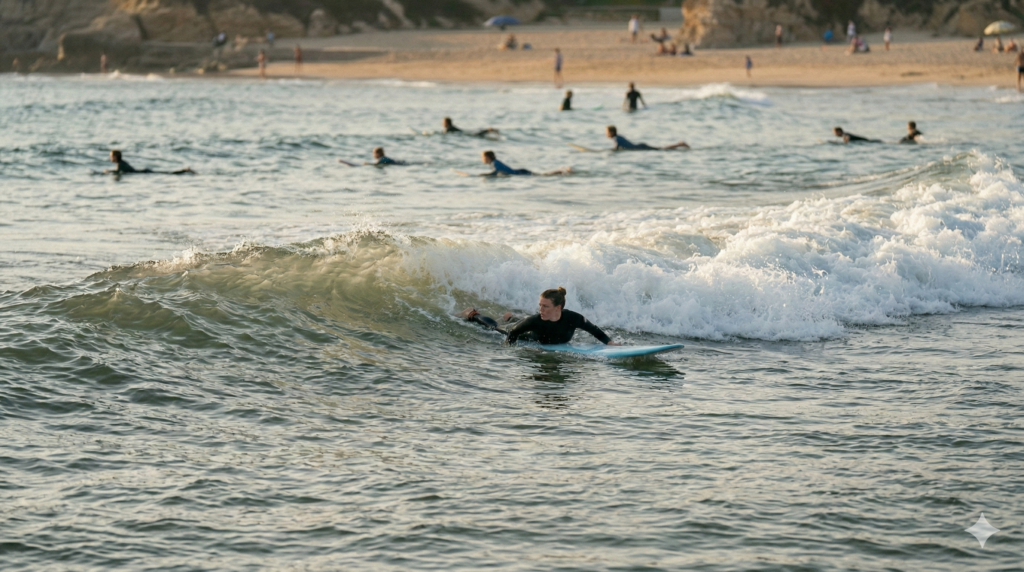
This is the mistake that truly humbled me. I would spot the peak (where the waves were breaking the best), aim my board straight at it, and paddle directly into the impact zone.
I got absolutely destroyed. I would take wave after wave of heavy whitewater straight to the face, getting pushed backward, spun around, and tossed underwater. I would lose all my energy and be gasping for air before I even made it out to the lineup.
How To Fix?
I didn’t know how to time my paddle out or how to read the ocean. You rarely paddle in a straight line in surfing. Take ten minutes on the beach to observe the ocean. Look for the “channels”, areas where the water is deeper and the waves aren’t breaking as heavily—and use them to paddle out around the impact zone. Wait for a lull between the sets of waves before making your move.
Master the Basics Before You Paddle Out
All of these mistakes have one thing in common: they come from ignoring the basics. Positioning, timing, and equipment matter way more than people think. Surfing isn’t just about the glorious moment of standing up; it’s about everything that happens before that moment.
You can’t skip the beginner phase. You are going to struggle, and you are going to have days where nothing works. But every wipeout and every frustrating session is part of the process.
However, you can save yourself months of unnecessary exhaustion by learning the correct fundamentals from day one. If you want to know exactly how to position yourself, how to choose the right board, and how to read the ocean, head over to our Ultimate Guide to Surfing for Beginners: How to Start and Not Give Up . It is the roadmap I wish I had before I bought that tiny fiberglass board.
Frequently Asked Questions About Beginner Mistakes
How do I know if my surfboard is too small for me?
If you are paddling as hard as you can but the wave keeps rolling right underneath you without catching you, your board is likely too small (it lacks volume). Additionally, if the board sinks below the surface of the water when you sit on it, or if it feels incredibly wobbly when you try to pop up, you need to upgrade to a larger board with more volume.
How do I get past the breaking waves without getting exhausted?
Never paddle straight into the area where the waves are crashing the hardest (the impact zone). Instead, look for a rip current or a channel where the water is calmer, and use that to paddle out. Also, timing is everything, wait on the beach or in the shallow water until a “set” of big waves finishes breaking, and then paddle out quickly during the calm “lull.”
Why does the nose of my board keep diving underwater when I catch a wave?
This is called “pearling” or “nose-diving,” and it happens because your weight is too far forward when the wave catches you. However, beginners often overcorrect this by sliding too far back, which causes the “anchor paddle.” The trick is to arch your back and lift your chest high off the board as you paddle for the wave; this naturally adjusts your center of gravity and prevents the nose from diving.