
Category: Winter

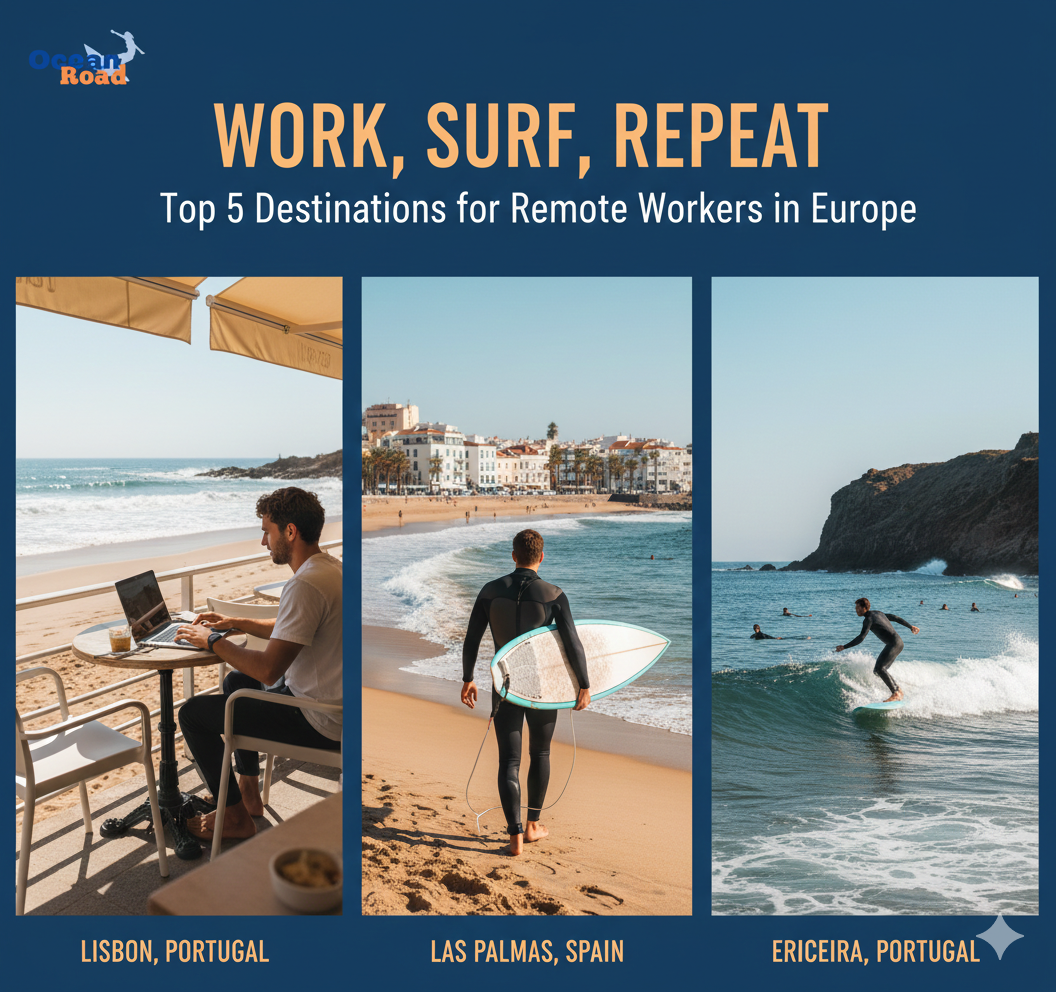
  • Work, Surf, Repeat: Top 5 Destinations for Remote Workers in Europe (2026)

    Work, Surf, Repeat: Top 5 Destinations for Remote Workers in Europe (2026)

    It’s 10:55 AM. You are on a Zoom call with the marketing team in London. You are nodding politely, but under the desk, your legs are restless. Why? Because you checked the cam at Ribeira d’Ilhas, and the wind just switched offshore.

    This is the reality of the Digital Nomad Surf lifestyle in 2026, It’s not just Instagram photos of laptops on hammocks (bad for your back, worse for your productivity… It’s a tactical balancing act, It’s knowing exactly which café in Las Palmas has fiber optic speed strong enough to upload a 4GB video file, and which beaches in Portugal have lockers so you don’t have to leave your MacBook hidden under a towel.

    I’ve spent the last three years trading office fluorescents for Atlantic sunsets. We are looking for the Holy Trinity of the surfing nomad: Consistent Waves + High-Speed WiFi + Walkability.

    So, close your slack notifications for a minute. Here are the spots where you can actually get work done, and get barreled, in the same afternoon.

    Vibe: Silicon Valley meets Saltwater.

    Ericeira, Portugal: The European Mecca

    Ericeira isn’t a secret anymore, but it holds the crown for a reason. As Europe’s only World Surfing Reserve, the wave density is insane. In 2026, the community is fully established, making it the easiest place to network.

    Best Season: Year-round (Best waves: Sept-May).

    WiFi Speed: Average 500 Mbps (Fiber everywhere).

    Top Coworking: Kelp Cowork, Salt Studio.

    Cost of Living: High (Similar to Lisbon).

    Urban surf jungle

    Las Palmas de Gran Canaria, Spain: The Winter Escape

    When the rest of Europe is freezing in January, Las Palmas is 22°C. “La Cicer” (the main surf beach) is literally in the city center. You can finish a meeting at a café on the promenade and be in the water in 5 minutes.

    Best Season: October to March (Winter Gold).

    WiFi Speed: 600 Mbps – 1 Gbps.

    Top Coworking: Talleres Palermo, Soppa de Azul.

    Cost of Living: Medium (Tax benefits for nomads).

    Classy and energetic

    San Sebastián (Donostia), Spain: Surf & Gastronomy

    If you have a higher budget and appreciate the finer things, San Sebastián is the place. You surf at Zurriola Beach (right in the hip Gros neighborhood) and then eat the best pintxos of your life.

    Best Season: Autumn and Spring.

    WiFi Speed: 600 Mbps.

    Top Coworking: Impact Hub Donostia, Kowork.

    Cost of Living: Very High (Especially accommodation).

    Wild West / Nature focused

    Sagres, Portugal: The End of the World

    If you need to finish a big project and want zero distractions, go to Sagres, located at the tip of the Algarve, it catches swell from two directions (South and West). It’s rugged, windy, and beautiful.

    Best Season: Winter (for big swells) & Spring.

    WiFi Speed: 200 Mbps (Decent, but verify your Airbnb first).

    Top Coworking: The Hangout (Café style), Cowork Sagres.

    Cost of Living: Medium-Low.

    High-performance industry.

    Hossegor, France: The Autumn Choice

    Warning: Do not go in January unless you like solitude and storms. Hossegor shines in September and October, the summer crowds leave, the water is still warm, and the legendary sandbanks turn on.

    Best Season: September – October.

    WiFi Speed: 400 Mbps.

    Top Coworking: Jo&Joe (Open space), L’Office.

    Cost of Living: High.


    The Nomad Gear Check: Protect Your Tech

    Living this lifestyle means your expensive laptop is constantly exposed to its worst enemies: sand, salt, and humidity. You don’t need a lot of stuff, but you need the right stuff. Here is what I never travel without:

    1. The “Dry” Backpack: A waterproof roll-top bag is essential. If you are biking from the coworking space to the beach, sudden rain or a wet wetsuit in the trunk can ruin your electronics.
    2. Noise-Canceling Headphones: Essential for focus in busy cafes.
    3. A Changing Robe: When you have a meeting in 20 minutes, you can’t struggle with a towel. A good poncho gets you dry and dressed in seconds

    Looking for durable gear that survives the nomad life? We are curating a selection of surf-ready accessories. Stay tuned.
  • Winter Surfing in Europe: The Ultimate Gear & Wetsuit Guide (2026 Edition)

    Winter Surfing in Europe: The Ultimate Gear & Wetsuit Guide (2026 Edition)

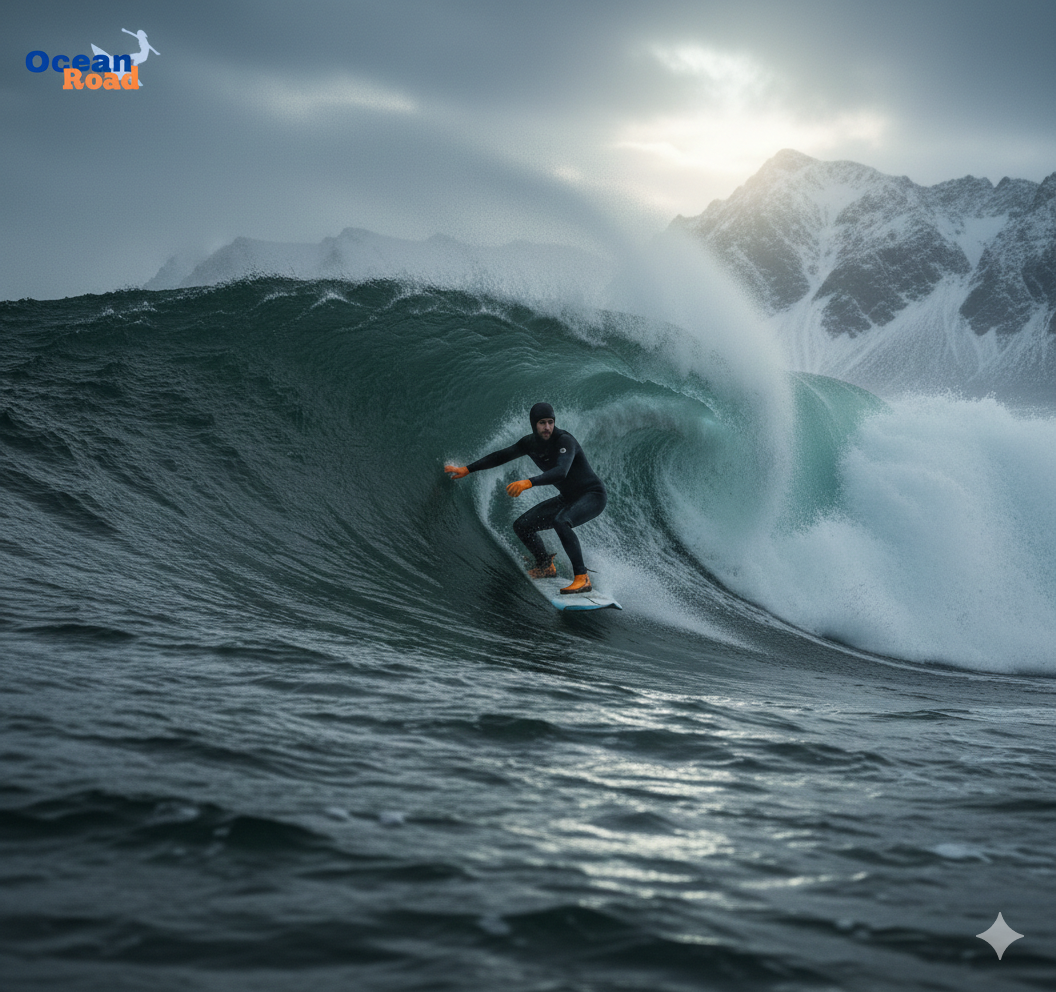
    Let’s be honest for a second. Waking up at 7:00 AM in January, when the streets are frozen and it’s still pitch black outside, feels unnatural. Your brain screams “stay in bed.” I’ve been ther, sitting in my van in a parking lot in Hossegor, watching the steam rise from my coffee, dreading the moment I have to take off my warm hoodie

    But then you see it. clean lines, offshore wind. And the most important part? Empty peaks.

    That’s the secret we keep at OceanRoad..winter surfing in Europe isn’t a punishment; it’s the prize, but only if you have the right armor. I remember my first winter trip to Peniche years ago…I tried to brave the atlantic in an old, crusty 3/2mm wetsuit, I lasted 20 minutes my feet went numb, my duck dives felt like brain freezes, and I missed the best session of the trip because I couldn’t stop shivering.

    That day I learned the golden rule, there is no such thing as bad weather, only bad gear.

    In 2026, technology has changed the game, we aren’t surfing in stiff rubber anymore, we have materials that stretch like a second skin and linings that feel like wearing a wool sweater underwater. So, grab a coffee, and let’s break down exactly what you need to pack so the only thing you feel is the stoke, not the freeze.

    The Big Debate: 4/3mm vs. 5/4mm Wetsuits

    This is the most common question we get: “Do I really need a 5/4, or can I get away with a 4/3?” The answer depends entirely on your latitude and your tolerance to the wind chill factor.

    Here is our definitive cheat sheet for the European coast (Jan-Feb):

    RegionWater Temp (Avg)Recommended WetsuitAccessories Needed
    South Portugal (Algarve) / South Spain15-16°C (59-61°F)4/3mm3mm Booties (Optional but recommended)
    Central Portugal (Ericeira) / North Spain13-14°C (55-57°F)5/4mm5mm Booties + Hood (Wind days)
    France (Landes) / UK / Ireland8-11°C (46-52°F)5/4mm or 6/5mmHood + 5mm Gloves + 7mm Boots

    Planning a longer trip? Check out our guide on The Best Digital Nomad Spots in Europe to see which towns have the mildest winters.

    Wetsuit Tech 2026: What to Look For Before Buying

    Not all millimeters are created equal… A cheap 5mm suit will feel colder than a premium 4mm suit, when shopping for the best winter wetsuits in 2026, look for these three features

    Sustainable Rubber (Yulex & Beyond)

    Sustainability is no longer optional; it’s the standard, traditional petroleum-based neoprene is fading out.

    • Yulex Natural Rubber: Derived from plants. In 2026, Yulex is just as flexible as standard neoprene while big brands popularized it, many European indie brands (from the UK, Netherlands, and France) are now producing incredible eco-friendly suits that rival the giants in quality and price. Support local, surf global.

    Thermal Lining (The Furnace Effect)

    Turn the suit inside out. Do you see a fluffy, fleece-like material? That is the thermal lining, It traps a layer of air against your skin, which your body heats up. Look for suits that have this lining all the way down to the knees, not just on the chest panel.

    The Game Changer: Battery Heated Vests

    If you really suffer from the cold, 2026 has brought battery tech to the mainstream. Heated vests worn under your wetsuit are now thinner, safer, and more affordable. they keep your core temperature up for 2+ hour sessions in the North Sea. It’s not cheating; it’s evolution.

    The Extremities: Booties, Hoods, and “Lobster Claws”

    Your core might be warm, but if you can’t feel your feet, you can’t surf. Here is the cold water surf gear checklist for your extremities:

    • Surf Booties: For Europe, 3mm is okay for the south, but 5mm booties are the standard for the Atlantic coast, look for “split toe” designs… They prevent your foot from sliding around inside the boot when you turn.
    • The “Lobster Claw” Glove: This hybrid design (three fingers together, index separate) gives you the warmth of a mitten with the grip of a glove. They are essential for winter surfing in France or the UK.
    • Hoods: Surfer’s Ear (exostosis) is real and caused by cold wind and water, even if you don’t like wearing a hood, keep a hooded vest in your bag for those windy days.

    The Pre & Post-Surf Ritual

    Surviving the cold isn’t just about what happens in the water, the most dangerous part is often the parking lot.

    1. The Changing Poncho: Essential. Get a thick, terry-cloth poncho, It blocks the wind while you change.
    2. Hot Water Jug: Fill a large jug with hot tap water before you leave the house. Pouring warm water over yourself after a freezing session is the best feeling in the world.
    3. Winter Wax: Don’t forget to scrape off your tropical wax. You need “Cold” or “Cool” water wax; otherwise, your board will be slippery like a bar of soap.

    Embrace the Elements

    Winter surfing in Europe tests your commitment, but it rewards you with empty lineups and the best waves of the year, with the right winter surf gear, the cold becomes just another element to manage, not a barrier.