The Soul of Surf Travel: Aligning Your Skill Level with the Right Wave
When you first learn how to plan a surf trip, the temptation is to pull up a map of the world, locate the most legendary reef breaks on Earth, and book the next flight out. In my twenty years of chasing swells across both hemispheres, I’ve seen this exact impulse lead to flat days, broken gear, or worse,bruised egos and dangerous situations.
I still remember sitting on the cliff edge at Uluwatu years ago, watching a young traveler struggle with the heavy current. He was paddling a potato-chip shortboard in massive groundswell, completely out of his depth. The ocean has a way of reflecting exactly who you are; if you approach it with ego, it will humble you quickly. If you approach it with respect, it yields magic.
To avoid the classic pitfalls of surf travel, your planning must begin with an honest assessment of your abilities. This isn’t just about what waves you can surf on your best day at your home break; it’s about what you can handle when you are tired, jet-lagged, and facing an unfamiliar playing field. If you are still working on your pop-up or struggle to duck-dive consistently, booking a boat charter in the Mentawais is going to be a stressful exercise in survival. Conversely, if you are an intermediate surfer, putting yourself in a crowded, high-performance lineup can lead to frustration and zero wave count.
To keep your logistics clean and your expectations grounded, I always recommend referencing The Ultimate Surf Travel Guide as your strategic compass throughout this planning phase.
Every destination has its unique rhythm, dictated by its bathymetry—the underwater topography. Sand-bottom beach breaks are generally more forgiving for beginners, offering soft cushions for falls. Point breaks provide long, predictable walls that are perfect for intermediates looking to hone their turns. Reef breaks, while offering the cleanest and fastest pockets, require precise take-offs and a deep understanding of tide changes, as the water level above sharp coral can drop drastically in a matter of hours. When I tested different regions in my early thirties, I learned that matching my physical conditioning to the specific wave type of my destination was the single greatest factor in how many waves I actually caught.
Deciphering Ocean Graphics: Swell, Wind, and Tides
To plan a truly successful surf trip, you must learn to think like a meteorologist. You cannot simply trust travel brochures that promise “year-round surf.” While some tropical zones are highly consistent, the quality of the waves depends on a delicate dance between three key components: swell direction, wind direction, and tidal range. In my early days, I once booked a costly surf trip to Central America during the height of the dry season, assuming offshore winds meant perfect waves every day.What I didn’t realize was that the swell window was completely blocked by a southern island chain during those specific months. I spent two weeks staring at a glassy, flat ocean. It was a harsh but invaluable lesson.
When analyzing a potential surf trip, look beyond simple wave height. The most important metric on any surf forecast is the swell period, measured in seconds. Groundswells—waves generated by massive, distant storms thousands of miles away—typically have periods of 12 to 20 seconds. These waves carry immense energy, travel fast, and organize themselves into beautiful, clean sets.
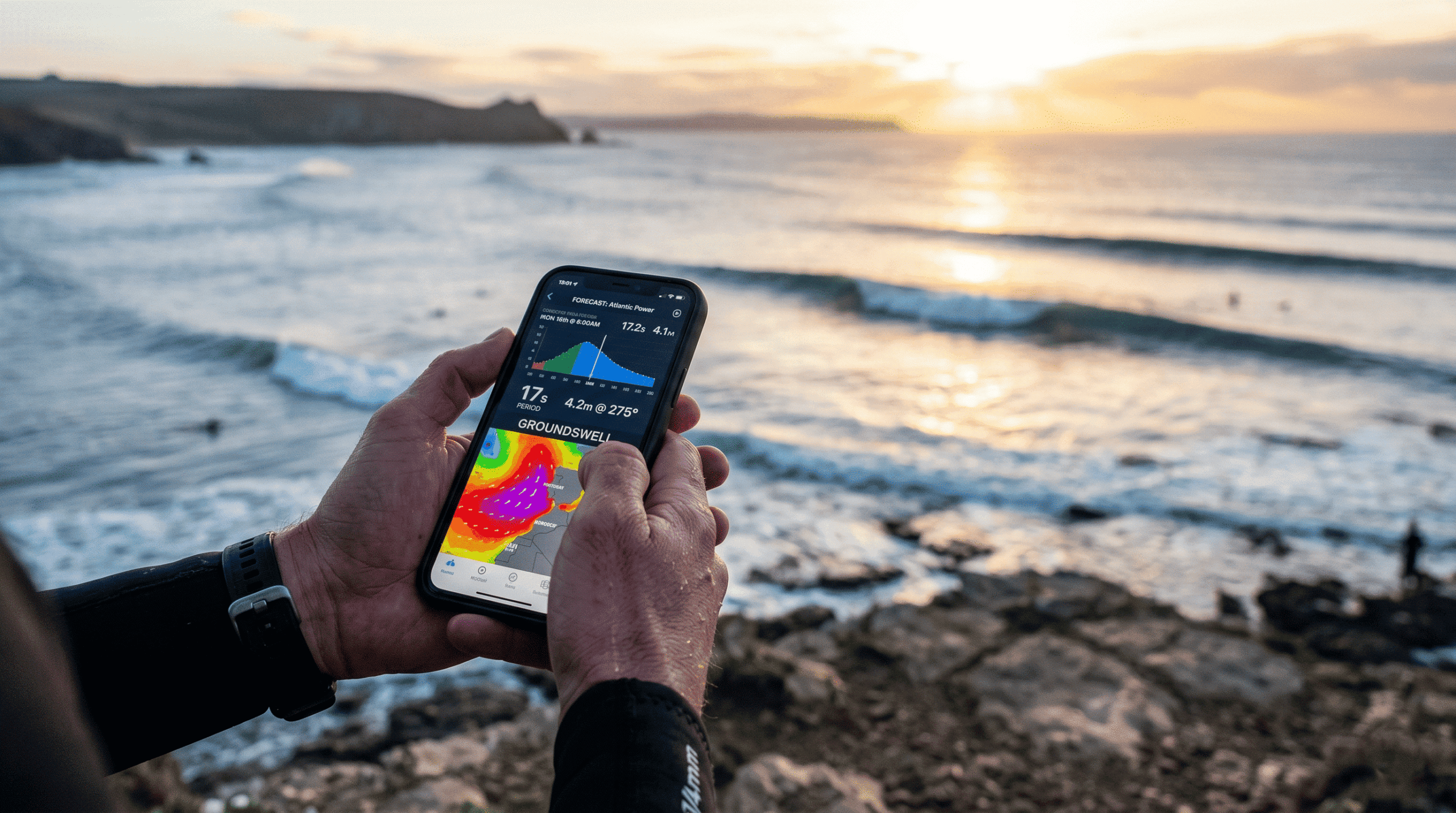
On the other hand, windswells (periods of 6 to 9 seconds) are generated by local winds; they are short, disorganized, and often weak. A 3-foot swell at 17 seconds will produce much larger, more powerful, and cleaner waves than a 6-foot swell at 8 seconds. Understanding this difference is what separates the surfers who score pristine sessions from those who get stuck paddling through endless soup.
Wind is the second half of the equation. As a general rule, you want light offshore winds (blowing from the land out to sea) to groom the wave faces into smooth, rideable canvases. Onshore winds (blowing from the ocean to the land) destroy the wave shape, causing it to crumble and close out. However, don’t write off cross-shore winds entirely; some point breaks are naturally sheltered by headlands that block problematic wind angles.
Finally, study the local tide chart. Some spots require a high tide to fill in over a shallow shelf, while others need a low tide to allow the wave to section up and break properly. Keep a journal of how your favorite local spots react to these shifts, and apply that same rigorous analytical eye when studying your target destination.
Surf Trip Logistics: Accommodations, Gear, and Planning Styles
Once you’ve aligned your skills with the right swell window, you face the practical mechanics of the surf trip. The decisions you make regarding where you stay and how you move will dictate your daily rhythm. Are you looking to step out of bed and paddle directly into a point break, or are you comfortable loading boards onto a moped and driving down dusty coastal tracks? Over the years, I’ve stayed in everything from dirt-cheap hammocks on the beach to high-end surf charters, and each style has its place depending on your budget and goals.
Packing for a surf trip is an art form. The golden rule is simple: travel light, but never compromise on the essentials. If you are flying, surfboard baggage fees can be extortionate, and airlines are notorious for dinging boards. In my experience, traveling with a maximum of two boards is the sweet spot. Pack one reliable “daily driver” that excels in everyday conditions, and one “step-up” board with a bit more volume and a pulled-in tail for when the swell increases.
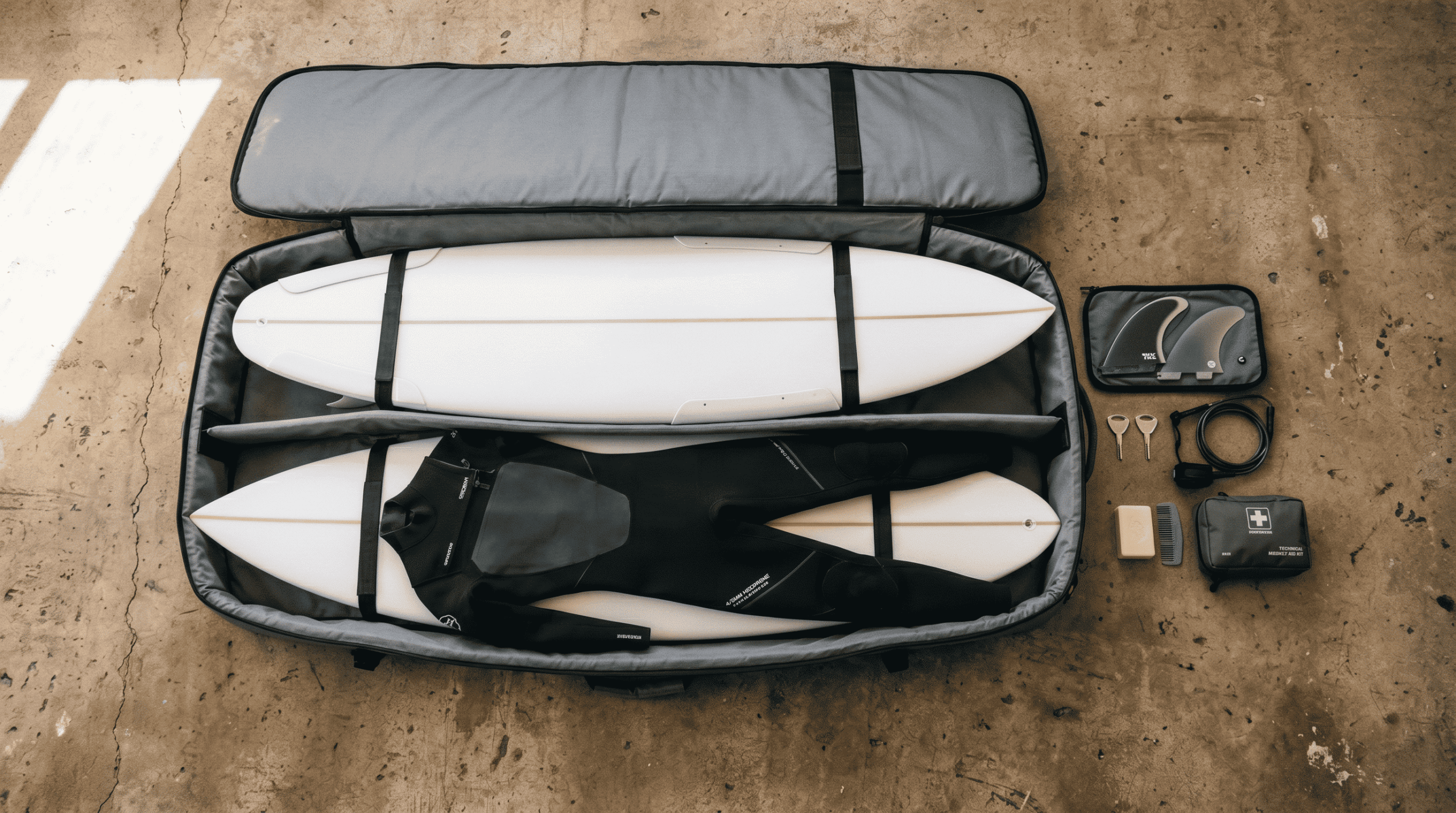
Protect your boards by wrapping them in bubble wrap, securing pool noodles along the rails, and packing your soft items, like wetsuits, boardshorts, and beach towels, around the nose and tail inside a high-quality, armored travel bag from a technical hardware specialist like FCS.
To help you decide which structure fits your travel style, I’ve compiled a direct comparison of the three primary surf trip formats based on years of firsthand trial and error:
| Surf Trip Format | Best Suited For | Key Advantage | Primary Challenge |
|---|---|---|---|
| The Surf Camp / Lodge | Solo travelers, beginners, and intermediates | Built-in community, local surf guides, and meals included. | Fixed daily schedules and less privacy. |
| The DIY Road Surf Trip | Experienced surfers, groups of friends | Ultimate freedom to chase changing wind and swell conditions. | High planning stress and complex gear logistics. |
| The Boat Charter | Advanced surfers seeking remote waves | Unmatched access to uncrowded, high-quality reef breaks. | Premium cost and isolated environment with no escape. |
Regardless of the format you choose, never overlook local health risks and travel insurance. Surfing in remote areas means you are often hours away from quality medical care. A simple cut from a coral reef can quickly turn into a nasty infection if not treated immediately. I always pack a comprehensive medical kit containing antiseptic wash, waterproof bandages, reef booties, a roll of duct tape (good for both boards and quick gear fixes), and broad-spectrum antibiotics. Ensure your travel insurance explicitly covers “surfing” as an activity, as many standard policies exclude adventure sports from their medical evacuation coverage.
The Unwritten Rules: Lineup Etiquette and Respecting the Locals
You can plan your surf trip to absolute perfection, but if you do not understand the social dynamics of the water, you will have a miserable time. Every wave in the world belongs to the community that lives alongside it. When you travel, you are a guest in someone else’s home. Localism is not just about territorial surfers being aggressive; it is a self-regulating system designed to keep crowded lineups safe. When a wave is breaking over a shallow reef, one reckless drop-in can result in severe physical injury to another person. Respect is the ultimate currency in the surf world, and it is earned through humility, observation, and patience.
When you arrive at a new spot, do not immediately paddle out to the peak. Sit on the beach or the cliff for at least fifteen minutes first. Watch where the locals paddle out, where the waves are breaking, where the rip currents are, and how the crowd is behaving. When you do enter the water, paddle to the shoulder.

Do not sit on the inside of the main peak waiting to snag a wave from someone who has been waiting their turn. Smile, greet the people around you, and wait patiently, if you let a couple of good waves go by to show that you aren’t there to dominate the lineup, the locals will naturally open up and let you have your share.
The core rules of surf etiquette are non-negotiable, regardless of where you are in the world. The surfer closest to the peak—where the wave is first breaking—has unconditional right of way. Snaking (paddling around someone to get closer to the peak) and dropping in (taking off on a wave that someone else is already riding) are the fastest ways to get yourself sent back to the beach. If you do make a mistake and accidentally drop in on someone—which can happen when waves are fast—apologize immediately and sincerely. A quick, genuine wave of the hand and an “I’m sorry, I didn’t see you” goes an incredibly long way in defusing tension in the water.
Frequently Asked Questions
How do I choose the right surfboard for a surf trip?
Choose boards that match the typical conditions of your destination, not just your dream wave. If you are headed to a mellow point break in Central America, bring a board with plenty of volume and a flatter rocker to glide through slow sections. If you are heading to steep, hollow reefs in Indonesia, you will need a board with more nose rocker to prevent nose-diving (pearling) on late drop-ins. When in doubt, always err on the side of more volume; paddling power is your best friend when navigating foreign lineups.
Is it better to rent a board or travel with my own?
If you are a beginner or intermediate traveling to a well-established surf destination, renting is often the smart choice. It saves you from paying hefty airline baggage fees and frees you from the anxiety of damaged gear. However, if you are an advanced surfer, or if you are traveling to a remote destination with limited infrastructure, you must bring your own boards. There is nothing worse than arriving at a world-class wave only to find a rental shed filled with dinged, waterlogged foamies.
How do I prepare physically for a surf trip?
Surfing requires a unique combination of cardiovascular endurance, core stability, and upper-body explosive power. The best training for surfing is surfing itself, but if you live inland, focus on swimming, push-ups, and core exercises. In the weeks leading up to my surf trips, I spend hours in the pool practicing interval training to mimic the explosive bursts of paddling required to catch waves and escape heavy sets.
What should I do if I get caught in a rip current at an unfamiliar break?
First, do not panic. Panic causes rapid breathing and wastes valuable energy. A rip current is not going to pull you underwater; it is simply a river of water moving out to sea. Do not try to paddle directly back to shore against the current. Instead, paddle parallel to the beach until you feel the pull of the current subside, then use the breaking waves to help push you back toward the shallow sandbars.