What Makes a Surf Destination Truly Beginner-Friendly?
There is a specific, intoxicating sensory mix that accompanies your first real surf destination trip. It is the sweet, tropical scent of coconut wax melting under a hot sun, the sharp hiss of salt foam sliding across a sandy beach, and that sudden, cold flush of water down your wetsuit that jolts your heart into overdrive. In my twenty years of chasing swells across this blue planet, I have seen hundreds of bright-eyed beginners stand on the shore, clutching oversized foam boards with white-knuckled grips, staring out at the horizon with a mix of pure awe and absolute terror.
I know that feeling intimately. I still remember the raw burn in my lats and the salt-stung eyes of my early days when the ocean felt like a chaotic, beautiful washing machine.
To the untrained eye, any beach with a wave looks like a surf destination spot. But taking your first steps in the wrong arena is the fastest way to break your spirit—and your board. True beginner-friendly surf destinations require a very specific set of oceanographic ingredients. You are not looking for the heavy, hollow barrels you see in magazines; you need slow-peeling, soft-shouldered waves that break over forgiving sandy bottoms. Point breaks with long, predictable lines allow you to establish a rhythm without the chaotic shifting peaks of an open-ocean beach break. Furthermore, you need a destination with deep water, minimal undertow, and a welcoming local culture that understands that everyone was a “kook” once.
Before you book your flights, pack your zinc, and head out to the coast, diving into The Ultimate Surf Travel Guide will give you the foundational blueprint for planning a strike mission, understanding swell directions, and packing the right gear. Choosing the right playground is the difference between a frustrating week of “pearling” (nose-diving) into the sand and that life-altering, time-slowing moment where your board stops wobbling, matches the wave’s speed, and you are suddenly flying on water.
The Best Surf Destinations for Beginners: Our Top Picks
Waikiki, Oahu, Hawaii: The Birthplace of Glide
There is a holy reverence to paddling out at Waikiki. This is the playground of Duke Kahanamoku, the father of modern surfing, and the energy here is pure, unadulterated aloha. When I first paddled out at Canoes—the main beginner break here—I was struck by how long and gentle the waves were. They roll in from the outer reef like massive, liquid blue hills, giving you ample time to find your footing, steady your stance, and actually look around at the majestic silhouette of Diamond Head.
The water here is a warm, inviting turquoise, meaning you can ditch the rubber and surf in boardshorts or a bikini. The waves break over a very deep, flat reef that has been worn smooth over decades, making it incredibly safe compared to other Hawaiian breaks. The secret to surviving Waikiki is navigating the crowd. Because it is the most famous beginner wave on earth, the lineup can look like a floating parking lot. My personal advice: paddle out at first light.
The air is still, the water is glassy, the sweet scent of plumeria drifts off the land, and you will share the water with only a handful of respectful longboarders. Keep your eyes peeled for stray, heavy rental boards; they can become floating hazards in the midday chaos.
Tamarindo, Costa Rica: The Warm-Water Playground
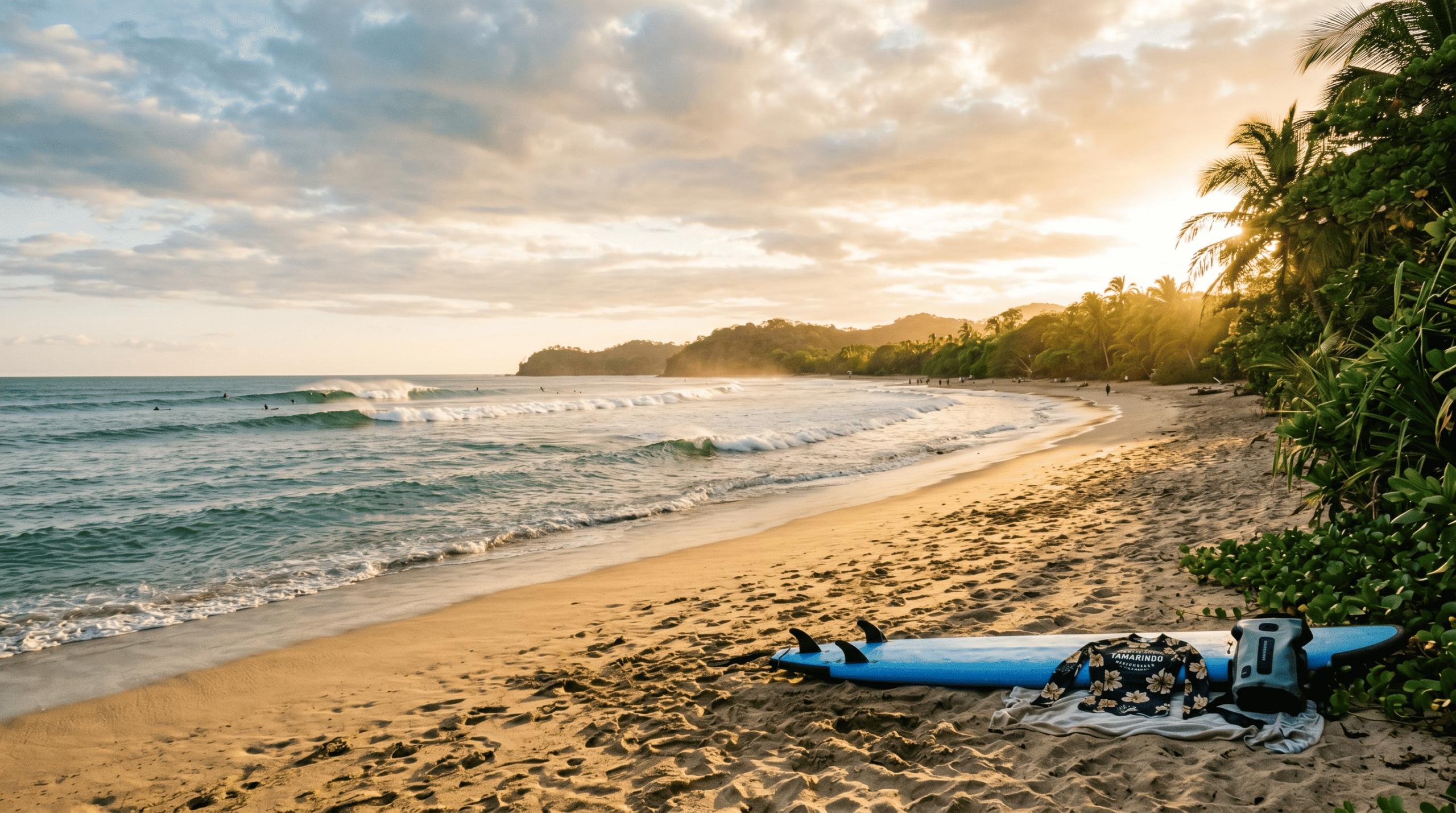
If your dream surf destination trip involves lush green jungles, howling monkeys in the canopy, and warm, consistent beach breaks, then Tamarindo is your sanctuary. Located on Costa Rica’s Nicoya Peninsula, this vibrant surf town is perfectly oriented to catch consistent, mellow swells year-round. The main beach, Playa Tamarindo, features a soft, sandy bottom with multiple peaks that are ideal for those transitioning from riding white foam to catching green, unbroken waves.
In my experience, the magic of Tamarindo lies in its warm water and offshore winds that blow steadily throughout the dry season (December to April), grooming the waves into clean, predictable lines. When I tested the breaks around the river mouth, I found that the incoming mid-tide offered the softest, most forgiving canvas for practicing pop-ups. A quick word of warning from a seasoned traveler: stay clear of the actual river estuary mouth during high tide.
While the waves there peel beautifully, the local crocodiles occasionally like to sun themselves nearby. Stick to the main beach breaks in front of the surf schools where the community vibe is incredibly supportive, supportive instructors are plentiful, and the post-surf ceviche is unparalleled.
Taghazout, Morocco: The Right-Hand Point Break Mecca
For those who want a touch of exotic culture with their surf progression, the dusty, blue-washed fishing village of Taghazout on Morocco’s Atlantic coast is unmatched. This area is famous for its world-class right-hand point breaks. While spots like Anchor Point are strictly for the advanced charger, Taghazout is blessed with incredibly forgiving beginner sanctuaries like Panorama Beach and Crocodile Point.
The sensory experience here is unforgettable: the dry, spiced desert wind blowing off the Atlas Mountains, the distant call to prayer echoing across the bay, and the dry heat contrasted against the cool, refreshing Atlantic water (you will want a 3/2mm wetsuit here). Panorama Beach offers a long, sandy right-hand wave that peels so slowly it feels like it is moving in slow motion. It is the perfect place to learn how to trim your board and start turning.
When you are done, you can sit on the beach, sip hot, sweet mint tea, and watch the camels stroll past. The local surf camps here are some of the best in the world, offering structured, video-analysis coaching that can shave months off your learning curve.

Byron Bay, Australia: The Laid-Back Longboard Haven
Australia’s surf culture is legendary, but it can also be highly competitive and intimidating. Byron Bay, located in northern New South Wales, is the glorious exception. Blessed with a unique geographical shape that protects its bays from rough southerly winds, Byron is a natural amphitheater of peeling, low-energy waves. The crown jewel for beginners is a spot called The Pass.
The Pass is a sandy point break where the waves wrap around a headland and roll endlessly into a sheltered bay. On a good day, you can catch a wave and ride it for over a hundred meters, feeling the burn in your thighs as you glide past playful bottlenose dolphins. The sand is pure, squeaky white, and the surrounding eucalyptus trees fill the air with a clean, medicinal aroma.
Because the wave is so perfect, it attracts some of the best longboarders in the country, alongside absolute beginners. The key here is patience and humility. Respect the lineup, wait your turn on the inside, and never drop in on someone already riding. The surf community here is incredibly warm, provided you show respect for the unwritten laws of the ocean.
Comparing the Ultimate Beginner Spots
To help you choose the perfect backdrop for your first real surf destination adventure, I have mapped out the key characteristics of these premier beginner surf destinations. Each offers a unique blend of environment, wave dynamics, and cultural flavor.
| Destination | Wave Type | Bottom Type | Ideal Season | Water Temp & Gear | Mentor’s Secret Tip |
|---|---|---|---|---|---|
| Waikiki, Hawaii | Slow, rolling reef break | Flat, smooth coral reef | May to September (Southern Swells) | Warm (78°F / 25°C) – Boardshorts/Bikini | Paddle out at 6:00 AM to beat the catamaran charters and rental crowds. |
| Tamarindo, Costa Rica | Mellow, shifting beach breaks | Soft sand | December to April (Dry Season) | Warm (80°F / 27°C) – Rashguard/Boardshorts | Surf the incoming mid-tide; the waves have more shape and won’t close out. |
| Taghazout, Morocco | Long, peeling point breaks | Sand and flat rock | October to March (Winter Swells) | Cool (64°F / 18°C) – 3/2mm Wetsuit | Book a camp that offers beach transfers; spots like Anza or Panoramas work on different tides. |
| Byron Bay, Australia | Endless sandy point break | Soft sand | March to August (Autumn/Winter) | Mild (70°F / 21°C) – Springsuit or 2mm Top | Sit on the inside of “The Pass” and catch the smaller reform waves that the advanced surfers pass up. |
Essential Etiquette and Safety in the Lineup
I will never forget the day I truly learned about surf etiquette. I was a cocky teenager, eager to prove myself, and I paddled straight to the peak at a crowded beach break. I didn’t look back, spun around, and dropped in right in front of a respected local elder. The collision was messy, my pride was shattered, and I spent the next hour receiving a very stern, very necessary lecture on the beach. It was a humiliating lesson, but it taught me that the ocean is a mirror—if you approach it with ego and ignorance, it will push back; if you approach it with respect, it will embrace you.
Before you paddle into any lineup, you must understand the golden rule of surfing: the surfer closest to the breaking peak of the wave has unconditional priority. If someone is already riding a wave, or is paddling for it closer to where the wave is curling, do not spin around and catch it. This is called “dropping in,” and it is the ultimate surf sin. It is not just rude; it is incredibly dangerous. A heavy glass fiber board with sharp fiberglass fins traveling at speed can cause severe injuries.
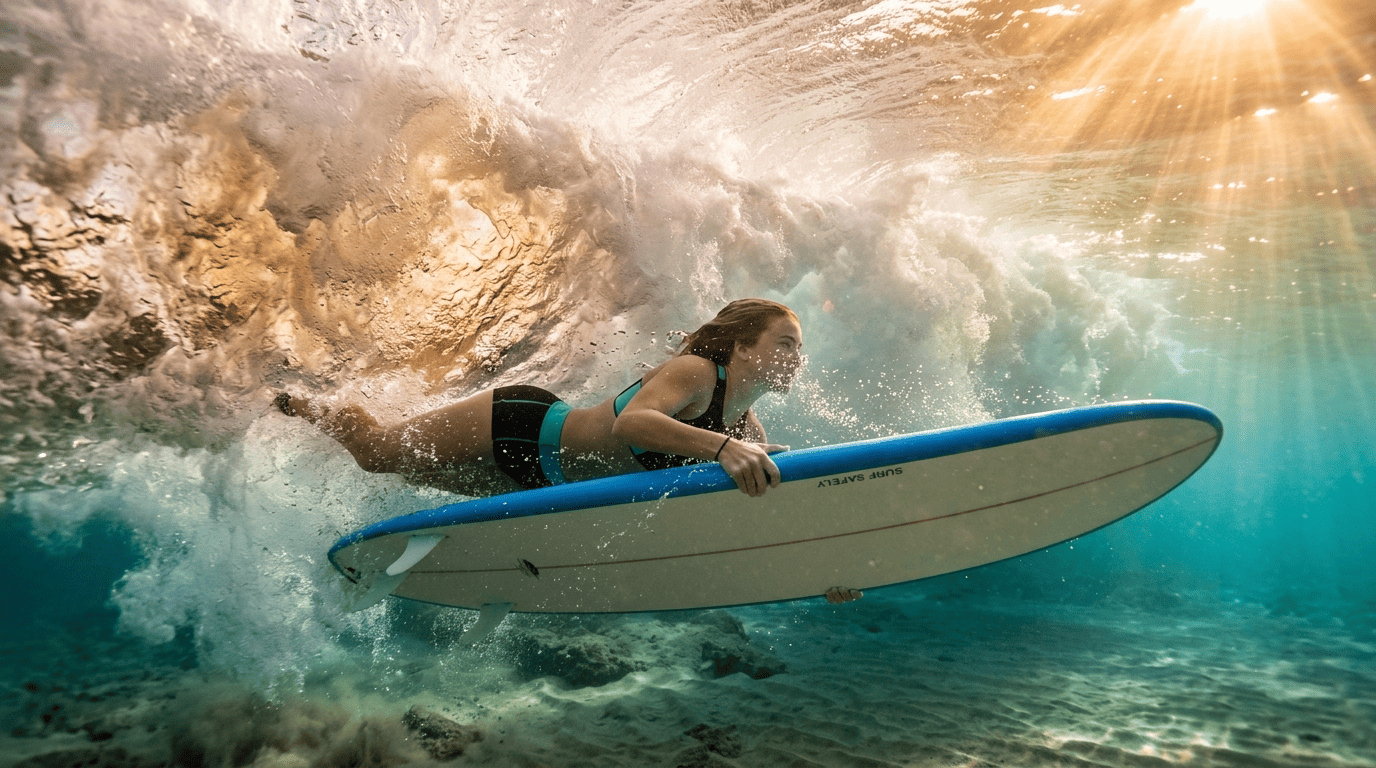
Secondly, learn the art of the paddle-out. When you are paddling back out to the lineup, never paddle directly through the “zone” where other surfers are riding. If a surfer is coming toward you on a wave, paddle toward the broken whitewater behind them, not onto the clean shoulder in front of them. Yes, this means you will have to take a beating from the foam, but it keeps the wave face clear for the rider. Always hold onto your surfboard. Throwing your board away when a large wave approaches is a cardinal sin; that board becomes a floating weapon that can easily strike another paddler behind you. Practice your turtle rolls and duck-dives until they are second nature.
Frequently Asked Questions
What size surfboard should a beginner use?
In my twenty years in the water, the biggest mistake I see beginners make is trying to surf a board that is far too small. Do not buy a shortboard because it looks cool. You need volume, surface area, and stability. Start on a soft-top foam board (often called a “Foamy” or “Wavestorm“) that is between 8 and 9 feet long. These boards float like boats, paddle easily, catch even the tiniest ripples, and are soft enough to ensure you won’t hurt yourself or anyone else when you inevitably wipe out.
Is it safe to learn to surf at a spot with a reef bottom?
While sand-bottom beach breaks are generally preferred for beginners because they offer soft landings, certain flat, deep-water reef breaks (like Waikiki) are actually safer than heavy, shallow sandbars. The key is depth and topography. A flat, deep reef provides incredibly consistent, predictable wave breaks, whereas a sandbar can shift daily and create heavy shore-dumps. Always consult with a local surf school or lifeguard before paddling out over a reef to understand the depth and potential hazards like sea urchins or sharp coral heads.
How fit do I need to be to start surfing?
Surfing is one of the most physically demanding sports on earth, but you do not need to be an Olympic athlete to start. The most critical physical attributes are paddle endurance (shoulders, upper back, and core strength) and cardiovascular stamina. If you can swim comfortably in open water and have a basic level of fitness, you can learn to surf. I highly recommend practicing swimming, yoga for flexibility, and push-ups to build that explosive upper-body strength needed for a clean, fast pop-up.
How do I know if a surf destination spot is too dangerous for me?
Always perform a “twenty-minute beach check” before you ever wax your board. Sit on the sand and watch the ocean for twenty minutes. Look at where the waves are breaking, locate the channels of calm water (which often indicate dangerous rip currents), and observe the other surfers in the water. If you do not see any other beginners out there, or if the surfers in the lineup look stressed and are struggling, do not go out. When in doubt, never hesitate to ask a local lifeguard or surf shop employee. They live by the tide and will always steer you in the right direction.