Why Thickness is Your Best Ally
Choosing the right wetsuit thickness is the difference between a transcendental morning session and a shivering, miserable retreat to the car. In my twenty years of chasing swells from the frigid North Atlantic to the balmy tropics, I’ve learned that “feeling” the water is more about thermal management than it is about the board under your feet.
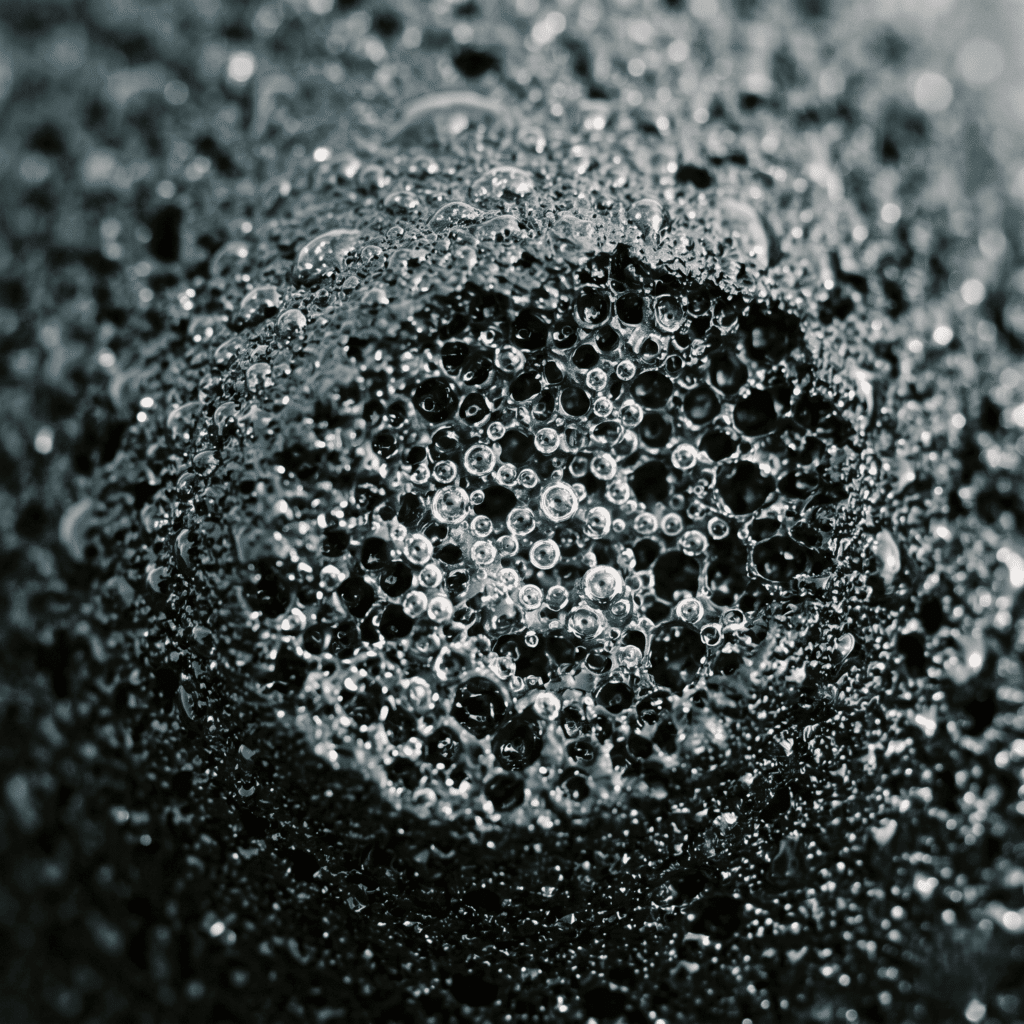
When your core temperature drops, your muscles stiffen, your reaction time slows, and that peak you’ve been waiting for all morning becomes an unreachable shadow. Neoprene works by trapping a thin layer of water between the suit and your skin; your body heat warms this water, creating a personal microclimate. If the suit is too thin, the heat escapes faster than you can generate it. If it is too thick, you lose the mobility required to duck-dive or pop up with precision.
When you look at a wetsuit, you will usually see two or three numbers separated by slashes, such as 3/2mm or 5/4/3mm. These numbers represent the thickness of the neoprene in millimeters. The first number is the thickness at the torso and core, where your vital organs need the most protection from the cold. The subsequent numbers indicate the thickness in the limbs (arms and legs) where flexibility is paramount for paddling and maneuvering. Before you commit to a purchase, checking a comprehensive Complete Guide to Wetsuits can provide the foundational knowledge needed to understand how different brands vary in their neoprene density and stretch capabilities.
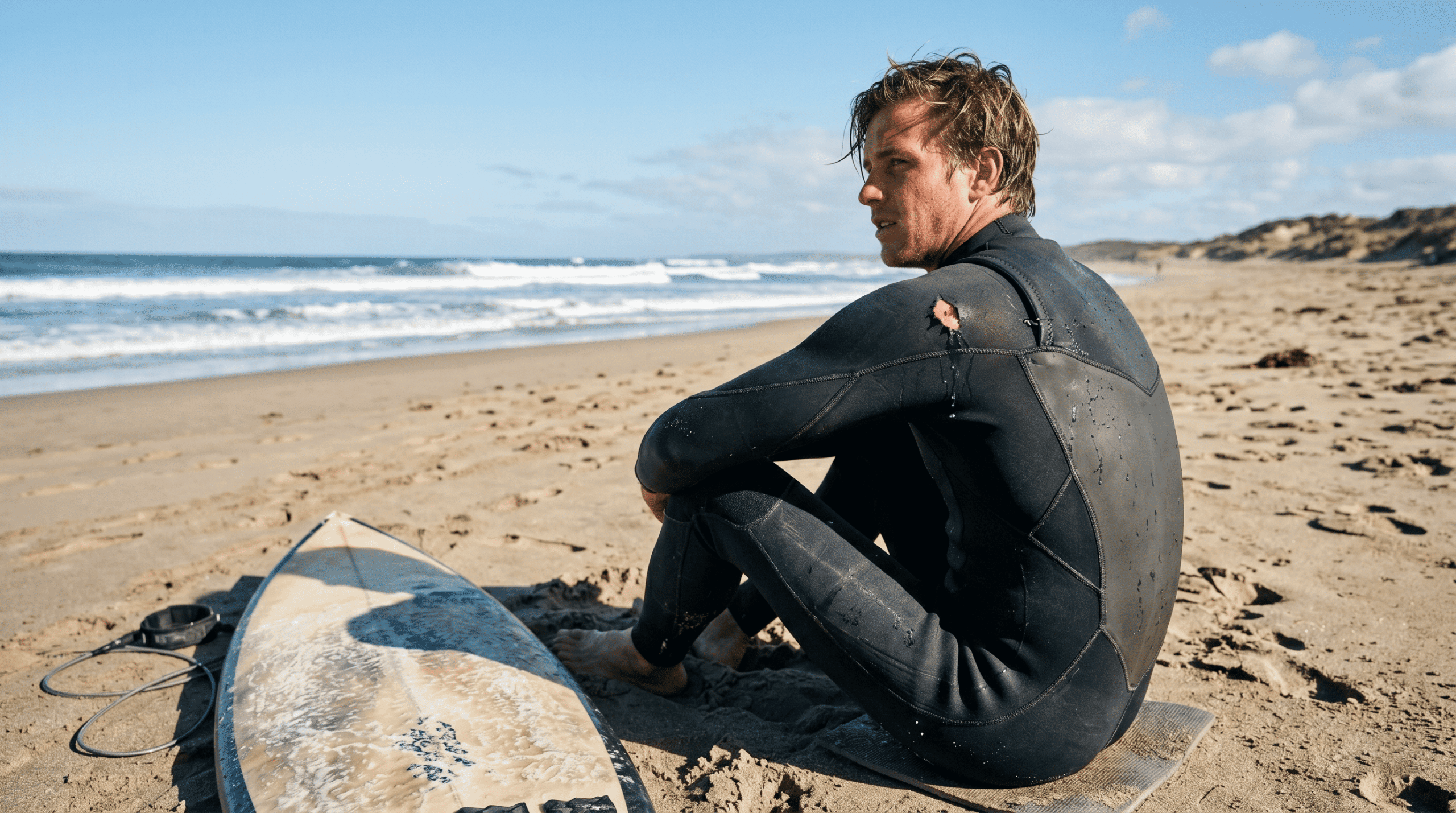
Many beginners underestimate the energy cost of being cold. When I was starting out in the chilly waters of the Pacific Northwest, I tried to “tough it out” in a cheap 3/2mm during late autumn. I lasted forty minutes and spent the next two hours trying to stop my hands from shaking. A quality suit with the correct thickness doesn’t just keep you warm; it extends your stamina.
The extra millimeters of rubber provide buoyancy, which helps with paddle endurance, but they also act as a physical barrier against the wind, a factor often overlooked by those who only look at a thermometer. Choosing the right thickness is about balancing the physics of heat retention with the mechanical needs of your body’s movement.
The Definitive Wetsuit Thickness vs. Temperature Matrix
The primary factor in your decision must be the water temperature. However, “temperature” is a deceptive metric. A 60°F day in the bright sun feels vastly different from a 60°F day with a 20-knot offshore wind. As a mentor to many young chargers, I always tell them to look at the “real feel” of the water. Below is a detailed breakdown of how to match thickness to the conditions you’ll likely face. Note that these are benchmarks; if you are someone who “runs cold,” I always recommend bumping up a millimeter or ensuring your suit has a high-quality thermal inner lining.
| Water Temperature (°F) | Water Temperature (°C) | Recommended Wetsuit Thickness | Essential Accessories |
|---|---|---|---|
| 72°F + | 22°C + | Vest or 1mm Shorty | UV Protection / Rash Guard |
| 65°F – 72°F | 18°C – 22°C | 2mm Spring Suit / 3/2mm Full | Not usually required |
| 58°F – 65°F | 14°C – 18°C | 3/2mm or 4/3mm Full | Optional Boots (for sensitivity) |
| 52°F – 58°F | 11°C – 14°C | 4/3mm or 5/4mm Full | 3mm Boots & 2mm Gloves |
| 43°F – 52°F | 6°C – 11°C | 5/4mm or 6/5mm Hooded | 5mm Boots & 3mm Gloves |
| Below 43°F | Below 6°C | 6/5/4mm or 7mm Hooded | 7mm Boots & 5mm Lobster Mitts |
When I tested various suits in the varying tides of the Atlantic, I found that the 4/3mm is the “Swiss Army Knife” of wetsuits. It’s thick enough to handle the transition into winter but flexible enough to not feel like a suit of armor during a spring swell. However, if you are surfing in places like Northern California or the UK, you will eventually find that a 5/4mm with an integrated hood is the gold standard for survival and performance. The hood is vital; you lose a massive amount of heat through your head, and the “ice cream headache” from a heavy duck-dive in 50°F water can end your session instantly if you aren’t protected.
Accounting for the Wind Chill and Activity Level
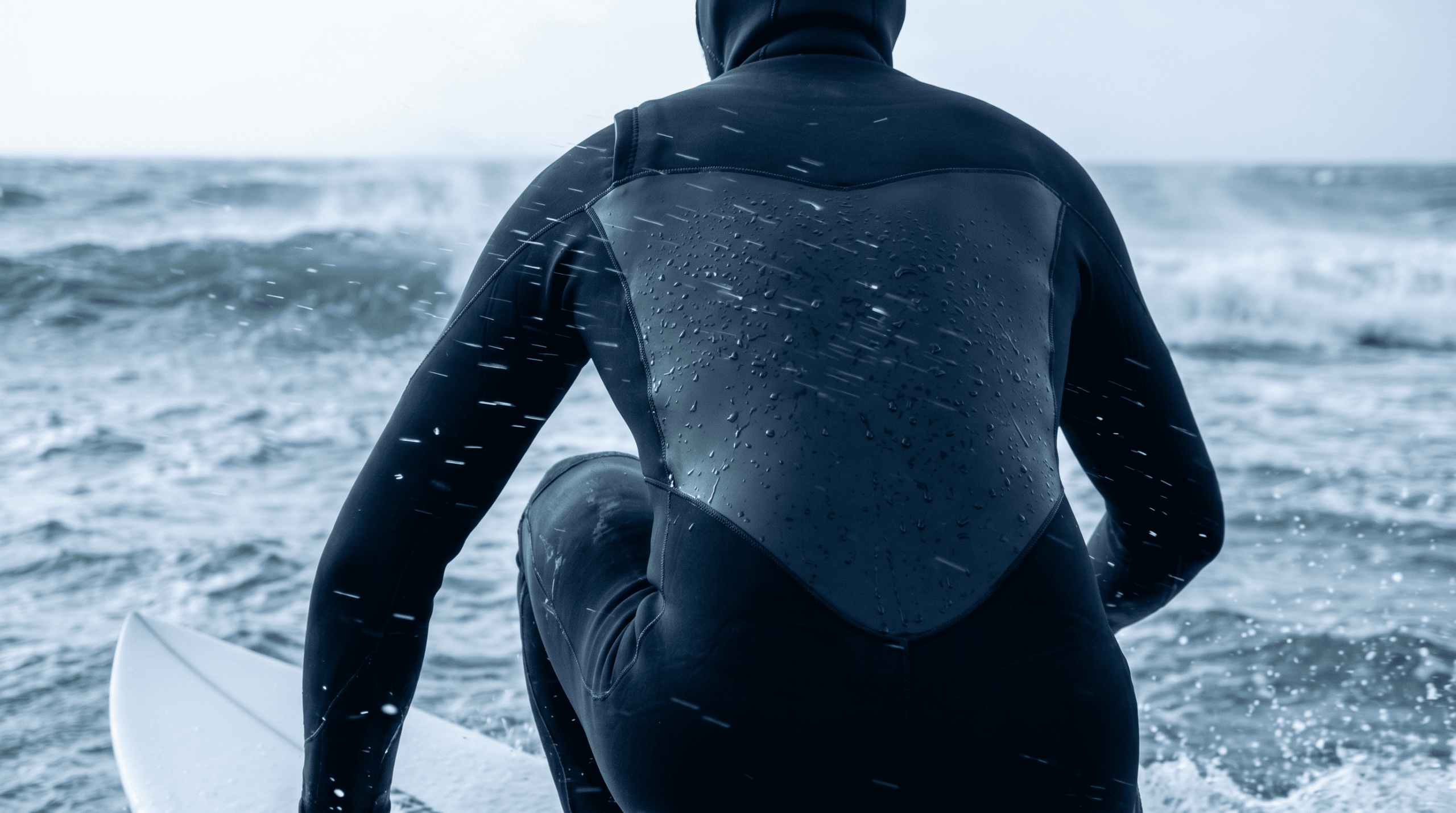
It’s not just about the water. I’ve had sessions where the water was a manageable 62°F, but the air was 45°F with a biting wind. In those scenarios, a 3/2mm suit with “flatlock” stitching, which allows air and water to seep through, will fail you. You need “Smoothskin” or “Single-lined” neoprene on the chest and back panels. These rubbery, looking panels are designed to repel water and block wind, preventing the evaporative cooling that happens when you’re sitting on your board waiting for a set.
If you are a high-activity surfer, constantly paddling and catching waves, you generate more internal body heat, allowing you to opt for a slightly thinner, more flexible suit. Conversely, if you’re a longboarder who spends more time sitting and waiting for the perfect log wave, go thicker.
I always prioritize the core. If my core is warm, my heart continues to pump warm blood to my extremities. Once the core temperature dips, the body enters “survival mode,” pulling blood away from the fingers and toes. This is why you see surfers struggling to un-zip their suits at the end of a session; their fingers have literally lost the fine motor skills required to function. Don’t be that person. Over-invest in thickness if you’re unsure; modern neoprene is so stretchy that the “stiffness” penalty is much lower than it was a decade ago.
Seams, Linings, and the “Flush” Factor
The thickness number on the sleeve is only half the story. The way those neoprene panels are joined together determines how much of that thickness actually works for you. When I first started, I didn’t understand why two different 4/3mm suits could feel so different in the water. The secret lies in the seams. Flatlock stitching is common in cheaper, thinner suits (usually 2mm or less); it’s breathable but leaks water constantly. For any suit 3mm or thicker, you must look for GBS (Glued and Blind Stitched) seams. This process involves gluing the edges and then stitching them in a way that the needle never fully penetrates the neoprene, keeping the seam watertight.
If you really want to level up, look for “Taped” or “Liquid Sealed” seams. This is where a thin ribbon of rubber is applied over the GBS seam. In my years of testing gear, I’ve found that taped seams not only keep the water out more effectively but also significantly increase the lifespan of the suit. A suit that “flushes”, where cold water rushes in through the neck or ankles during a wipeout, instantly negates the benefit of thick neoprene. A high-quality 4/3mm with internal taping will often feel warmer than a cheap 5/4mm that leaks like a sieve. Look for “donut” seals on the wrists and ankles which grip the skin and prevent water entry.
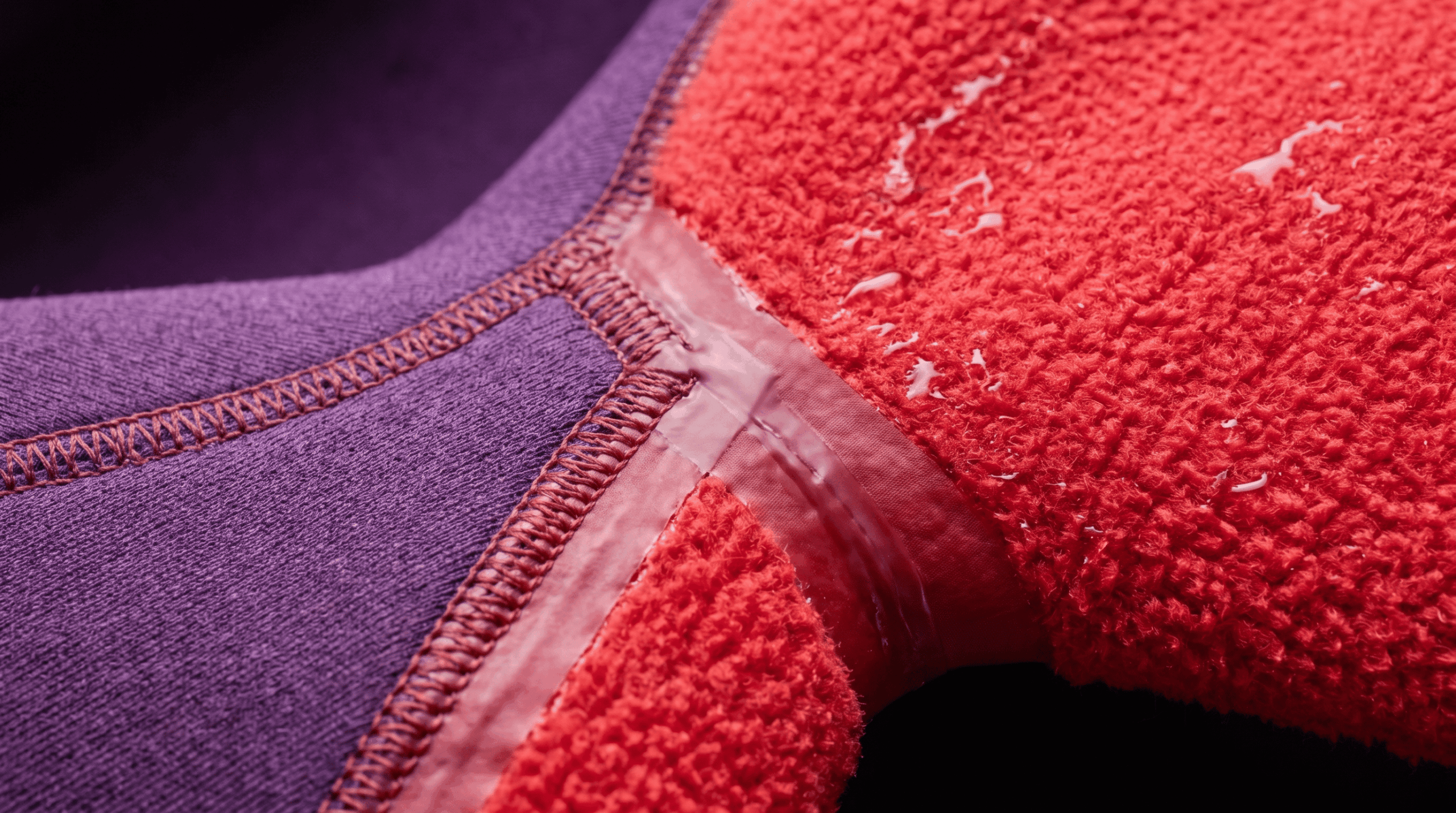
Internal linings are the final piece of the puzzle. Most high-end winter suits now feature a “poly-pro” or “fleece” lining on the inside of the chest and back panels. This looks like a fuzzy red or purple wool. It serves two purposes: it adds an extra layer of insulation and it wicks water away from the skin. More importantly, it dries incredibly fast.
There is nothing more soul-crushing than pulling on a cold, wet 5/4mm suit for a second session in the afternoon. These thermal linings are a game-changer for anyone surfing multiple times a day. When I’m choosing a suit for a trip to Ireland or Scotland, the quality of the internal lining is just as important to me as the thickness of the rubber itself.
Final Wisdom for the Cold Water Hunter
Check the fit before you worry about the thickness. A 5mm suit that is too big for you will be colder than a 3mm suit that fits perfectly. If there are gaps under your armpits or a “pocket” of air at the small of your back, water will pool there, get cold, and stay cold. The suit should feel “uncomfortably snug” in the shop, as neoprene expands slightly when wet.
Also, remember that neoprene degrades over time. The nitrogen bubbles trapped in the rubber eventually collapse, meaning your three-year-old 4/3mm is likely performing more like a 3/2mm. If you start feeling the bite of the cold in conditions you used to handle easily, it’s not you getting older, it’s your suit getting tired.
Frequently Asked Questions
Should I get a 3/2mm or a 4/3mm for my first suit?
If you plan on surfing in temperate waters (58°F to 68°F), the 4/3mm is generally the safer bet for a first suit. It offers a much wider comfort range. While you might get a little warm in the height of summer, you won’t be forced out of the water when the temperature drops in autumn. The 3/2mm is better suited for truly warm climates or peak summer months.
How do I know if my wetsuit is thick enough?
You should feel a “warmth bloom” within five minutes of entering the water. If you are shivering while paddling or if your hands and feet feel numb within the first thirty minutes, your suit is either too thin, poorly sealed, or fits too loosely. A proper suit should allow you to sit still for at least ten minutes without feeling a chill.
Does thickness affect my paddling speed?
Technically, yes. Thicker neoprene offers more resistance when you rotate your shoulders. However, modern high-end neoprene (often called “Technobutter” or “E7”) is incredibly flexible. The slight decrease in paddle efficiency is far less detrimental than the loss of muscle function that occurs when you get cold. For most surfers, the buoyancy of a thicker suit actually helps them stay higher in the water, making paddling feel easier.
Can I use a surfing wetsuit for diving or vice versa?
I don’t recommend it. Surfing wetsuits are designed for high-stretch movements and are made of “blown” neoprene which is flexible but compresses under pressure. Diving suits are designed to withstand the pressure of deep water and are generally much stiffer. If you surf in a diving suit, you will feel like you are wearing a straightjacket. If you dive in a surfing suit, it will lose its insulating properties as you descend.