
Table of Contents
The jump from a soft top to a hardboard is one of those moments in surfing you never forget—mostly because it humbles you instantly.
For months, you’ve been the king of the foamie. You’re catching waves, standing up consistently, and feeling like a “real” surfer. Then, you paddle out on a fiberglass or epoxy hardboard for the first time, and suddenly, you feel like a day-one beginner all over again.
What I learned the hard way is that moving to a hardboard isn’t just an upgrade in equipment; it’s a complete recalibration of your muscle memory. Before you make the switch, make sure you’ve mastered the basics in our How to Choose the Right Surfboard Guide
If you are ready for the challenge, here is the honest truth about the transition from foam to fiberglass.
The First Paddle: Why a Hardboard Feels “Alive” (and Unstable)
The first time I paddled a hardboard, the difference was immediate. It felt faster—no doubt about it. The board had more glide, cutting through the water instead of dragging over it. When I caught a wave, the board responded way quicker to every shift in my weight.
But there was a catch: it felt incredibly unstable.
On a soft top, you can be a bit sloppy with your balance and still stay on your feet. The foam deck acts like a stable platform that forgives your mistakes. On a hardboard, that safety net is gone. Every little error in your positioning or pop-up shows up instantly. It stops feeling like a platform and starts feeling like something alive under your feet. You have to be precise, or it will buck you off.
Goodbye Safety Net: The Mental Shift of Wiping Out
There is a psychological comfort to a foam board that you don’t realize you have until it’s gone. On a soft top, you fall, you laugh, and you climb back on. The deck is soft, the fins are usually plastic, and the stakes feel low.
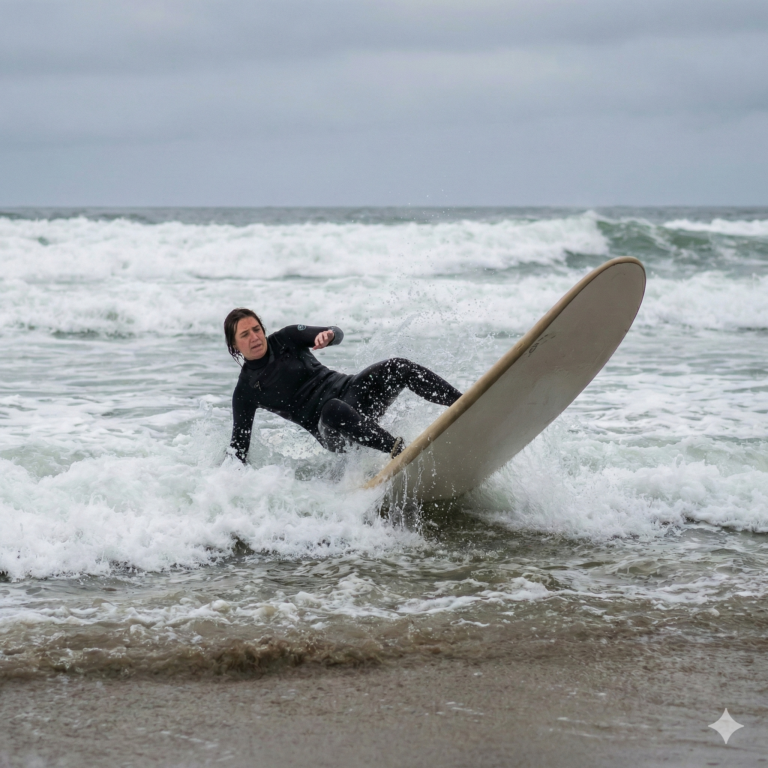
Wiping out on a hardboard hits differently. Suddenly, you are hyper-aware of where the board is, where those razor-sharp fiberglass fins are, and exactly how you are hitting the water.
That mental shift makes you hesitate. You might find yourself paddling a bit more cautiously or committing less to a steep drop because you’re afraid of the impact. In surfing, hesitation usually means you miss the wave or fall. Learning to trust yourself on a hard, fast projectile is one of the biggest mental hurdles of the transition.
Quick Comparison: Soft Top vs. Hard Top at a Glance
| Feature | Soft Top (Foamie) | Hard Top (Fiberglass/Epoxy) |
| Primary Goal | Learning and fun | Performance and progression |
| The Feel | Stable, forgiving “platform” | Reactive, fast, “alive” |
| Durability | High (hard to ding) | Low (cracks easily) |
| Safety | High (soft deck/fins) | Moderate (fins/rails can be sharp) |
| Paddling | High drag, high float | Low drag, high glide |
The 3 Biggest Technical Hurdles You’ll Face
1) Narrower Rails & The Balance Trap
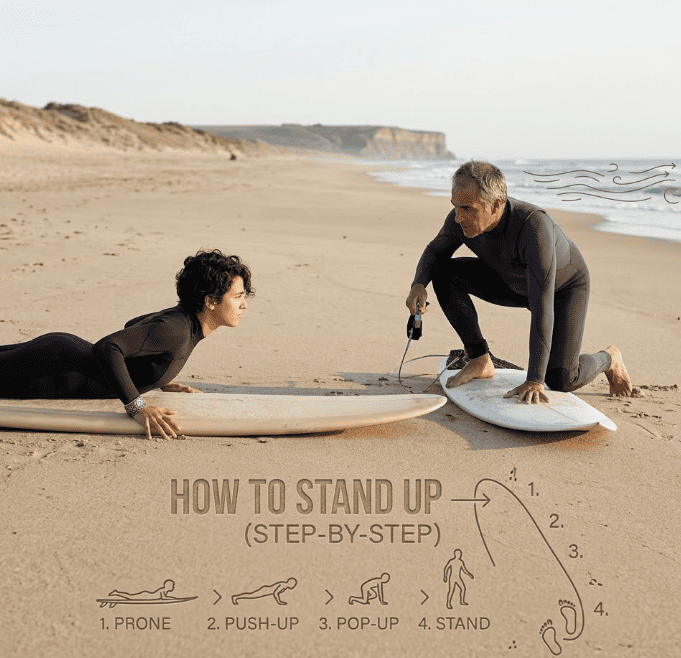
Most hardboards have narrower, more refined rails than a chunky foamie. This makes the board much more sensitive to where you place your feet. If your pop-up isn’t centered, the board will rail-flip or wobble instantly. You have to move from “standing up” to “landing precisely.”
2) Mastering the Duck Dive
On a big soft top, you don’t really duck dive; you usually just “turtle roll” or push through the whitewater. With a hardboard, you are expected to sink the board cleanly under the wave. Mastering the timing and the “scoop” of a duck dive takes weeks of practice and a lot of saltwater up the nose, but it’s the only way to get out back efficiently.
3) Overcoming the “Hesitation” Factor
Because the board is less forgiving, your brain will tell you to play it safe. You’ll find yourself pulling back on waves you could have caught. The only way past this is repetition. You have to fall a few times to realize that while the board is hard, you are still in control. Commitment is the only way to make a hardboard work for you.
When is the Right Time to Make the Switch?
Don’t rush to leave your soft top. It builds your foundation, your confidence, and your wave-counting stats. A hardboard demands precision, but it only rewards you if you have the skills to handle the speed.
When you can consistently turn both ways and you feel like the “drag” of the foam is holding back your speed, that is the moment to level up. Just be prepared to be humbled for a few sessions—it’s all part of the process.
Frequently Asked Questions
Are hardboards faster than soft tops?
Yes. Fiberglass and epoxy resins create a much smoother, harder surface than foam. This reduces friction and drag against the water, allowing the board to glide faster and maintain more speed through turns.
Will a hardboard help me turn better?
Eventually, yes. Hardboards have “hard rails” (sharper edges) that bite into the face of the wave, giving you much more control during a turn. However, because they are more sensitive, you need better foot placement and balance than you did on a soft top.
Should I keep my soft top after I buy a hardboard?
Absolutely! Every surfer should have a “fun foamie” in their quiver. They are perfect for small, crowded summer days or for when you just want to relax and catch 20 waves without the pressure of performance.