

If you had told me when I first started that surfing would shape both my body and my mind the way it has, I probably wouldn’t have understood it. At first, I just wanted to stand up on a wave. I wasn’t thinking about fitness, and I certainly wasn’t thinking about mental health.
But over the years, the benefits of surfing sneak up on you.
After decades in the water, I can confidently say that surfing strips life down to the basics: breathe, paddle, observe, commit. There is something incredibly powerful about that simplicity. If you are looking for a reason to paddle out, here is how the ocean quietly transforms your physical and mental well-being.
The Physical Shift: Fitness Disguised as Fun
Most fitness routines are a grind. You watch the clock on a treadmill, or you count reps in a crowded gym. Surfing is entirely different; it is full-body conditioning disguised as fun.
When you surf, you paddle for hours, engaging your shoulders, back, and core. You are constantly adjusting your balance, holding tension, and exploding into pop-ups. I remember looking in the mirror a few months into surfing consistently and realizing my shoulders were broader and my stamina was through the roof, yet I hadn’t stepped foot in a gym.
The psychological difference is massive. You aren’t working out; you are chasing waves. Because the effort feels like play, you push your body further than you ever would in a traditional workout.
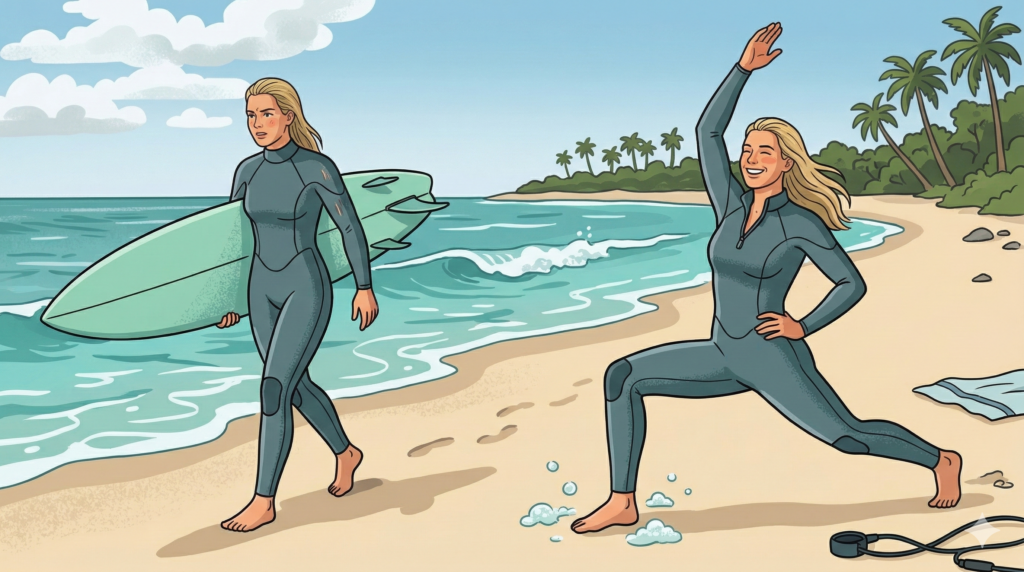
The Mental Reset: Forced Presence in a Noisy World
Where surfing truly changed my life was mentally. We all go through stressful periods where our heads just won’t switch off—the work pressure, the personal issues, the 2 a.m. overthinking. Honestly, sometimes the ocean was the only place that could quiet the noise.
When you are sitting in the lineup, watching the horizon, and feeling the rhythm of the sets coming in, your brain simply doesn’t have the space to obsess over emails or problems. You are present because you *have* to be. The ocean demands your full attention.
You can’t fake it out there. You can’t scroll on your phone, you can’t multitask, and you can’t escape into digital distractions. It is just you and the water. That intense focus becomes a pure, forced meditation.
A Change of Perspective: Feeling Small in the Best Way
The mental reset surfing provides is hard to explain unless you’ve felt it. It isn’t just relaxation; it is a profound shift in perspective.
When you are sitting on your board out the back, you are small. The horizon is endless, and the energy pushing your board upward has traveled across an entire ocean just to reach you. Whatever was stressing you out on land suddenly feels incredibly small afterward. The problems aren’t gone, but they are lighter. They become manageable.

“Clean Exhaustion” and the Ultimate Sleep
The way you sleep after a good surf session is completely different from normal tiredness. It is not just physical fatigue; it is what I call “clean exhaustion.”
Your body feels worked but balanced, and your mind feels beautifully empty. After a solid surf, especially one where you caught a few good waves, I sleep heavier and wake up with a clearer head. It feels as though the combination of saltwater, adrenaline, and physical exertion completely resets your nervous system.
Ready to Transform Your Mind and Body?
Surfing isn’t just a sport. It’s therapy, it’s training, it’s meditation, and it’s a community. It builds your body quietly and clears your mind without asking permission. Once you’ve felt that combination, it is very hard to replace.
If you are ready to experience this for yourself, you don’t need to be an elite athlete to start. You just need the right knowledge to get past the initial learning curve safely.
Head over to our Ultimate Guide to Surfing for Beginners: How to Start and Not Give Up. It covers everything you need to know to take your first paddle out, catch your first wave, and begin a journey that will change your life both inside and out.
Frequently Asked Questions
Do I need to be incredibly fit to start surfing?
No, you don’t need to be in peak physical condition to start, provided you begin on a large, buoyant beginner board (a “foamie”) in small, manageable waves. However, surfing will rapidly improve your cardiovascular fitness, shoulder strength, and core stability as you practice.
Is surfing good for anxiety and stress relief?
Absolutely. Surfing requires immense focus and mindfulness, which forces your brain to stay entirely in the present moment. This “forced meditation,” combined with the physical exertion and the calming effect of being in nature (the “blue mind” effect), makes it an incredible tool for managing anxiety and stress.
What muscles does surfing work the most?
Surfing is a true full-body workout. Paddling heavily targets your latissimus dorsi (back), deltoids (shoulders), and triceps. The “pop-up” engages your chest and core, while riding the wave requires your quadriceps, hamstrings, and stabilizer muscles to maintain balance.