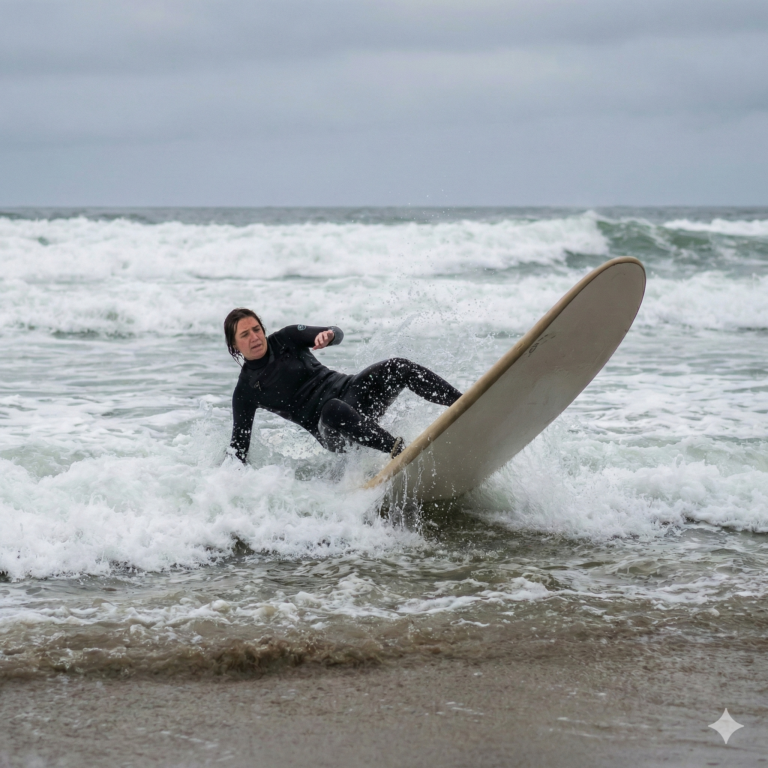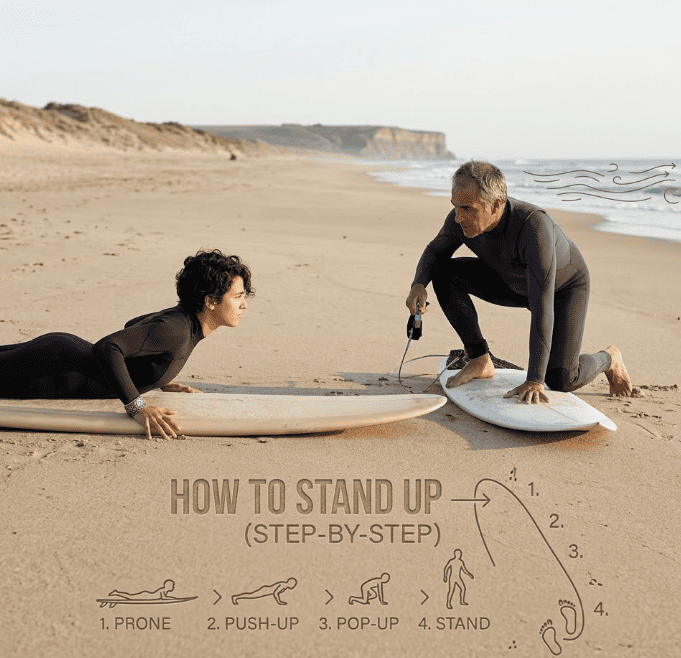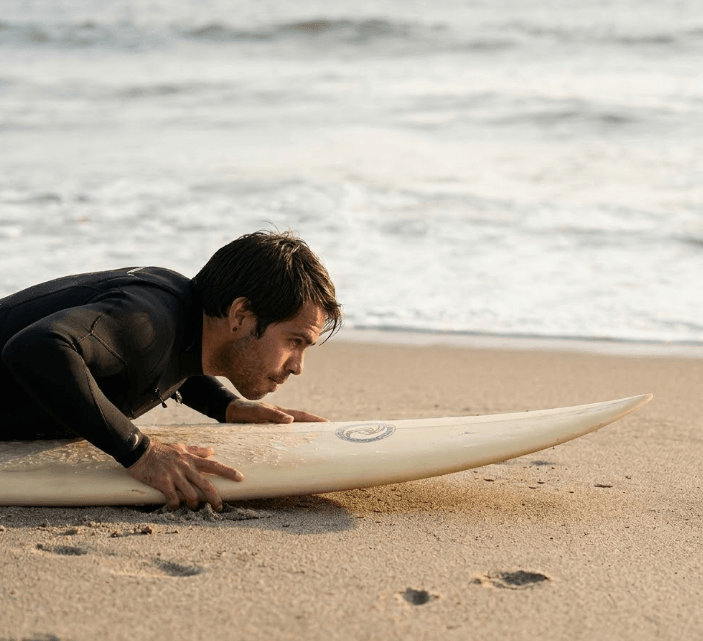

If there is one thing I wish someone had drilled into me from day one, it’s that surf safety isn’t optional. When you are a first-time surfer, you are so hyper-focused on trying to stand up that you don’t realize how many small decisions can quickly turn into big problems.
The ocean doesn’t need to be huge to be powerful, and it certainly doesn’t give warnings in words. It teaches through experience. I definitely learned my safety lessons the hard way—getting tumbled, smacked, and dragged—but you don’t have to.
If you want to progress faster, avoid unnecessary injuries, and actually enjoy your time in the water, here are the absolute must-know surf safety tips, born directly from my own rookie mistakes.
Tip #1: Observe Before You Enter (Safety Starts on the Sand)
One of the biggest mistakes beginners make is running straight from the car into the water. What I’ve learned after all these years is that safety in surfing starts before your toes even touch the ocean.
Take ten minutes to stand on the beach and just watch. Check the conditions. Is the tide coming in or going out? Where are the experienced surfers paddling out, and more importantly, where are they exiting the water? Look for rocks, piers, or areas where the water looks chaotic. If you don’t take the time to study the environment you are about to play in, you are already putting yourself at a disadvantage.

Tip #2: Beware the “Easy” Paddle Out (Understanding Rip Currents)
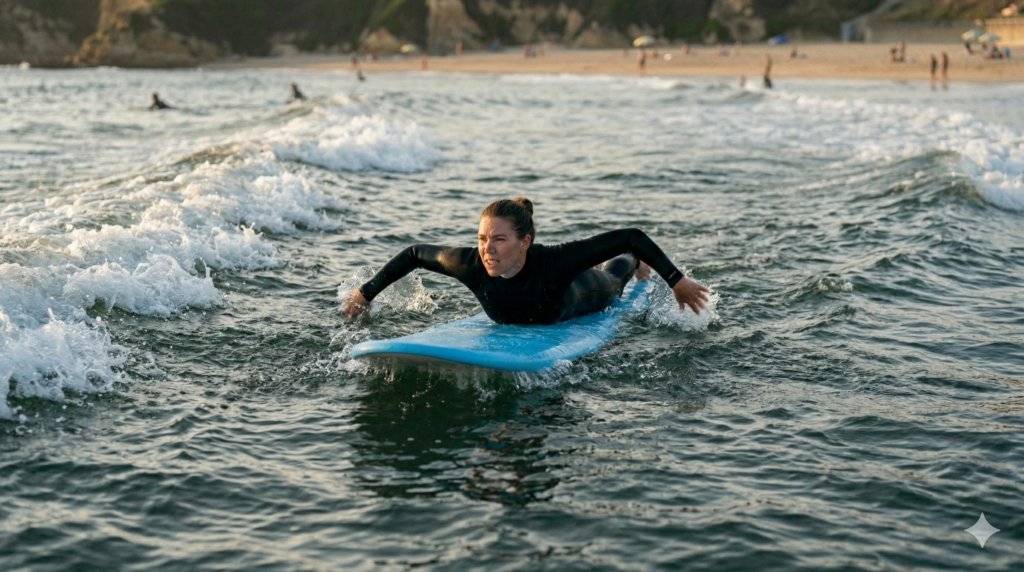
I remember paddling out one day and thinking, “Nice, this is incredibly easy. I’m barely paddling and I’m already so far out!” I had paddled straight into a rip current without even realizing it. What I didn’t understand at the time was that this fast-moving water heading out to sea isn’t your friend; it’s a conveyor belt. Suddenly, I was way deeper than I intended to be, slightly panicking, and burning all my energy trying to paddle straight back to the beach without going anywhere.
The Fix: You never fight a rip current directly back to shore. You stay calm, save your energy, and paddle parallel to the beach until you are out of the pull, then let the breaking waves wash you in. Even better, learn to avoid them entirely by spotting the darker, choppier channels of water where the waves aren’t breaking—that is usually where the rip is pulling out.
Tip #3: Protect Your Head from Your Own Board (Always)
Getting hit by your own board hurts your body, and it definitely hurts your pride.
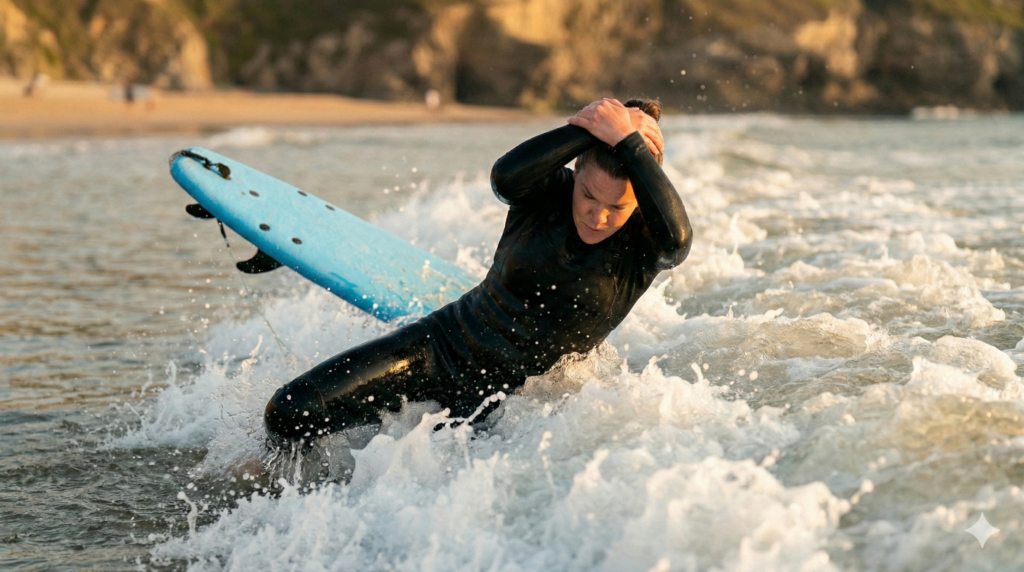
Early on, I wiped out on a wave and immediately popped my head above the surface to grab a breath. I didn’t cover my head. The board had been sucked backward by the wave, and my leash acted like a giant rubber band, snapping the board straight back at my face. Luckily, the fins missed me and it wasn’t serious, but it easily could have been.
The Fix: Since that day, my reaction is automatic. When you fall off your board, always stay underwater for an extra second, and always surface slowly with your arms wrapping your head and face. Your surfboard is heavy, it has sharp fins, and in moving water, it is totally unpredictable. Never assume it isn’t flying right toward you.
Tip #4: Never Underestimate “Small” Waves
People tend to think surf safety is only something you worry about when the waves are massive. That is a dangerous illusion. Small waves breaking over a shallow sandbar can severely mess you up.
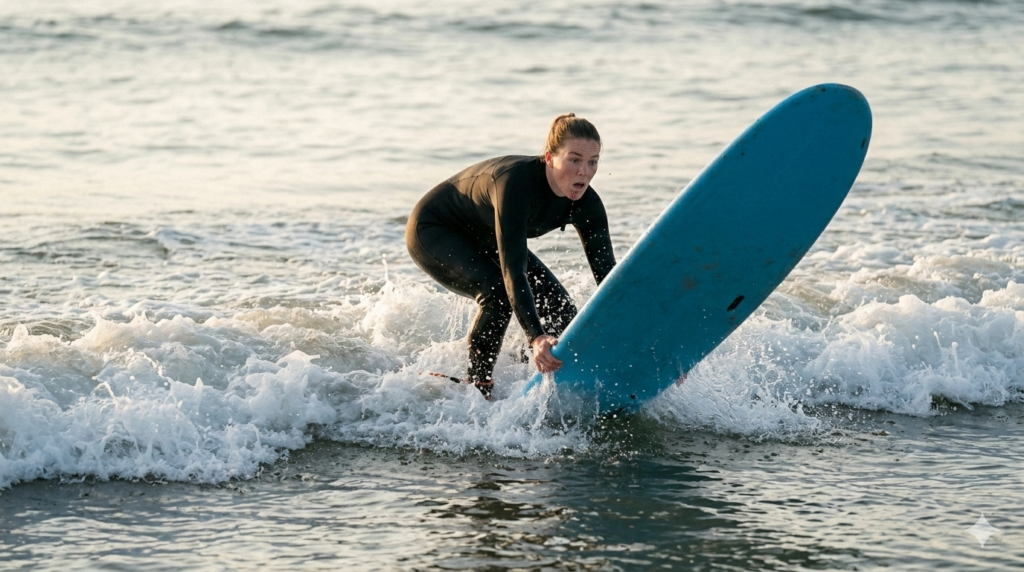
I remember getting caught inside by what looked like a completely harmless, waist-high wave. But it pitched faster than I expected, caught me off guard, and slammed me directly into the bottom, rolling me over the sandbar. Because the water was so shallow, there was no cushion. I came up coughing with sand in my mouth and a brand-new respect for “fun-sized” conditions.
The Fix: Power isn’t just about the height of the wave; it’s about how and where it breaks. Always protect your neck when falling in shallow water by falling flat (like a starfish) rather than diving headfirst.
Tip #5: Don’t Fight the Ocean (And Don’t Panic)
The golden rule of surfing is that the ocean always wins. If you get held underwater after a wipeout, your instinct will be to thrash around and fight your way to the surface. This only burns the oxygen in your lungs and induces panic.
Relax. Let the wave roll over you. The turbulence only lasts for a few seconds, and your wetsuit and surfboard (attached to your ankle) both act as flotation devices. Surfing is incredible freedom, but it is a freedom that only works when you respect your limits and stay calm under pressure.
Master the Fundamentals to Stay Safe
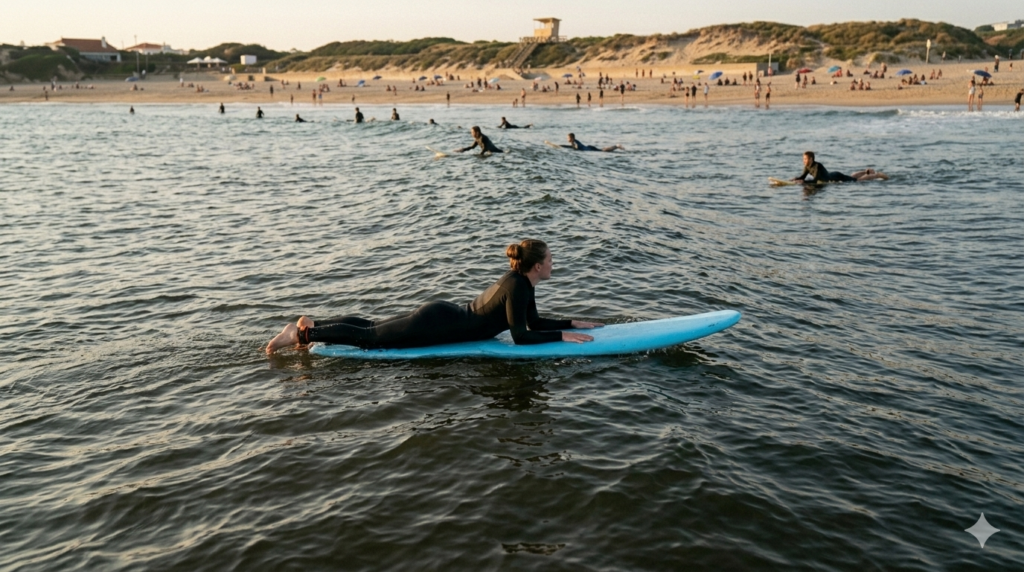
The best way to stay safe in the water is to know exactly what you are doing before you paddle out into the lineup. Good technique is the ultimate safety gear.
If you want to ensure you know how to handle your board properly, how to position your weight so you don’t wipe out dangerously, and how to navigate the waves with confidence, head over to our Ultimate Guide to Surfing for Beginners: How to Start and Not Give Up. Mastering those foundational skills will keep you out of trouble and help you actually enjoy the ride.
Frequently Asked Questions About Surf Safety
What should I do if I get held underwater by a wave?
The most important thing is to stay calm and not panic. The typical “hold down” for a beginner wave lasts less than 5 seconds, even if it feels much longer. Cover your head with your arms, let the turbulence pass, and once the spinning stops, grab your leash and pull yourself gently up to the surface.
Why do I need to wear a leash?
A leash connects your ankle to your surfboard. It is your most important piece of safety equipment for two reasons: First, your board acts as a giant life preserver that you can always pull yourself back to. Second, it prevents your heavy board from washing freely toward the beach and hitting other surfers or swimmers in the head.
Is it safe to surf alone as a beginner?
No, beginners should never surf entirely alone. Always surf at a beach where there are lifeguards present or where other surfers are in the water. If you get caught in a rip current, suffer a cramp, or hit your head, having people nearby can be life-saving.